
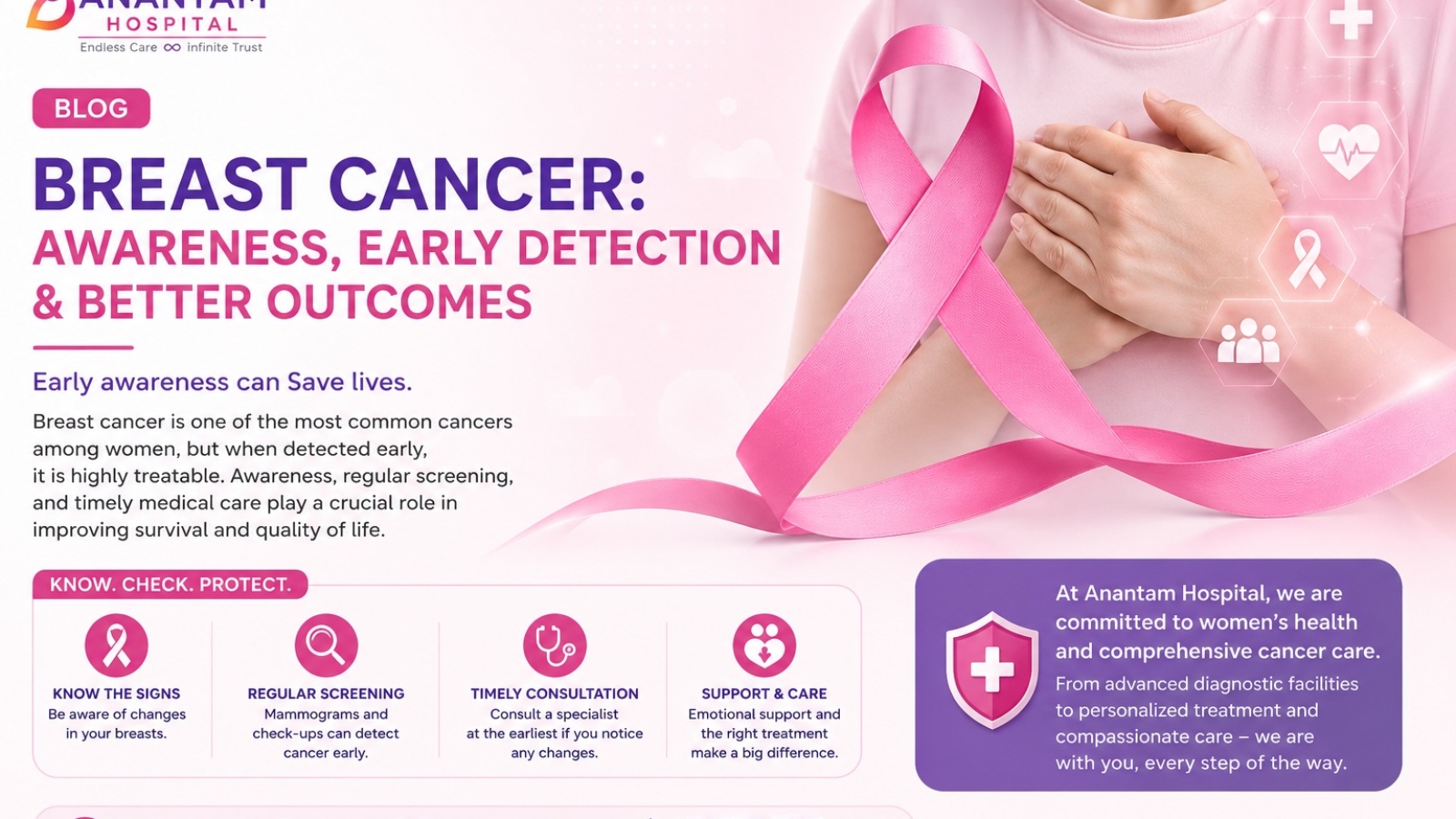
Breast cancer is one of the most common cancers affecting women worldwide. While the diagnosis can be overwhelming, advancements in medical science, increased awareness, and early detection have significantly improved treatment outcomes and survival rates. Understanding the signs, risk factors, and importance of regular screening can help individuals take proactive steps toward protecting their health. At Anantam Hospital, we believe that awareness and early intervention are key to improving outcomes and empowering women to make informed healthcare decisions.
Breast cancer occurs when abnormal cells in the breast begin to grow uncontrollably, forming a tumor that may spread to surrounding tissues or other parts of the body if left untreated. Although it primarily affects women, breast cancer can also occur in men. The exact cause of breast cancer is not always known, but factors such as age, family history, genetic mutations, hormonal influences, obesity, lifestyle habits, and certain medical conditions can increase the risk of developing the disease.
One of the most effective ways to combat breast cancer is through early detection. Regular breast self-examinations, clinical breast examinations, and mammography screenings can help identify abnormalities before symptoms become noticeable. Detecting breast cancer in its early stages often allows for more treatment options, less invasive procedures, and significantly better recovery outcomes. Awareness of changes in breast appearance, lumps, skin dimpling, nipple discharge, or persistent pain should never be ignored and should be evaluated by a healthcare professional promptly.
Mammography remains one of the most important screening tools for breast cancer detection. This specialized imaging test can identify small abnormalities that may not be felt during a physical examination. Regular mammograms, especially for women above the recommended screening age or those with higher risk factors, play a crucial role in identifying cancer at an early and more treatable stage.
Treatment for breast cancer varies depending on the type, stage, and overall health of the patient. Modern treatment options may include surgery, chemotherapy, radiation therapy, hormone therapy, targeted therapy, or immunotherapy. A personalized treatment plan is developed after careful evaluation to ensure the most effective approach for each individual. Advances in cancer treatment continue to improve survival rates while helping patients maintain a better quality of life throughout their treatment journey.
At Anantam Hospital, patient care extends beyond diagnosis and treatment. We understand the emotional, physical, and psychological challenges that may accompany a breast cancer diagnosis. Our healthcare team focuses on providing compassionate support, patient education, and continuous guidance to help individuals and families navigate every stage of treatment and recovery with confidence.
Prevention and lifestyle management also play an important role in reducing breast cancer risk. Maintaining a healthy weight, engaging in regular physical activity, limiting alcohol consumption, following a balanced diet, and attending routine health screenings can contribute to overall breast health. While not all cases can be prevented, adopting healthy lifestyle habits can help reduce risk factors and promote long-term well-being.
Breast cancer awareness is not limited to a single month or campaign. It is an ongoing effort to encourage education, regular screenings, and timely medical attention. By spreading awareness and promoting early detection, more lives can be saved and more individuals can receive treatment when it is most effective.
At Anantam Hospital, we remain committed to supporting women’s health through preventive care, advanced diagnostic services, and compassionate treatment. Through awareness, early action, and expert medical care, we strive to help individuals overcome challenges and lead healthier, stronger lives.


Add a Comment