
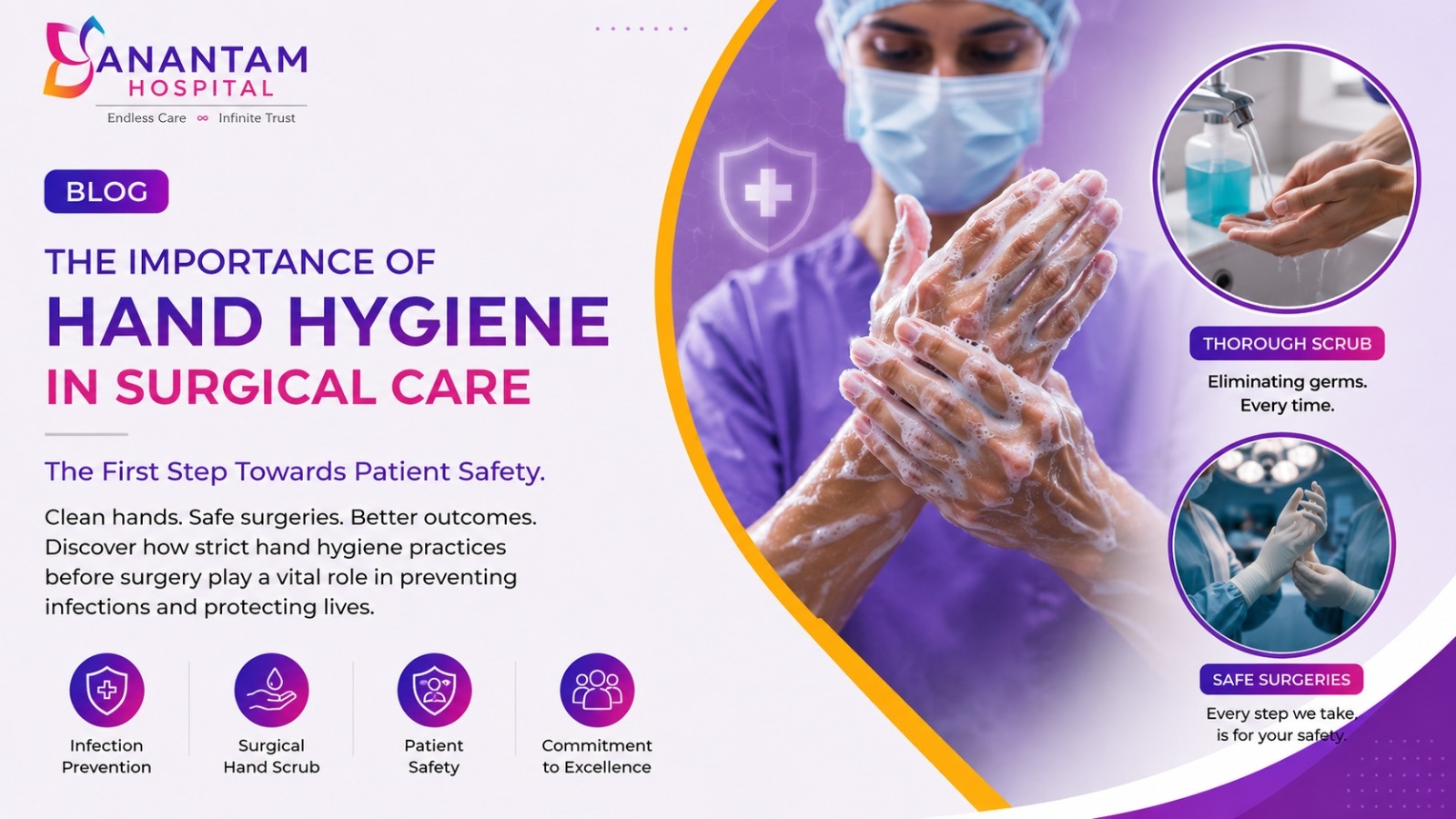
In healthcare, patient safety begins long before a surgical procedure starts. Every successful surgery depends not only on the expertise of the medical team and advanced technology but also on strict hygiene practices followed before entering the operating room. Among these practices, proper hand hygiene remains one of the most important and effective measures in preventing infections and ensuring safe surgical outcomes. At Anantam Hospital, maintaining the highest standards of hand hygiene is a fundamental part of delivering quality healthcare and protecting patient well-being.
Hands are one of the most common ways through which harmful microorganisms can spread in healthcare environments. During surgical procedures, even a small lapse in hygiene can increase the risk of infections, complications, and delayed recovery. This is why surgeons, nurses, and operating room staff follow a rigorous hand washing and surgical scrubbing process before every procedure. These protocols are designed to significantly reduce the number of microorganisms present on the skin and create a safer environment for patients undergoing treatment.
Surgical hand preparation involves much more than routine hand washing. Before entering the operating theatre, healthcare professionals perform a detailed surgical scrub using specialized antiseptic solutions. The process includes thoroughly cleaning the hands, fingers, nails, wrists, and forearms for a specified duration to eliminate bacteria and other potentially harmful microorganisms. Following this, sterile gloves and protective surgical attire are worn to maintain a controlled and hygienic environment throughout the procedure.
Proper hand hygiene plays a crucial role in preventing Surgical Site Infections (SSIs), which are among the most common healthcare-associated infections worldwide. Reducing infection risks not only improves patient safety but also contributes to faster recovery, shorter hospital stays, and better overall treatment outcomes. Studies have consistently shown that adherence to hand hygiene protocols significantly lowers the chances of infection transmission within healthcare settings.
At Anantam Hospital, infection prevention is integrated into every stage of patient care. Medical professionals undergo continuous training and strictly follow internationally recommended hygiene and sterilization protocols. Operating rooms are maintained under stringent cleanliness standards, and every precaution is taken to ensure that patients receive care in the safest possible environment. These measures reflect the hospital’s commitment to excellence, quality healthcare, and patient-centered treatment.
Hand hygiene is not only important for healthcare professionals but also for patients and visitors. Simple practices such as regular hand washing, using alcohol-based sanitizers, and maintaining personal hygiene can help reduce the spread of infections both inside and outside healthcare facilities. Creating awareness about hand hygiene encourages healthier habits and contributes to the overall well-being of the community.
While advanced medical technology and specialized treatments continue to evolve, the importance of basic preventive measures remains unchanged. Proper hand hygiene is a simple yet powerful practice that protects patients, supports healthcare professionals, and strengthens infection control efforts across the healthcare system.
At Anantam Hospital, every step taken before surgery reflects a commitment to patient safety, precision, and compassionate care. Through strict hygiene practices, advanced medical standards, and a dedicated healthcare team, the hospital continues to uphold its mission of delivering safe, effective, and trusted healthcare services to every patient.


Add a Comment