
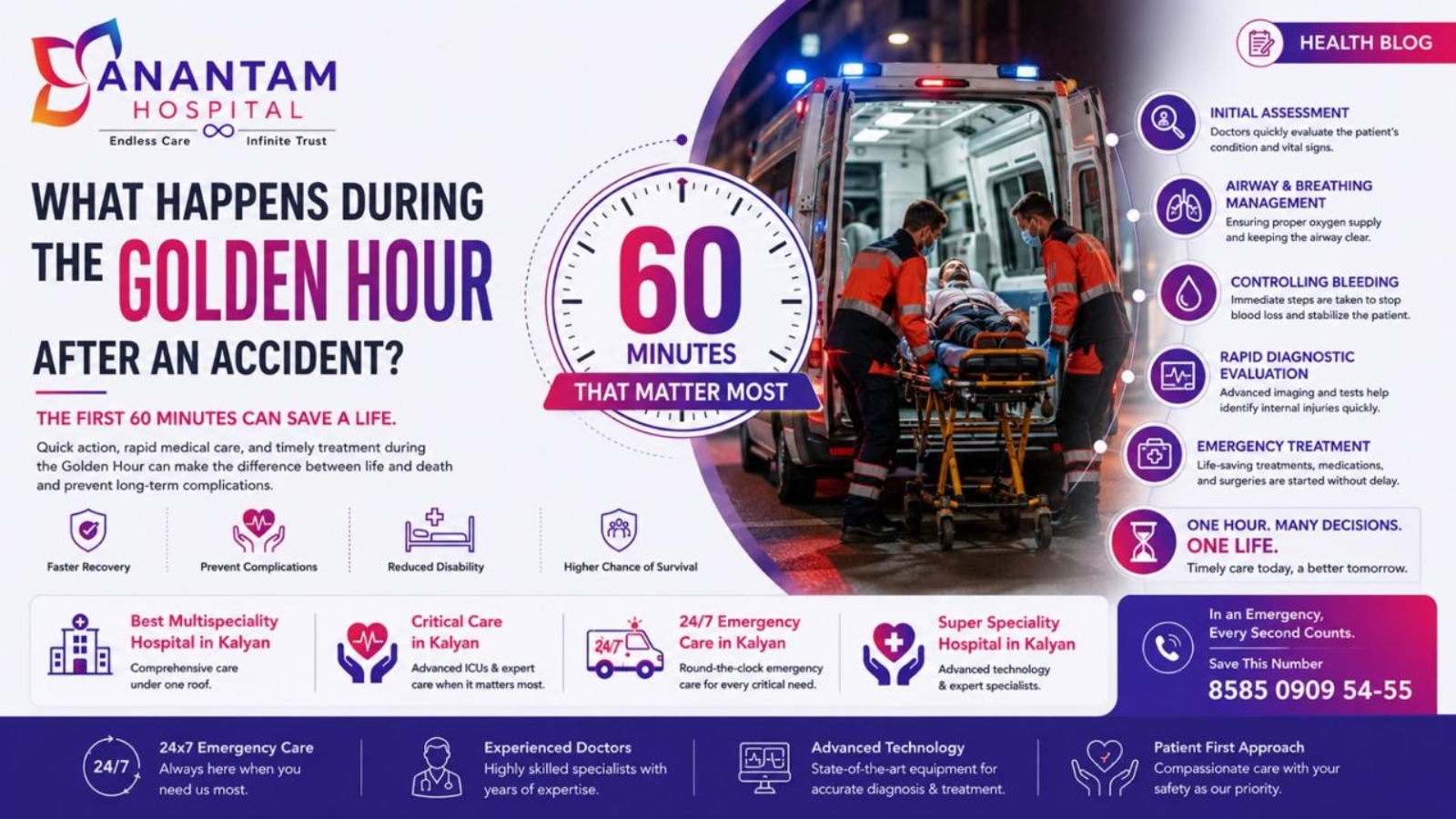
Road accidents, falls, workplace injuries, and other traumatic incidents can occur without warning, changing lives in a matter of seconds. While the severity of injuries varies, one factor remains constant—the importance of receiving immediate medical care. In emergency medicine, the first 60 minutes after a serious accident are known as the Golden Hour. This crucial period often determines whether a patient survives, how quickly they recover, and whether they experience long-term complications.
During the Golden Hour, every minute counts. Quick decisions, rapid transportation, accurate diagnosis, and immediate treatment can significantly improve outcomes. Delaying medical attention, even by a short time, may increase the risk of severe complications, permanent disability, or even loss of life.
At Anantam Hospital, recognized as the Best Multispeciality Hospital in Kalyan, our emergency physicians, trauma specialists, surgeons, and critical care experts are available around the clock to provide immediate and comprehensive emergency treatment when every second matters.
What is the Golden Hour?
The Golden Hour refers to the first hour following a traumatic injury or medical emergency. During this period, the body may be experiencing significant blood loss, reduced oxygen supply, internal injuries, or damage to vital organs. Prompt medical intervention during this time greatly increases the chances of survival and minimizes the risk of permanent complications.
The concept of the Golden Hour is widely followed in emergency medicine because early stabilization and treatment can prevent injuries from becoming life-threatening. Whether the patient has suffered a road traffic accident, a fall from height, a sports injury, or any other traumatic event, immediate medical care plays a critical role in protecting life and preserving organ function.
Why is the Golden Hour So Important?
Following a serious accident, the body undergoes tremendous physical stress. Severe bleeding can rapidly reduce blood circulation, depriving vital organs such as the brain, heart, kidneys, and lungs of oxygen. Internal injuries may not always be visible, making it difficult to judge the seriousness of the condition without medical evaluation.
The sooner medical professionals control bleeding, stabilize fractures, restore breathing, and manage internal injuries, the greater the chance of preventing irreversible damage. Early diagnosis also helps doctors identify hidden injuries before they become more severe.
This is why emergency medical services emphasize rapid transportation to a well-equipped hospital capable of providing advanced trauma care.
What Happens During the Golden Hour?
Once an accident victim reaches the emergency department, a highly coordinated medical response begins immediately. Every member of the emergency team has a specific role, ensuring that critical treatment starts without delay.
Initial Assessment
The first priority is assessing the patient’s overall condition. Emergency physicians quickly evaluate consciousness, airway, breathing, circulation, and neurological status. This systematic assessment helps identify life-threatening injuries that require immediate intervention.
Doctors also monitor vital signs such as heart rate, blood pressure, oxygen saturation, respiratory rate, and body temperature while gathering information about the accident whenever possible.
Airway and Breathing Management
One of the most important priorities during trauma care is ensuring that the patient can breathe properly. If the airway is blocked or breathing is inadequate, immediate measures are taken to restore oxygen flow. Supplemental oxygen, airway devices, or advanced respiratory support may be required depending on the severity of the injuries.
Maintaining adequate oxygen supply is essential for protecting the brain and other vital organs from permanent damage.
Controlling Bleeding
Uncontrolled bleeding is one of the leading causes of preventable death following trauma. Emergency teams immediately identify external bleeding and apply appropriate pressure dressings or other interventions to stop blood loss.
If internal bleeding is suspected, rapid imaging studies help doctors determine the source and plan urgent surgical or interventional treatment.
Rapid Diagnostic Evaluation
Modern emergency departments use advanced diagnostic tools to identify injuries quickly. Depending on the patient’s condition, investigations may include X-rays, ultrasound examinations, CT scans, blood tests, ECG, and other specialized imaging procedures.
These investigations help detect fractures, head injuries, internal organ damage, chest injuries, abdominal bleeding, and spinal trauma that may not be visible externally.
Emergency Treatment
Based on the diagnosis, doctors initiate appropriate treatment immediately. This may include intravenous fluids, blood transfusions, pain management, fracture stabilization, emergency surgery, cardiac monitoring, or specialized interventions for brain and spinal injuries.
The objective is to stabilize the patient as quickly as possible while preventing further complications.
Common Injuries That Require Immediate Emergency Care
Several types of injuries demand urgent evaluation during the Golden Hour. These include severe head injuries, spinal trauma, multiple fractures, chest injuries, abdominal injuries, uncontrolled bleeding, burns, crush injuries, and major road traffic accidents.
Even if a patient appears stable after an accident, internal injuries can develop silently. Therefore, professional medical evaluation should never be delayed.
What Should You Do Immediately After an Accident?
Knowing how to respond before medical professionals arrive can make a significant difference. The first priority should always be ensuring your own safety before assisting others. Immediately call emergency medical services and provide accurate information about the accident location and the patient’s condition.
Avoid moving an injured person unnecessarily, especially if a neck or spinal injury is suspected. Keep the patient calm, monitor their breathing, and apply gentle pressure to visible bleeding if it is safe to do so. Do not give food, water, or medications unless instructed by medical professionals.
Most importantly, arrange immediate transportation to a fully equipped emergency hospital capable of managing trauma patients.
The Role of Critical Care After Trauma
Some accident victims require intensive monitoring even after initial treatment. Patients with severe head injuries, multiple fractures, internal bleeding, breathing difficulties, or organ damage often need specialized intensive care.
At Anantam Hospital, our advanced Critical Care in Kalyan is equipped with modern monitoring systems, ventilator support, experienced intensivists, and multidisciplinary specialists who provide continuous care for critically injured patients. Early intensive care helps prevent complications and supports faster recovery.
Why Choosing the Right Hospital Matters
Trauma care requires more than just emergency treatment. It demands rapid diagnosis, advanced imaging, experienced surgeons, orthopedic specialists, neurosurgeons, anesthesiologists, critical care experts, and modern operation theatres working together seamlessly.
As a Super Speciality Hospital in Kalyan, Anantam Hospital offers comprehensive trauma and emergency services under one roof. Our integrated approach ensures that patients receive timely diagnosis, expert treatment, and coordinated care without unnecessary delays.
Whether it is emergency surgery, fracture management, neurological care, or intensive monitoring, every aspect of treatment is designed to maximize patient safety and recovery.
24/7 Emergency Care When Every Second Matters
Medical emergencies can happen at any time, which is why immediate access to experienced healthcare professionals is essential. Anantam Hospital provides 24/7 Emergency Care in Kalyan, supported by experienced emergency physicians, trauma specialists, advanced diagnostic services, operating theatres, ambulance support, and critical care facilities.
Our emergency response system is designed to ensure that patients receive rapid assessment and treatment from the moment they arrive at the hospital.
Preventing Accidents Saves Lives
Although emergency care plays a vital role after an accident, prevention remains the best approach. Wearing seat belts, using helmets, avoiding distracted driving, following traffic rules, maintaining workplace safety, and practicing responsible driving habits significantly reduce the risk of serious injuries.
Simple preventive measures can protect not only your own life but also the lives of others.
The Golden Hour is one of the most critical periods after an accident. Immediate medical attention during this time can significantly improve survival, reduce complications, and increase the chances of a full recovery. Every minute matters, and delaying treatment can have life-threatening consequences.
If you or a loved one is involved in an accident, do not wait for symptoms to worsen. Seek immediate medical care at Anantam Hospital – the Best Multispeciality Hospital in Kalyan, where our expert trauma specialists, advanced Critical Care in Kalyan, 24/7 Emergency Care in Kalyan, and comprehensive treatment facilities are always ready to provide prompt, life-saving care when it matters most.


Add a Comment