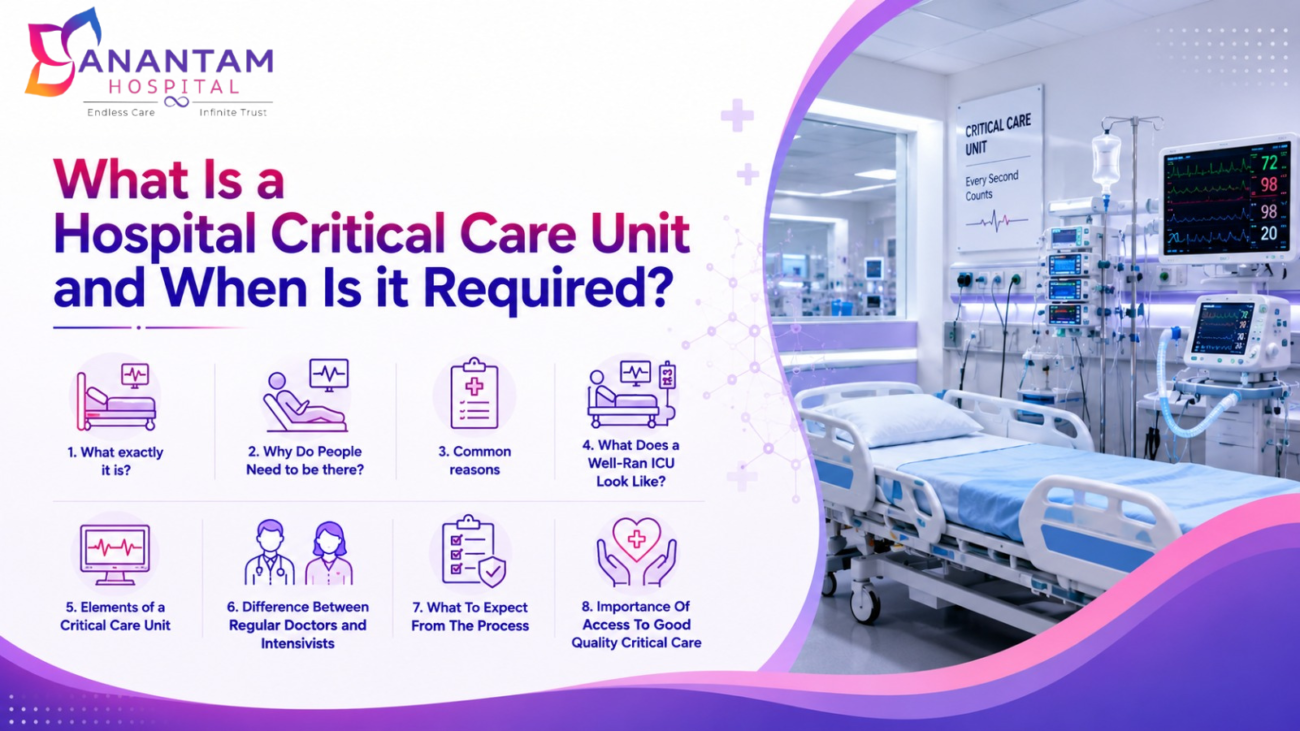
Hospital critical care unit with ICU beds and monitoring equipment at Anantam Hospital

What Is a Hospital Critical Care Unit and When Is it Required?

The news that a relative or close person will be admitted to the ICU may be frightening and even alarming as most people do not understand what does it mean. It is important to learn some information about a hospital critical care unit as it will help to understand the situation better.

What Is a Hospital Critical Care Unit?

The ICU, or a critical care unit, is a special area in the hospital which is dedicated to patients who require continuous monitoring and intensive attention. The main peculiarity of this unit is that each patient gets much more attention than it is in the other hospital areas.

Why Do People Need to Be in a Critical Care Unit?

There are many reasons why a person is admitted to the ICU and all of them are rather serious. In most cases, such a unit helps to save lives.

Common reasons for admission to a critical care unit include:

  • Sepsis or other serious infections
  • After complications following the surgical operation
  • Patients with heart attacks
  • Patients with breathing problems
  • After an accident or any other trauma
  • Organ failure

It may take several days or even weeks for a patient to leave the critical care unit. It depends on his or her condition.

What Does a Well-Ran ICU Look Like?

It is not only a ward with some additional devices and machines. A good ICU consists of highly-specialized medical staff, advanced medical technologies and readiness for rapid response.

Elements of a hospital critical care unit include:

  • Constant monitoring of the patient’s vital signs
  • Ventilators in case a person cannot breathe on his/her own
  • Cardiac monitors
  • Intensivists who are medical doctors specializing in critical care medicine
  • Rapid response protocols

All these elements have a purpose to provide timely reaction to all possible problems of patients.

Difference Between Regular Doctors and Intensivists

Doctors usually focus on diagnostics and development of treatment plan. On the contrary, intensivists always try to make a quick decision in case of changes in a patient’s condition.

What To Expect From The Process

Being with your loved one in critical care can be a difficult experience, but there are certain things one can expect from the process.

  • The visiting hours may be limited due to patient needs and restrictions
  • Communications take place on regular basis, with doctors keeping the families informed about the current situation and future plans
  • Getting psychological support is important so ask the hospital’s staff to help you if you need any assistance
  • Questions are always allowed – ask the care team all the questions you might have

You are not supposed to know all the terms used by medical specialists, but a competent care team should be able to give you the needed explanation.

The Importance Of Access To Good Quality Critical Care

In a real emergency every minute counts, and having a well-equip hospital critical care unit available within the area is vital.

Some of the criteria for assessing a hospital’s readiness for a crisis situation:

  • 24×7 availability of intensivists and other specialists
  • Modern equipment maintained and upgraded regularly
  • Quick admission to critical care after being detected at the general ward
  • Effective communication between different departments in case of an emergency

These points are crucial to consider when evaluating the quality of the care offered at a particular facility.

Conclusion

Hospitals’ critical care units are designed to provide care to people who really need constant monitoring and fast reaction in case of a crisis situation. Understanding what such departments do, who are their target audiences and what one can expect from the process is important.

If you look for a hospital to get treatment for yourself or a loved one suffering from a certain condition, pay attention to the critical care unit. Anantam Hospital, which is considered the best multispeciality hospital in Kalyan, provides its patients with a 24×7 critical care unit staffed by experienced intensivists.

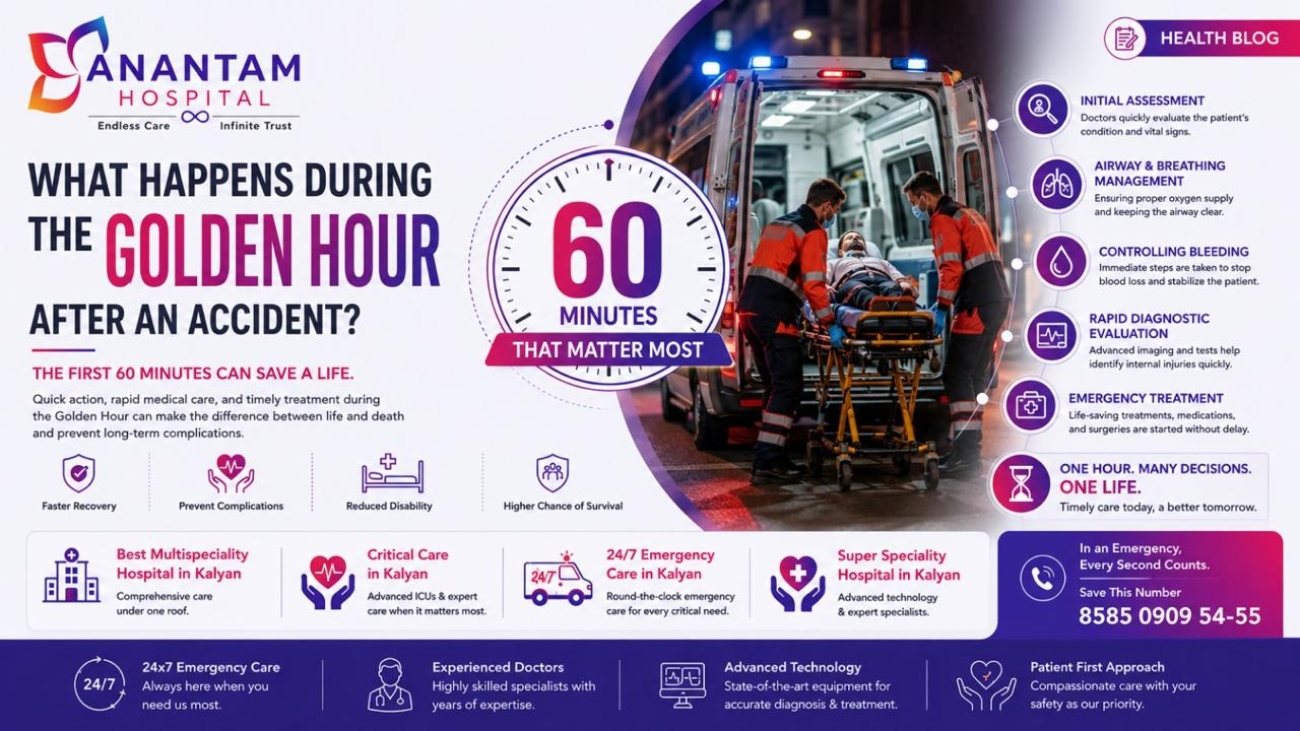
Golden Hour after accident infographic at the best multispeciality hospital in Kalyan-Anantam

What Happens During the Golden Hour After an Accident?

Road accidents, falls, workplace injuries, and other traumatic incidents can occur without warning, changing lives in a matter of seconds. While the severity of injuries varies, one factor remains constant—the importance of receiving immediate medical care. In emergency medicine, the first 60 minutes after a serious accident are known as the Golden Hour. This crucial period often determines whether a patient survives, how quickly they recover, and whether they experience long-term complications.

During the Golden Hour, every minute counts. Quick decisions, rapid transportation, accurate diagnosis, and immediate treatment can significantly improve outcomes. Delaying medical attention, even by a short time, may increase the risk of severe complications, permanent disability, or even loss of life.

At Anantam Hospital, recognized as the Best Multispeciality Hospital in Kalyan, our emergency physicians, trauma specialists, surgeons, and critical care experts are available around the clock to provide immediate and comprehensive emergency treatment when every second matters.

What is the Golden Hour?

The Golden Hour refers to the first hour following a traumatic injury or medical emergency. During this period, the body may be experiencing significant blood loss, reduced oxygen supply, internal injuries, or damage to vital organs. Prompt medical intervention during this time greatly increases the chances of survival and minimizes the risk of permanent complications.

The concept of the Golden Hour is widely followed in emergency medicine because early stabilization and treatment can prevent injuries from becoming life-threatening. Whether the patient has suffered a road traffic accident, a fall from height, a sports injury, or any other traumatic event, immediate medical care plays a critical role in protecting life and preserving organ function.

Why is the Golden Hour So Important?

Following a serious accident, the body undergoes tremendous physical stress. Severe bleeding can rapidly reduce blood circulation, depriving vital organs such as the brain, heart, kidneys, and lungs of oxygen. Internal injuries may not always be visible, making it difficult to judge the seriousness of the condition without medical evaluation.

The sooner medical professionals control bleeding, stabilize fractures, restore breathing, and manage internal injuries, the greater the chance of preventing irreversible damage. Early diagnosis also helps doctors identify hidden injuries before they become more severe.

This is why emergency medical services emphasize rapid transportation to a well-equipped hospital capable of providing advanced trauma care.

What Happens During the Golden Hour?

Once an accident victim reaches the emergency department, a highly coordinated medical response begins immediately. Every member of the emergency team has a specific role, ensuring that critical treatment starts without delay.

Initial Assessment

The first priority is assessing the patient’s overall condition. Emergency physicians quickly evaluate consciousness, airway, breathing, circulation, and neurological status. This systematic assessment helps identify life-threatening injuries that require immediate intervention.

Doctors also monitor vital signs such as heart rate, blood pressure, oxygen saturation, respiratory rate, and body temperature while gathering information about the accident whenever possible.

Airway and Breathing Management

One of the most important priorities during trauma care is ensuring that the patient can breathe properly. If the airway is blocked or breathing is inadequate, immediate measures are taken to restore oxygen flow. Supplemental oxygen, airway devices, or advanced respiratory support may be required depending on the severity of the injuries.

Maintaining adequate oxygen supply is essential for protecting the brain and other vital organs from permanent damage.

Controlling Bleeding

Uncontrolled bleeding is one of the leading causes of preventable death following trauma. Emergency teams immediately identify external bleeding and apply appropriate pressure dressings or other interventions to stop blood loss.

If internal bleeding is suspected, rapid imaging studies help doctors determine the source and plan urgent surgical or interventional treatment.

Rapid Diagnostic Evaluation

Modern emergency departments use advanced diagnostic tools to identify injuries quickly. Depending on the patient’s condition, investigations may include X-rays, ultrasound examinations, CT scans, blood tests, ECG, and other specialized imaging procedures.

These investigations help detect fractures, head injuries, internal organ damage, chest injuries, abdominal bleeding, and spinal trauma that may not be visible externally.

Emergency Treatment

Based on the diagnosis, doctors initiate appropriate treatment immediately. This may include intravenous fluids, blood transfusions, pain management, fracture stabilization, emergency surgery, cardiac monitoring, or specialized interventions for brain and spinal injuries.

The objective is to stabilize the patient as quickly as possible while preventing further complications.

Common Injuries That Require Immediate Emergency Care

Several types of injuries demand urgent evaluation during the Golden Hour. These include severe head injuries, spinal trauma, multiple fractures, chest injuries, abdominal injuries, uncontrolled bleeding, burns, crush injuries, and major road traffic accidents.

Even if a patient appears stable after an accident, internal injuries can develop silently. Therefore, professional medical evaluation should never be delayed.

What Should You Do Immediately After an Accident?

Knowing how to respond before medical professionals arrive can make a significant difference. The first priority should always be ensuring your own safety before assisting others. Immediately call emergency medical services and provide accurate information about the accident location and the patient’s condition.

Avoid moving an injured person unnecessarily, especially if a neck or spinal injury is suspected. Keep the patient calm, monitor their breathing, and apply gentle pressure to visible bleeding if it is safe to do so. Do not give food, water, or medications unless instructed by medical professionals.

Most importantly, arrange immediate transportation to a fully equipped emergency hospital capable of managing trauma patients.

The Role of Critical Care After Trauma

Some accident victims require intensive monitoring even after initial treatment. Patients with severe head injuries, multiple fractures, internal bleeding, breathing difficulties, or organ damage often need specialized intensive care.

At Anantam Hospital, our advanced Critical Care in Kalyan is equipped with modern monitoring systems, ventilator support, experienced intensivists, and multidisciplinary specialists who provide continuous care for critically injured patients. Early intensive care helps prevent complications and supports faster recovery.

Why Choosing the Right Hospital Matters

Trauma care requires more than just emergency treatment. It demands rapid diagnosis, advanced imaging, experienced surgeons, orthopedic specialists, neurosurgeons, anesthesiologists, critical care experts, and modern operation theatres working together seamlessly.

As a Super Speciality Hospital in Kalyan, Anantam Hospital offers comprehensive trauma and emergency services under one roof. Our integrated approach ensures that patients receive timely diagnosis, expert treatment, and coordinated care without unnecessary delays.

Whether it is emergency surgery, fracture management, neurological care, or intensive monitoring, every aspect of treatment is designed to maximize patient safety and recovery.

24/7 Emergency Care When Every Second Matters

Medical emergencies can happen at any time, which is why immediate access to experienced healthcare professionals is essential. Anantam Hospital provides 24/7 Emergency Care in Kalyan, supported by experienced emergency physicians, trauma specialists, advanced diagnostic services, operating theatres, ambulance support, and critical care facilities.

Our emergency response system is designed to ensure that patients receive rapid assessment and treatment from the moment they arrive at the hospital.

Preventing Accidents Saves Lives

Although emergency care plays a vital role after an accident, prevention remains the best approach. Wearing seat belts, using helmets, avoiding distracted driving, following traffic rules, maintaining workplace safety, and practicing responsible driving habits significantly reduce the risk of serious injuries.

Simple preventive measures can protect not only your own life but also the lives of others.

The Golden Hour is one of the most critical periods after an accident. Immediate medical attention during this time can significantly improve survival, reduce complications, and increase the chances of a full recovery. Every minute matters, and delaying treatment can have life-threatening consequences.

If you or a loved one is involved in an accident, do not wait for symptoms to worsen. Seek immediate medical care at Anantam Hospital – the Best Multispeciality Hospital in Kalyan, where our expert trauma specialists, advanced Critical Care in Kalyan, 24/7 Emergency Care in Kalyan, and comprehensive treatment facilities are always ready to provide prompt, life-saving care when it matters most.

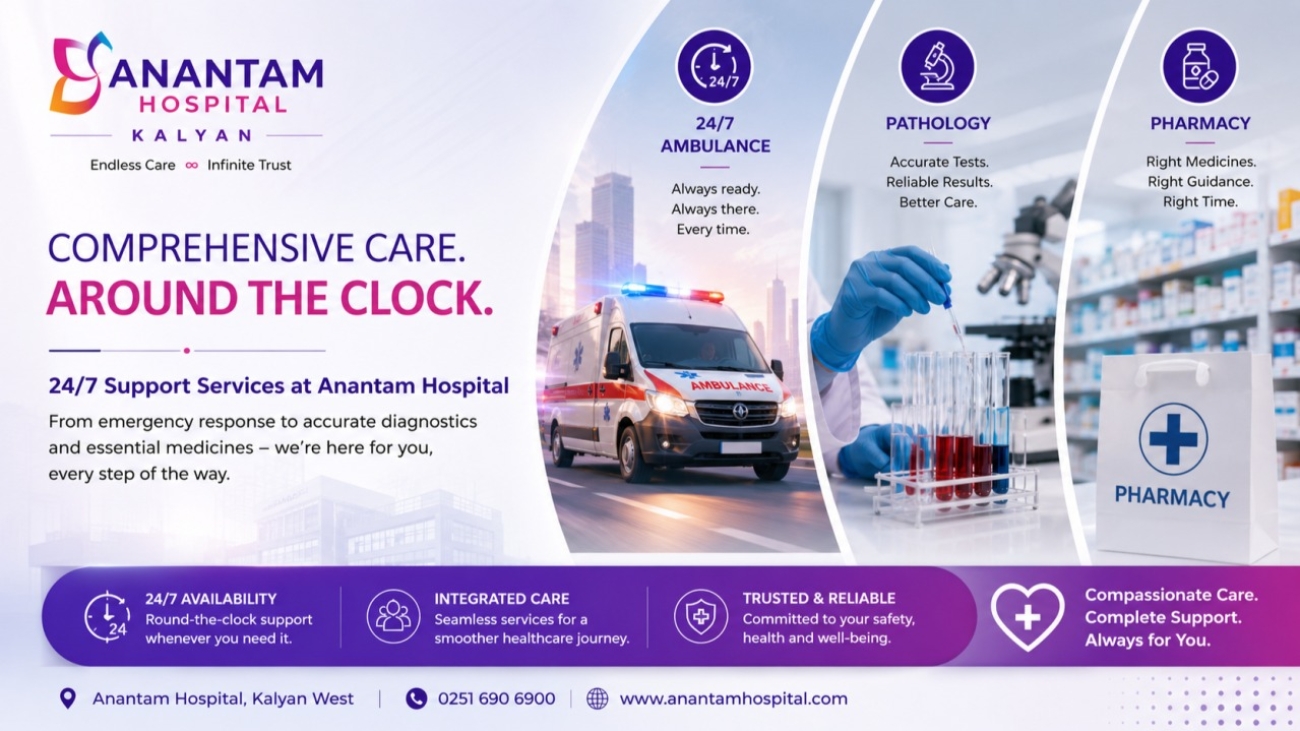
Comprehensive Healthcare Support at Anantam Hospital: 24/7 Ambulance, Pathology & Pharmacy Services

Comprehensive Healthcare Support at Anantam Hospital: 24/7 Ambulance, Pathology & Pharmacy Services

Access to timely and reliable healthcare is essential, especially during medical emergencies. While expert doctors, advanced treatments, and modern facilities play an important role in patient care, supporting services such as ambulance transportation, diagnostic pathology, and pharmacy services are equally important for ensuring a smooth healthcare journey. At Anantam Hospital, these essential services are designed to provide patients and families with convenient, timely, and coordinated medical support under one roof.

24/7 Ambulance Services for Timely Emergency Care
Medical emergencies can occur at any time, and timely transportation can often make a significant difference in a patient’s treatment journey. Anantam Hospital provides 24/7 ambulance services to support patients who require urgent medical attention or safe transportation to the hospital.

A hospital ambulance is more than just a mode of transport. It serves as an important link between the patient and emergency medical care. Trained personnel and essential medical support help ensure that patients receive appropriate care during transportation, depending on their condition and medical requirements.

Whether it is a cardiac emergency, accident, sudden illness, or any other urgent medical situation, timely ambulance support can help reduce delays in reaching the hospital. With round-the-clock availability, Anantam Hospital aims to ensure that patients can access emergency medical support whenever they need it.

Reliable Pathology Services for Accurate Diagnosis
Accurate diagnosis is the foundation of effective medical treatment. Pathology and laboratory investigations help doctors understand a patient’s health condition, identify diseases, monitor treatment progress, and make informed clinical decisions.

At Anantam Hospital, pathology services support a wide range of diagnostic requirements. From routine blood tests and urine examinations to specialized investigations, laboratory testing provides valuable insights into a patient’s overall health. Accurate and timely reports help doctors begin appropriate treatment and monitor the patient’s response over time.

Pathology services are also important for preventive healthcare. Regular health check-ups and diagnostic tests can help identify conditions such as diabetes, infections, anemia, kidney disorders, liver conditions, and other health concerns at an early stage. Early detection allows timely medical intervention and better management of various diseases.

Pharmacy Services for Convenient Access to Medicines
Access to prescribed medicines is an important part of every patient’s treatment journey. Anantam Hospital’s pharmacy services help patients and families conveniently access the medicines recommended by their doctors.

A hospital pharmacy plays an important role in supporting treatment continuity. Patients can obtain prescribed medications while receiving care at the hospital, reducing the need to search for medicines elsewhere. Proper guidance regarding prescriptions and medication requirements also supports safe and effective treatment.

For patients undergoing long-term treatment, timely access to prescribed medicines is particularly important. The pharmacy supports patients by helping ensure that necessary medications are available as part of their overall healthcare experience.

Integrated Healthcare Support Under One Roof
Healthcare involves more than consultation and treatment alone. From the moment a patient requires emergency transportation to the time they undergo diagnostic testing and begin their prescribed medication, every stage of care contributes to the overall treatment experience.

At Anantam Hospital, 24/7 ambulance services, pathology facilities, pharmacy services, emergency care, and specialized medical departments work together to provide integrated healthcare support. This coordinated approach helps reduce delays, improve convenience, and ensure that patients receive comprehensive medical assistance throughout their healthcare journey.

As the best multispeciality hospital in Kalyan West, Anantam Hospital is committed to providing comprehensive medical care supported by essential healthcare services. The hospital also provides access to 24 hour emergency care in Kalyan West, ensuring that patients can receive timely medical attention when urgent care is required.

With its multidisciplinary healthcare services, Anantam Hospital serves as a trusted super speciality hospital in Kalyan West. Patients can access specialized services including cardiology, nephrology, oncology, critical care, surgery, diagnostics, pharmacy, and emergency medical support.

For patients looking for a best hospital near Khadakpada Kalyan West, access to essential support services such as 24/7 ambulance assistance, reliable pathology testing, and convenient pharmacy facilities can make the healthcare experience more efficient and coordinated.

Supporting Better Healthcare Through Every Step
At Anantam Hospital, every aspect of patient care is focused on safety, convenience, and timely medical support. From emergency ambulance services to accurate pathology investigations and accessible pharmacy services, these facilities play an important role in delivering complete healthcare.

With experienced medical professionals, modern facilities, and patient-focused services, Anantam Hospital continues its commitment to providing dependable healthcare support to individuals and families in Kalyan and surrounding areas.

Because quality healthcare is not just about treating illness it is about being there for patients at every step.