
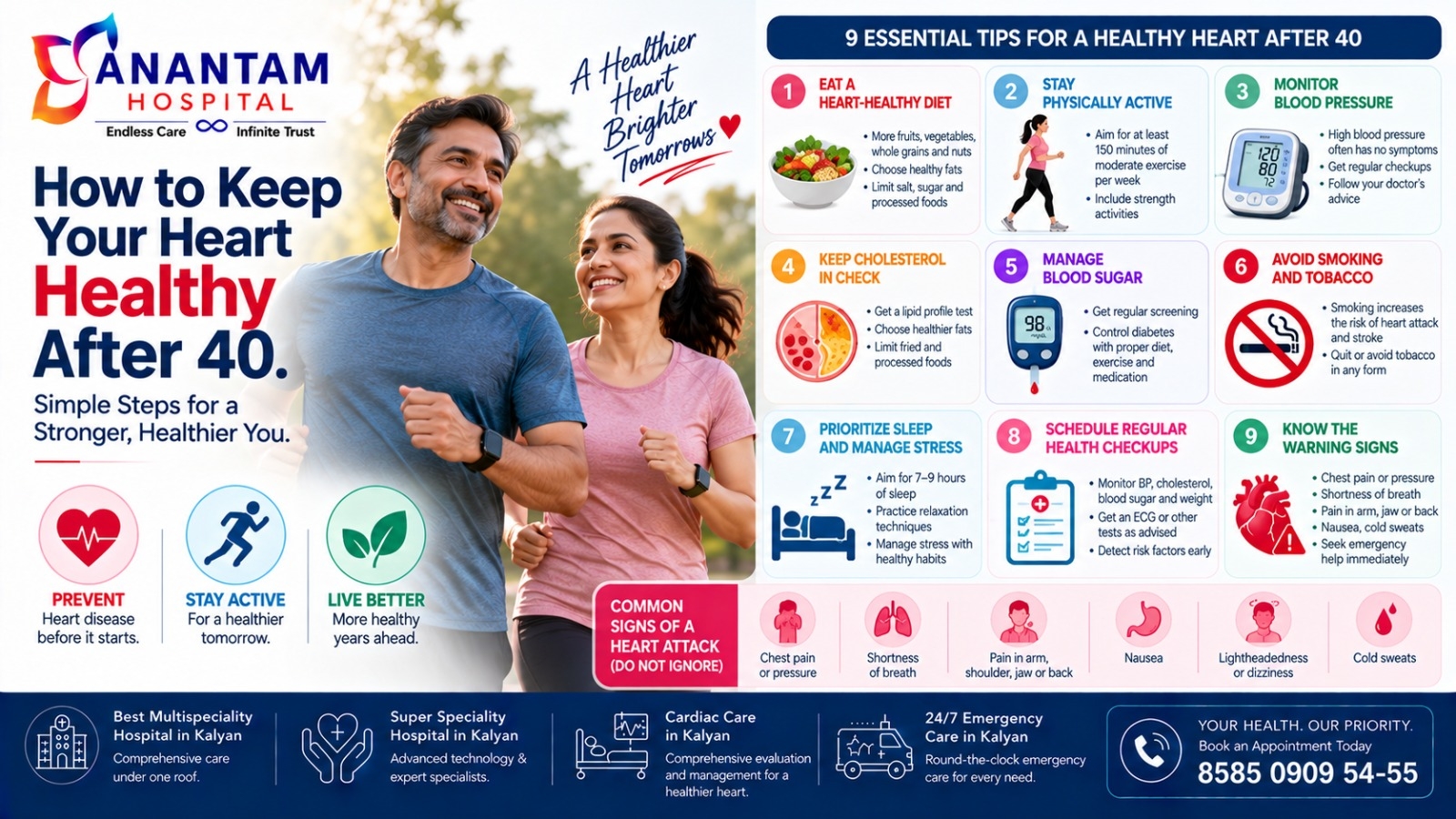
Turning 40 is an important milestone for your health. As we age, the risk of developing conditions such as high blood pressure, high cholesterol, diabetes, and heart disease can increase. However, adopting healthy habits and attending regular health checkups can help protect your heart and support long-term wellbeing.
Heart disease does not always cause noticeable symptoms in its early stages. This makes preventive care particularly important after 40. Understanding your risk factors, making informed lifestyle choices, and seeking medical advice when needed can help you maintain a healthier heart.
At Anantam Hospital, the Best Multispeciality Hospital in Kalyan, patients can access medical consultations, preventive health assessments, and cardiac evaluation to support better heart health at every stage of life.
Why Does Heart Health Matter After 40?
As people grow older, factors such as changes in blood vessels, long-term exposure to high blood pressure, elevated cholesterol, and changes in blood sugar can contribute to cardiovascular disease.
Family history, smoking, physical inactivity, unhealthy eating habits, excess alcohol consumption, and ongoing stress can further increase cardiovascular risk.
Age alone does not mean that heart disease is inevitable. Understanding your personal risk and taking preventive steps can make a meaningful difference.
- Eat a Heart-Healthy Diet
A balanced diet is one of the foundations of cardiovascular health. Choose a variety of vegetables, fruits, whole grains, beans, lentils, nuts, seeds, and other nutritious foods.
Include appropriate sources of protein and choose healthier fats, such as those found in nuts, seeds, and certain vegetable oils. Limit foods high in salt, added sugar, saturated fat, and trans fat, including frequent consumption of highly processed foods and deep-fried snacks.
In Indian households, simple changes can help. Choose whole-wheat roti, dal, vegetables, and salads more often, and moderate the amount of salt and oil used in cooking.
- Stay Physically Active
Regular physical activity helps support healthy blood pressure, cholesterol levels, blood sugar, and body function.
Adults should generally aim for at least 150 minutes of moderate-intensity aerobic activity per week, such as brisk walking, cycling, or swimming, alongside muscle-strengthening activities on two or more days per week, as appropriate for their health and fitness level.
If you have been inactive for a long time or have an existing medical condition, begin gradually and consult your healthcare professional if you are unsure which activities are suitable for you.
- Monitor Your Blood Pressure
High blood pressure is a major risk factor for heart disease and stroke. It often develops without obvious symptoms, so feeling healthy does not necessarily mean your blood pressure is normal.
Check your blood pressure at appropriate intervals, particularly if you have a family history of hypertension, diabetes, kidney disease, or previous elevated readings.
If your blood pressure is consistently high, your doctor may recommend lifestyle changes, medication, or both. Follow-up monitoring helps assess whether your treatment plan is working.
- Keep Cholesterol Levels in Check
Cholesterol is necessary for normal body functions, but unhealthy levels of LDL cholesterol can contribute to plaque buildup in the arteries. Over time, this can increase the risk of heart attacks and strokes.
A lipid profile measures cholesterol and other blood fats. Your doctor can advise when to get tested based on your age, family history, existing conditions, and overall cardiovascular risk.
A heart-healthy diet, regular exercise, avoiding tobacco, and prescribed medication when necessary can help manage cholesterol levels.
- Manage Blood Sugar and Diabetes
Diabetes can damage blood vessels over time and increase the risk of cardiovascular complications. People with diabetes may also have other risk factors, including high blood pressure and abnormal cholesterol levels.
After 40, discuss blood sugar screening with your healthcare provider, especially if you have a family history of diabetes, high blood pressure, excess abdominal fat, or other risk factors.
If you already have diabetes, follow your treatment plan and attend recommended checkups to monitor blood sugar and other cardiovascular risk factors.
- Avoid Smoking and Tobacco
Smoking damages blood vessels, promotes plaque formation, and increases the risk of heart attacks and strokes. Exposure to second-hand smoke can also be harmful.
Avoid cigarettes and other tobacco products. If you smoke, speak with a healthcare professional about support and strategies to help you quit.
Limiting or avoiding alcohol is also a sensible part of a heart-conscious lifestyle, as alcohol can contribute to high blood pressure and other health problems.
- Prioritize Sleep and Stress Management
Sleep and emotional wellbeing are important parts of overall cardiovascular health. Poor sleep and ongoing stress can make it more difficult to manage blood pressure, blood sugar, and other risk factors.
Try to maintain a consistent sleep schedule and aim for around seven to nine hours of sleep each night for most adults.
Relaxation techniques, hobbies, regular physical activity, and spending time with supportive people may help manage stress. If you regularly snore loudly, wake up gasping, or feel excessively sleepy during the day, discuss the possibility of a sleep disorder with your doctor.
8. Schedule Regular Health Checkups
Preventive health checkups can help identify cardiovascular risk factors before they cause noticeable symptoms.
Depending on your medical history and individual risk, your healthcare provider may recommend monitoring:
– Blood pressure – Cholesterol and other blood lipids – Blood glucose or HbA1c – Weight and other relevant health indicators – Kidney function, when appropriate
Not everyone needs the same tests at the same frequency. Your doctor can create a screening schedule based on your personal health profile. An ECG or other cardiac investigation may be recommended when clinically appropriate, but these tests are not necessary for every healthy adult simply because they have turned 40.
9. Know the Warning Signs of a Heart Attack
Even people who follow a healthy lifestyle can develop heart disease. Recognizing the warning signs of a heart attack is therefore essential.
Seek emergency medical help immediately if you or someone else experiences chest pressure, tightness or discomfort; pain spreading to the arm, shoulder, back, neck or jaw; shortness of breath; cold sweats; nausea; or sudden lightheadedness.
Heart attacks do not always cause severe chest pain, and symptoms can differ between individuals. Do not wait for symptoms to disappear before seeking help.
Heart Care at Anantam Hospital
At Anantam Hospital, patients can seek medical guidance for cardiovascular risk assessment, heart-related symptoms, and preventive health management.
As the Best Multispeciality Hospital in Kalyan, Anantam Hospital provides access to multidisciplinary healthcare services to support the early evaluation and management of conditions that may affect heart health.
If you have high blood pressure, diabetes, elevated cholesterol, a family history of heart disease, or concerns about your cardiovascular health, consult a qualified healthcare professional for personalized guidance.
Conclusion
Keeping your heart healthy after 40 does not require complicated changes. A balanced diet, regular physical activity, healthy sleep habits, avoiding tobacco, managing stress, and monitoring blood pressure, cholesterol, and blood sugar can all contribute to better cardiovascular health.
The most important step is to understand your individual risk and take preventive action before problems develop. Regular medical checkups and timely evaluation of unusual symptoms can help you make informed decisions about your heart health.
Take charge of your heart health today with preventive care and expert medical guidance at Anantam Hospital, Kalyan.
Medical Disclaimer: This article is for general health education and does not replace professional medical advice. Screening and treatment recommendations vary according to individual health conditions and cardiovascular risk. Seek emergency medical help if you suspect a heart attack.
meta title, description, geotagging keywords description, image alt, description, etc


Add a Comment