
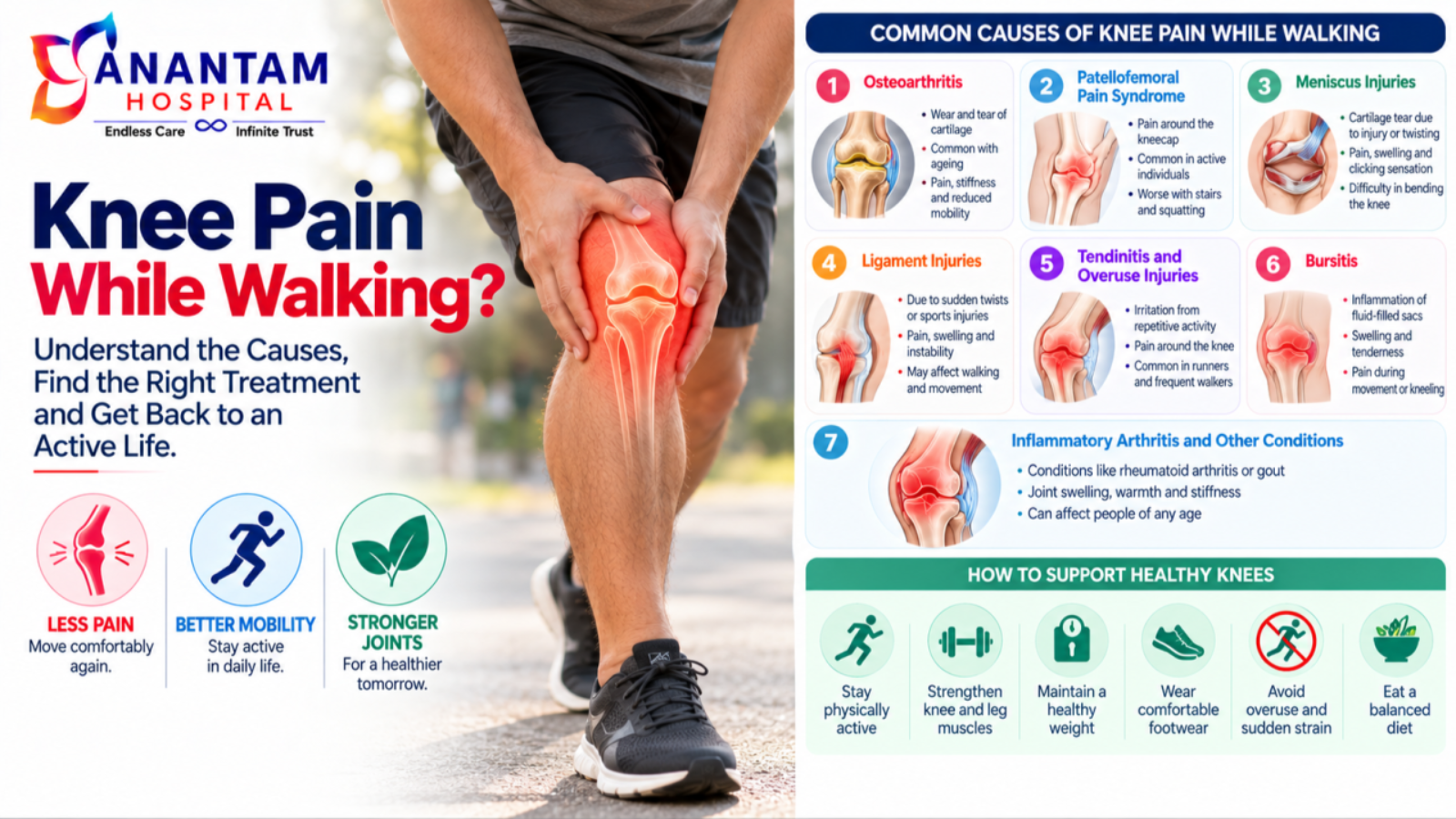
Pain in the knee can make walking, climbing stairs and doing simple tasks difficult. Whilst knee pain is often associated with aging, younger adults and active people can get knee pain due to injury, overuse or joint problems.
Knowing why you could be getting knee pain whilst walking can help you seek the correct medical advice and find the best treatment option.
Common causes of knee pain when walking
- Osteoarthritis
This is a common cause of knee pain especially in older adults. It causes changes to the cartilage and tissues in your joints causing pain, stiffness, swelling and difficulty moving. Symptoms can increase when walking, climbing stairs and after long periods of sitting.
Treatment may include physiotherapy, exercising, modifying activity and medication as advised by your healthcare provider.
- Patellofemoral Pain Syndrome
Pain in or behind the kneecap. Often occurs in runners, those who frequently climb stairs and those who squats or sits with their knees bent for long periods of time.
Often treatment includes modifying your activities and undertaking the correct strengthening exercise.
- Meniscus Injury
The meniscus in your knee is a piece of cartilage which acts as a shock absorber. This can be torn due to sudden twisting or can occur gradually with aging.
Symptoms may include pain, swelling, catching, stiffness and difficulty bending/straightening your knee. Treatment will depend on the severity and type of injury.
- Ligament Injury
Ligaments help provide stability to your knee. These can be damaged due to sudden twisting, falling or sports injuries. This can cause pain, swelling and difficulty walking.
A medical assessment can help determine how bad your injury is.
- Tendonitis and Bursitis
Overuse can cause irritation to the tendons around your knee. Inflammation of small fluid filled sacs known as bursae can cause localised pain, swelling and tenderness.
Treatment may include modifying activities that cause pain and undertaking the correct rehab. If you have a hot swollen knee with fever then seek medical advice promptly.
- Inflammatory Arthritis
Inflammation caused by conditions such as rheumatoid arthritis and gout can cause pain, swelling, heat and stiffness in the knee. It is important to know what condition you have as treatment will depend on the diagnosis.
When to see a doctor for knee pain
If you have ongoing, recurring or worsening knee pain and it is affecting your ability to walk and do everyday activities then seek advice from a healthcare professional.
Seek urgent medical advice if:
You cannot put any weight on your leg.
You have severe pain following an injury.
You have severe swelling or obvious deformity.
You have a hot swollen knee with fever.
These can indicate a problem that needs to be treated quickly.
How is knee pain diagnosed?
Your doctor may perform an examination to look at your knee, check its range of movement and stability and ask questions about your symptoms and medical history.
Depending on what they find they may request:
X-rays – to look at your bones, fractures and joint changes.
MRI – to look for ligament, meniscus or other soft tissue injuries.
Blood tests – to look for inflammatory conditions or infection.
Not everyone will need imaging or blood tests.
Treatment options
Treatment will depend on the cause and severity of your knee pain.
Physiotherapy – Strengthening exercises and improving range of movement can improve function of your joint.
Modify activity – Reducing activities that cause pain can help.
Medication – Your doctor will advise on the correct medication to help with your pain depending on your health.
Braces or walking aids – may be helpful in some cases.
Surgery – Serious injuries or advanced joint problems may require surgery.
Many conditions can be treated without surgery. If you have ongoing knee pain always seek advice from a qualified healthcare professional before taking any medication or undertaking exercise.
How to reduce your risk of knee pain
Simple lifestyle changes can help keep your knees healthy.
Exercise regularly with appropriate low impact exercises.
Strengthen your thigh and hip muscles.
Build up your walking distance and intensity.
Wear comfortable well fitting shoes.
Eat a balanced diet and maintain a healthy weight.
If your pain is recurring or worsening seek medical advice.
FAQs
- Why am I getting knee pain when walking?
You can get knee pain due to osteoarthritis, weak muscles, overuse, tendonitis, meniscus injury and ligament damage. A clinical assessment can help identify the cause.
- Can knee pain be treated without surgery?
Yes many conditions can be treated with physiotherapy, modifying activities and the correct medication. Surgery is only required in some cases.
- When should I be concerned about my knee pain?
If you have ongoing pain or it is affecting your daily activities. If you have severe pain, cannot put any weight through your leg or have a hot swollen knee with fever then seek medical advice.
Take care of your knees
Knee pain can cause difficulties with mobility, comfort and independence. Knowing the symptoms can help you seek medical advice to determine the cause and get the right treatment.
If you want to find out more about knee pain and orthopaedics in Kalyan, Anantam Hospital is a local healthcare provider.
Medical Disclaimer: This article is for general information only and should not be used as a substitute for professional medical advice, diagnosis or treatment.


Add a Comment