
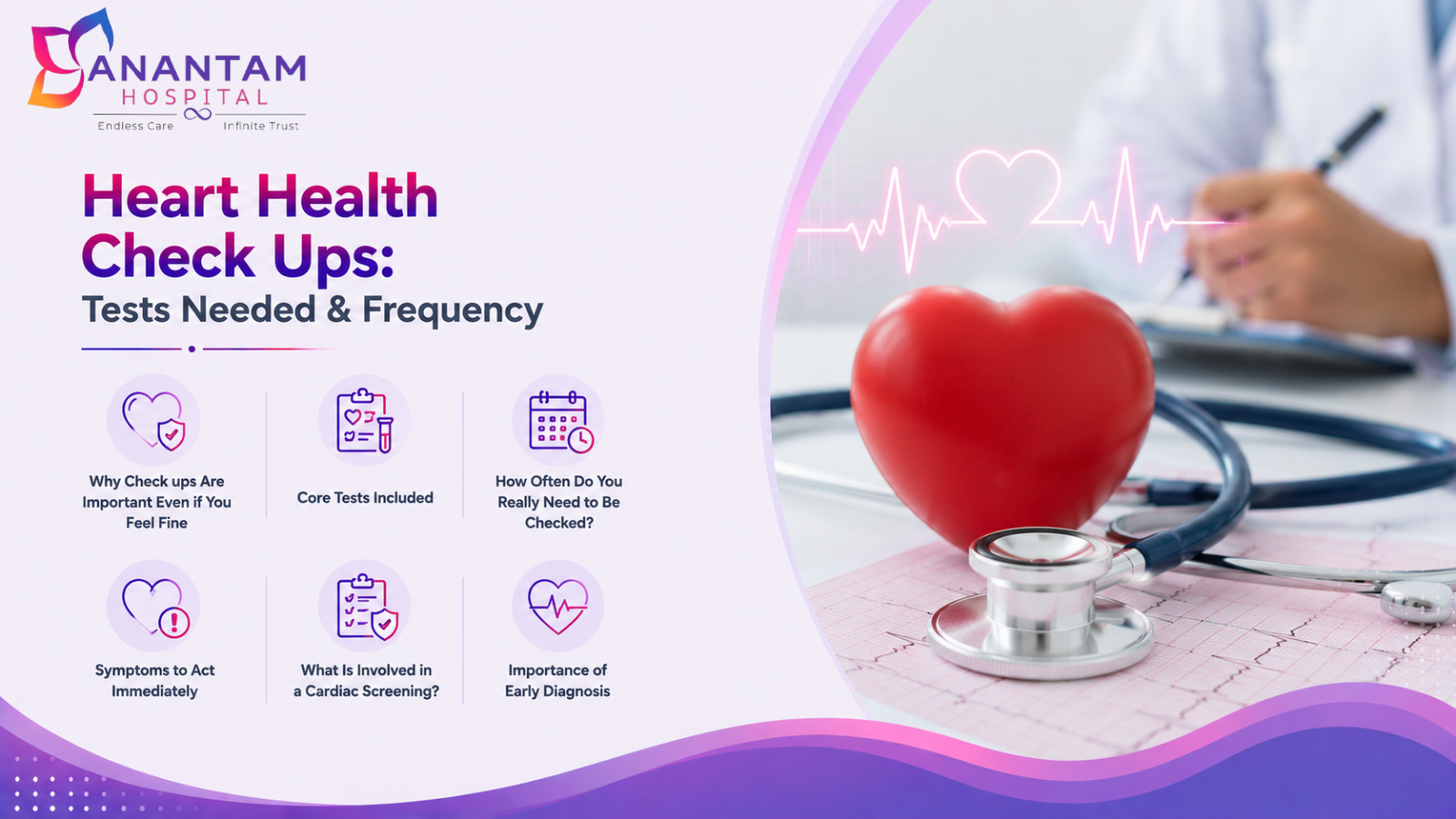
When was the last time you had your heart checked, not just the blood pressure at a random pharmacy, but a real checkup? And if you have no idea when you were last screened, you are in good company. We tend to think about our hearts only if we have some chest pain or another alarming symptom. However, heart health check ups aim to detect possible problems in advance, and this is their entire purpose.
Why Checkups Are Important Even if You Feel Fine
One of the major features of heart diseases is that they start developing without showing any visible symptoms. And even when you feel perfectly okay, you may have already accumulated some plaques in your arteries or your blood pressure may have been rising for many months.
And this is exactly the reason why heart health check ups should be done proactively, as screenings are supposed to find some problems before they become an emergency situation.
The Core Tests Included
It is crucial to understand what heart health check ups include, so that you will be ready to undergo your next screening.
ECG (Electrocardiogram)
- It measures your heart’s electrical activity.
- It is quick, non-invasive and is usually the first test that doctors conduct.
- Can reveal arrhythmias or previous problems with heart.
Echocardiogram
- Ultrasound scan of your heart that evaluates its structure and function.
- Evaluates the performance of your heart and detects possible valve disorders.
Lipid profile
- Blood test that measures your cholesterol level.
- High LDL cholesterol is a significant risk factor of heart disease.
Blood pressure monitoring
- Simple but the most important indicator of your heart health.
- Persistent high levels require further tests, even in absence of other symptoms.
Stress test
- It monitors the performance of your heart under exertion.
- Usually prescribed if you have some risk factors or unusual symptoms such as breathlessness.
How Often Do You Really Need to Be Checked?
There are several factors determining how often you should have heart health check ups, and age and risk factors are among those.
General recommendations are:
- Under 30, low-risk patient: every 2-3 years of basic checkups will do.
- 30 to 45: annual blood pressure and cholesterol checkups will be enough.
- Over 45: year-round comprehensive checkups are needed, including ECG and lipid profile.
- High-risk individuals (family history, diabetes, smoking, obesity): More regular screenings, depending on your doctor’s recommendations
If you belong to high-risk patients, do not rely on “standard” screenings. Discuss your situation with a doctor.
Symptoms That Are a Clear Sign to Act Immediately
Some symptoms are a clear sign to get yourself to the nearest heart specialist today, not in your routine appointments in the future.
- Get yourself to the hospital immediately if you experience: chest pain or tightness (even mild);
- Shortness of breath when doing light exercises;
- Irregular heartbeats or palpitations;
- Excessive fatigue or dizzy spells;
- Swelling in the legs and/or ankles.
None of these symptoms must be ignored and considered just a stress-induced condition or natural aging process.
What Is Involved in a Cardiac Screening?
Visiting a cardiac specialist for a first-time screening may be stressful. Here’s a brief description of what usually occurs during heart health check ups.
The first step of the procedure will be a discussion of your medical history and risk factors. Then, your heart health specialist will measure your vital signs, including heart rate and blood pressure. Depending on your personal risk profile, he/she will recommend an ECG test, blood work or echocardiogram.
All of the tests mentioned above are non-invasive and rather quick to perform. Most of them will yield the results immediately.
The Importance of Early Diagnosis
The early detection of any issues related to your heart health will significantly affect the approach to your treatment. The issue identified at the early stages might be resolved just by lifestyle modifications and monitoring.
The importance of regular heart screenings lies in providing you and your doctor a chance to catch up the problem before it becomes critical.
In Brief
Unlike other medical conditions, heart screenings are necessary for everyone, not just symptomatic or at risk patients. Being able to detect the problem at an early stage makes your life much easier.
If it has been too long since your last cardiac screening or you have never attended the appointment, it is time to change it. Anantam Hospital, which is known as the best multispeciality hospital in Kalyan, provides cardiological services including comprehensive screenings for your heart health.


Add a Comment