Angioplasty Treatment in Kalyan

What is Angioplasty? Everything You Need to Know

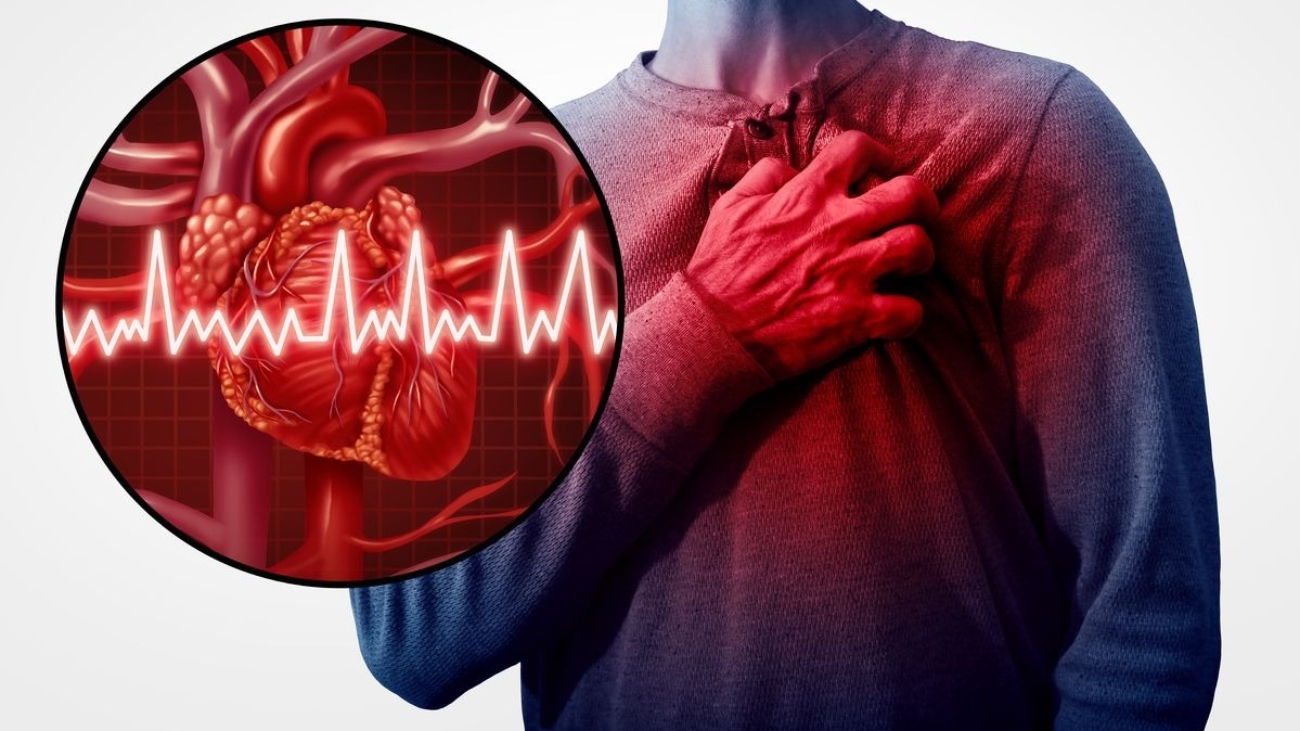
Heart disease remains one of the leading causes of death worldwide, and one of the most common reasons behind heart attacks is the narrowing or blockage of the coronary arteries. These arteries supply oxygen-rich blood to the heart muscle, and when blood flow is restricted, it can lead to chest pain, breathlessness, or even a life-threatening heart attack. Fortunately, advancements in medical science have made it possible to restore blood flow quickly through a minimally invasive procedure known as angioplasty.

If you or a loved one has been advised to undergo angioplasty, it is natural to have several questions about the procedure, its benefits, recovery process, and long-term outcomes. Understanding how angioplasty works can help reduce anxiety and prepare you for a smoother treatment journey.

At Anantam Hospital, recognized as the Best Multispeciality Hospital in Kalyan, our experienced cardiologists, state-of-the-art cardiac care unit, and advanced catheterization laboratory provide world-class heart care with a strong focus on patient safety and successful outcomes.

What is Angioplasty?
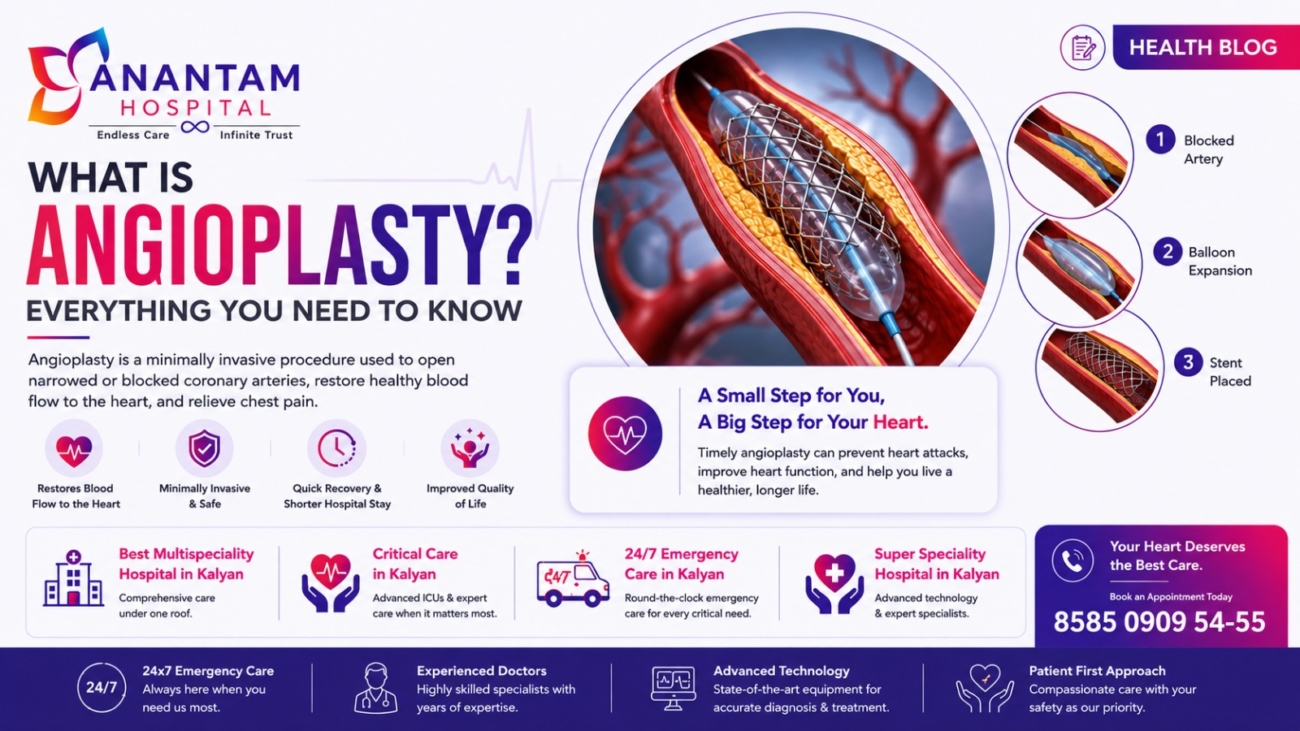
Angioplasty, also known as Percutaneous Coronary Intervention (PCI), is a minimally invasive procedure performed to open blocked or narrowed coronary arteries. Instead of performing open-heart surgery, doctors use a thin flexible tube called a catheter, which is inserted through an artery in the wrist or groin and carefully guided to the blocked artery.

Once the catheter reaches the affected area, a small balloon attached to its tip is inflated. This balloon compresses the plaque against the artery walls, restoring normal blood flow to the heart. In most cases, a small wire mesh tube called a stent is also placed inside the artery to keep it open and reduce the chances of future blockage.

Because angioplasty does not require large surgical incisions, patients usually experience less pain, shorter hospital stays, and faster recovery compared to traditional heart surgery.

Why is Angioplasty Needed?
The coronary arteries can gradually become narrowed due to the buildup of fatty deposits, cholesterol, calcium, and other substances, collectively known as plaque. This condition is called coronary artery disease (CAD). As the arteries narrow, the heart receives less oxygen-rich blood, making it difficult to function efficiently.

Doctors may recommend angioplasty for patients experiencing persistent chest pain (angina), shortness of breath, reduced blood supply to the heart, or after diagnostic tests reveal significant artery blockage. In emergency situations such as an acute heart attack, angioplasty is often performed immediately to restore blood flow and minimize damage to the heart muscle.

Early intervention significantly improves survival rates and reduces long-term complications associated with heart disease.

Symptoms That May Indicate Blocked Heart Arteries
Blocked arteries often develop gradually, and many people ignore the early warning signs. Some of the most common symptoms include persistent chest discomfort or pressure, pain radiating to the left arm, jaw, shoulder, or back, shortness of breath during physical activity, excessive fatigue, dizziness, cold sweats, irregular heartbeat, and nausea. In some individuals, particularly those with diabetes, symptoms may be mild or completely absent until a heart attack occurs.

Seeking immediate medical attention when these symptoms appear can be life-saving.

How is Angioplasty Performed?
The angioplasty procedure is usually completed within one to two hours, depending on the complexity of the blockage. Patients are given local anesthesia at the catheter insertion site, ensuring minimal discomfort while remaining awake throughout the procedure.

A catheter is inserted through an artery in the wrist or groin and guided toward the heart using real-time X-ray imaging. A contrast dye is injected to clearly visualize the blocked coronary artery. Once the blockage is identified, a balloon catheter is positioned and inflated to widen the artery. A stent is then deployed to keep the artery open and maintain healthy blood flow.

After the procedure, the catheter is removed, and pressure is applied to prevent bleeding. Patients are monitored closely before being shifted to recovery.

Types of Stents Used During Angioplasty
Modern angioplasty commonly involves the placement of a stent. Drug-Eluting Stents (DES) slowly release medication that helps prevent the artery from narrowing again, making them the most commonly used option today. Bare Metal Stents (BMS), although less frequently used, may still be appropriate for selected patients based on their medical condition and treatment requirements.

The choice of stent depends on the patient’s overall health, medical history, and recommendations made by the treating cardiologist.

Benefits of Angioplasty
Angioplasty provides rapid relief from symptoms by restoring blood flow to the heart. Patients often experience a significant reduction in chest pain and improved ability to perform daily activities. The procedure reduces the risk of heart attacks, improves heart function, shortens hospital stays, and allows for quicker recovery compared to conventional surgery. Since only a small incision is required, there is less pain, minimal scarring, and a lower risk of infection.

For patients experiencing a heart attack, emergency angioplasty can preserve heart muscle, improve survival rates, and prevent permanent damage.

Are There Any Risks?
Like any medical procedure, angioplasty carries some risks, although serious complications are uncommon when performed by experienced specialists. Possible risks include bleeding at the catheter insertion site, allergic reactions to contrast dye, blood clots, artery damage, irregular heartbeat, infection, kidney complications in susceptible individuals, and rarely, re-narrowing of the treated artery.

At Anantam Hospital, advanced technology, experienced cardiologists, and strict safety protocols significantly reduce these risks while ensuring the highest standards of patient care.

Recovery After Angioplasty
Recovery following angioplasty is generally quick. Most patients are able to walk within a few hours and return home within one or two days, depending on their condition. During the recovery period, patients should avoid strenuous activities for a short time, take prescribed medications regularly, attend scheduled follow-up appointments, maintain adequate hydration, and monitor the catheter insertion site for any unusual swelling or bleeding.

Complete recovery varies from person to person, but many individuals resume their normal routine within a week after consulting their doctor.

Lifestyle Changes After Angioplasty
While angioplasty restores blood flow, it does not cure coronary artery disease. Maintaining long-term heart health requires healthy lifestyle choices. Patients should adopt a balanced diet rich in fruits, vegetables, whole grains, and lean proteins while reducing the intake of saturated fats, processed foods, and excess salt. Regular physical activity, maintaining a healthy weight, controlling blood pressure, diabetes, and cholesterol levels, quitting smoking, limiting alcohol consumption, managing stress, and following prescribed medications all play a crucial role in preventing future heart problems.

These lifestyle modifications significantly improve long-term outcomes and reduce the chances of repeat procedures.

When Should You Seek Emergency Medical Care?
Never ignore symptoms that could indicate a heart attack. Severe chest pain lasting more than a few minutes, pain spreading to the arm, jaw, or back, sudden breathlessness, excessive sweating, fainting, nausea, or loss of consciousness require immediate medical attention.

Prompt treatment during the “golden hour” can save heart muscle and greatly improve survival. Anantam Hospital provides 24/7 Emergency Care in Kalyan, ensuring that experienced emergency physicians and cardiologists are available round the clock to respond to cardiac emergencies without delay.

Why Choose Anantam Hospital for Cardiac Care?
Choosing the right hospital is one of the most important decisions when it comes to heart health. As a Super Speciality Hospital in Kalyan, Anantam Hospital offers comprehensive cardiac services under one roof, supported by advanced medical technology and a multidisciplinary team of specialists.

Patients benefit from experienced interventional cardiologists, advanced cardiac catheterization facilities, modern diagnostic imaging, comprehensive cardiac rehabilitation, intensive monitoring, and personalized treatment plans. Our dedicated Critical Care in Kalyan unit is equipped to manage complex cardiac emergencies with continuous monitoring and expert medical support.

Whether it is emergency angioplasty, preventive heart screening, or long-term cardiac care, our commitment is to provide safe, evidence-based treatment focused on improving patient outcomes and quality of life.

Angioplasty has transformed the treatment of coronary artery disease by offering a safe, effective, and minimally invasive solution for restoring blood flow to the heart. Early diagnosis, timely intervention, and appropriate lifestyle changes can significantly reduce the risk of future cardiac events and help patients lead healthier lives.

If you experience persistent chest pain, breathlessness, or any symptoms suggestive of heart disease, do not delay seeking medical attention. At Anantam Hospital the Best Multispeciality Hospital in Kalyan, our expert cardiologists, advanced cardiac facilities, Critical Care in Kalyan, 24/7 Emergency Care in Kalyan, and comprehensive healthcare services ensure you receive the highest standard of treatment when every second matters.

2d echocardiography heart care

Understanding 2D Echo: Why Echocardiography is Essential for Early Heart Care

Heart diseases continue to be one of the leading health concerns worldwide, making early diagnosis more important than ever. Many heart conditions develop gradually and may not show obvious symptoms until they become serious. Advanced diagnostic tests such as a 2D Echocardiography (2D Echo) help doctors detect heart problems at an early stage, allowing timely treatment and better patient outcomes. At Anantam Hospital, we offer advanced cardiac diagnostic services with a focus on accurate diagnosis, compassionate care, and personalized treatment plans for every patient.

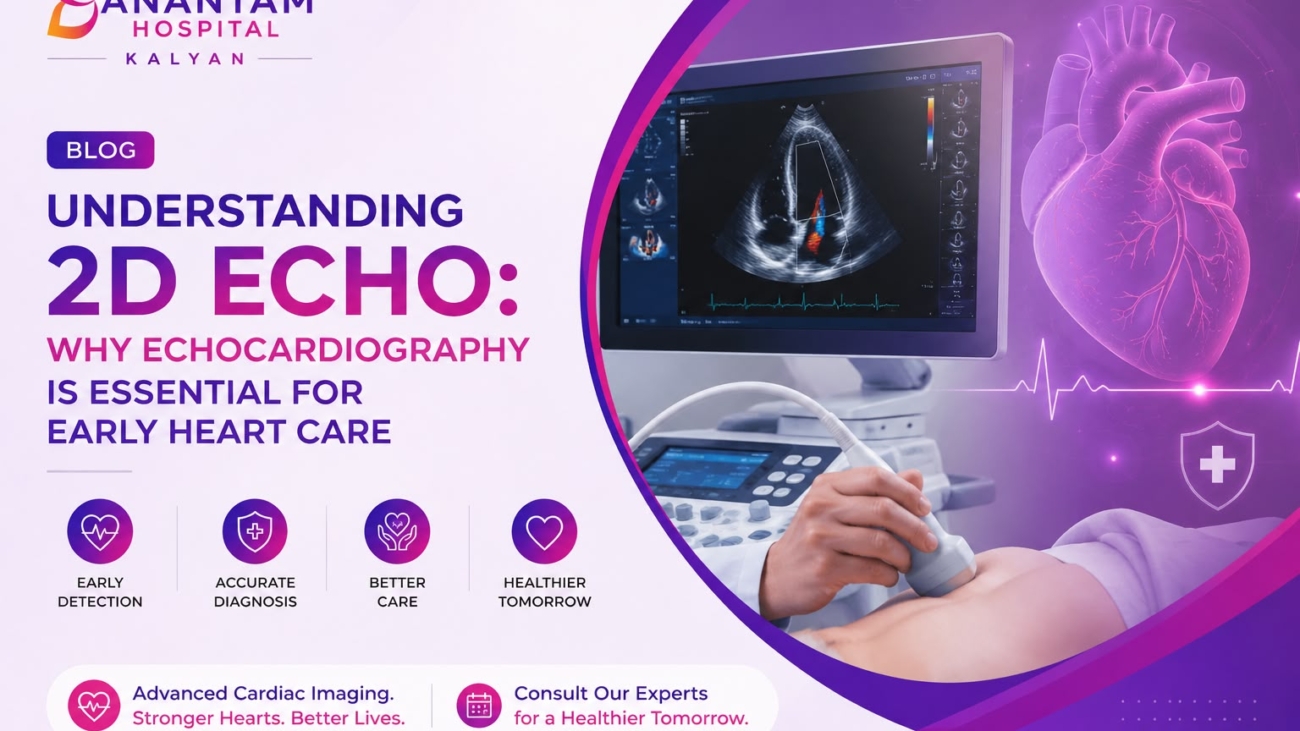
A 2D Echo, also known as Echocardiography, is a safe, painless, and non-invasive ultrasound test that uses sound waves to create real-time images of the heart. Unlike procedures that involve radiation or surgery, a 2D Echo is completely non-invasive and provides valuable information about the heart’s structure, function, valves, chambers, and blood flow. It allows cardiologists to assess how efficiently the heart is pumping and identify abnormalities before they progress into serious conditions.

Doctors often recommend a 2D Echo for patients experiencing symptoms such as chest pain, shortness of breath, palpitations, dizziness, swelling in the legs, unexplained fatigue, or irregular heartbeats. The test is also advised for individuals with high blood pressure, diabetes, previous heart attacks, congenital heart disease, or a family history of cardiovascular conditions. Early evaluation through echocardiography can help detect heart valve disorders, weakened heart muscles, heart failure, congenital abnormalities, and fluid around the heart.

The procedure itself is simple and comfortable. During the examination, a trained cardiac technician places a small ultrasound probe on the patient’s chest using a special gel. High-frequency sound waves produce detailed images of the heart, enabling the cardiologist to evaluate heart function in real time. The test usually takes between 20 and 40 minutes and does not require any recovery time, allowing patients to resume their daily routine immediately after the examination.

At Anantam Hospital, our cardiology department combines experienced specialists with advanced diagnostic technology to deliver accurate and reliable cardiac assessments. Every patient receives a detailed evaluation followed by expert guidance based on their individual health condition. Our goal is not only to diagnose heart diseases but also to help patients understand their heart health and take preventive steps to reduce future risks.

Regular heart check-ups and timely diagnostic investigations play a crucial role in preventing serious cardiovascular complications. Lifestyle-related conditions such as obesity, stress, hypertension, diabetes, and unhealthy eating habits have significantly increased the risk of heart disease across all age groups. Early diagnosis through tests like 2D Echo enables doctors to initiate treatment before complications become life-threatening.

As the best multispeciality hospital in Kalyan West, Anantam Hospital is committed to providing comprehensive cardiac care supported by modern diagnostic facilities and experienced medical professionals. From preventive heart screenings to advanced treatment and emergency cardiac care, patients receive complete support under one roof. Our hospital is also recognized as a trusted cardiology hospital in Kalyan West, offering patient-centric healthcare focused on safety, accuracy, and long-term heart wellness.

In addition to cardiac services, Anantam Hospital offers multidisciplinary care as a super speciality hospital in Kalyan West, with dedicated departments for oncology, critical care, nephrology, surgery, and emergency medicine. Whether you require preventive health check-ups, advanced diagnostics, or specialized treatment, our experienced healthcare team is committed to delivering quality care with compassion.

Your heart deserves timely attention. If you experience symptoms related to heart health or have risk factors for cardiovascular disease, consult a specialist without delay. Early diagnosis through a simple 2D Echo can make a significant difference in preventing future complications and ensuring a healthier life.

At Anantam Hospital, we remain committed to providing advanced cardiac diagnostics, expert medical care, and personalized treatment to help every patient live a healthier, stronger, and more confident life.

Primary angioplasty (PAMI) and CABG cardiac treatment services at Anantam Hospital

Primary Angioplasty (PAMI) and CABG Services at Anantam Hospital

Heart-related diseases have become increasingly common due to changing lifestyles, stress, unhealthy eating habits, lack of exercise, smoking, diabetes, and high blood pressure. Conditions affecting the heart and blood vessels can become life-threatening if not diagnosed and treated at the right time. Among the advanced cardiac treatment procedures available today, Primary Angioplasty (PAMI) and Coronary Artery Bypass Grafting (CABG) are two important treatments used to restore proper blood flow to the heart and improve heart function. At Anantam Hospital, advanced cardiac care services are focused on providing timely diagnosis, expert treatment, and compassionate care for patients with serious heart conditions.

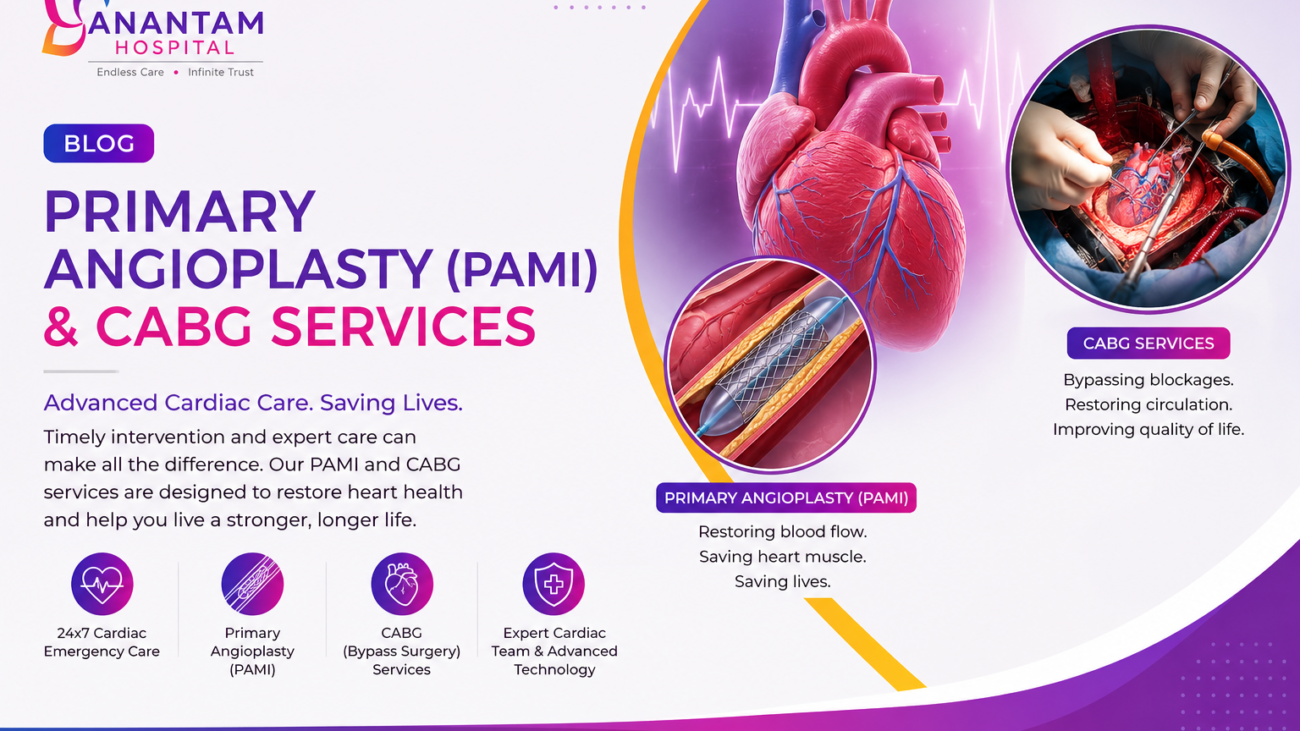
Primary Angioplasty, also known as PAMI, is an emergency heart procedure commonly performed during a heart attack. It is used to quickly open blocked arteries and restore blood flow to the heart muscles. During the procedure, a small balloon and stent are inserted through a blood vessel to remove the blockage and improve circulation. Timely angioplasty can significantly reduce heart damage, improve recovery chances, and save lives during critical cardiac emergencies. Fast medical attention is extremely important because delays in treatment can increase complications and affect heart function permanently.

Coronary Artery Bypass Grafting, commonly known as CABG or bypass surgery, is another important cardiac procedure used to treat severe blockages in the coronary arteries. In this surgery, healthy blood vessels from another part of the body are used to create a new pathway for blood flow around blocked arteries. CABG is usually recommended for patients with multiple artery blockages, severe coronary artery disease, or conditions where other treatments may not provide sufficient results. The procedure helps improve blood circulation to the heart, reduce chest pain, and lower the risk of serious heart complications.

At Anantam Hospital, cardiac care services focus on early diagnosis, accurate evaluation, and personalized treatment planning according to each patient’s health condition. Experienced healthcare professionals carefully monitor patients before, during, and after treatment to ensure safety and effective recovery. The hospital aims to provide comprehensive heart care with patient comfort, advanced medical support, and continuous monitoring throughout the treatment journey.

Recovery and lifestyle management are also important aspects of heart treatment. Patients are guided about healthy eating habits, physical activity, stress management, medication adherence, and regular follow-up care to maintain heart health after procedures like PAMI or CABG. Adopting a healthier lifestyle can help reduce future cardiac risks and improve overall quality of life.

Heart disease can often develop silently, making regular health checkups and early medical attention extremely important. Symptoms such as chest pain, breathlessness, excessive fatigue, sweating, dizziness, or discomfort in the arms and shoulders should never be ignored. Seeking timely treatment can prevent severe complications and improve survival outcomes significantly.

With experienced medical professionals, advanced cardiac care, and patient-centered healthcare services, Anantam Hospital is committed to helping patients receive effective heart treatment and long-term cardiac support. The hospital focuses on improving heart health, promoting faster recovery, and helping individuals lead healthier and more active lives with confidence and care.

Cardiology in kalyan

Heart Health 101: Expert Tips from Anantam Hospital’s Cardiology Department

Introduction

Your heart works tirelessly every second, pumping blood and oxygen throughout your body. Despite its importance, heart health is often ignored until noticeable symptoms appear. At Anantam Hospital, the Cardiology Department emphasizes preventive care, early diagnosis, and advanced treatments to ensure long-term heart wellness.


Why Heart Health Matters

Heart-related conditions continue to be one of the leading health concerns globally. Lifestyle choices such as unhealthy eating habits, lack of physical activity, stress, and smoking contribute significantly to cardiovascular diseases. However, maintaining heart health is not just about avoiding illness, it is about improving your overall quality of life and longevity.


Recognizing Early Warning Signs

The body often sends early signals before a serious heart condition develops, but these signs can easily be overlooked. Symptoms such as persistent chest discomfort, shortness of breath, unusual fatigue, irregular heartbeat, or swelling in the lower body should never be ignored. Early medical intervention can prevent complications and potentially save lives.


Building a Heart-Healthy Lifestyle

Maintaining a healthy heart begins with everyday choices. A balanced diet that includes fresh fruits, vegetables, whole grains, and lean proteins supports cardiovascular health, while reducing processed foods helps prevent risk factors. Regular physical activity strengthens the heart and improves circulation, even simple activities like walking can make a difference. Managing stress is equally important, as long-term stress can negatively impact heart function. Practices such as meditation, yoga, or mindful breathing can help maintain emotional and physical balance. Routine health check-ups also play a vital role in detecting potential issues before they become serious.


Advanced Cardiac Care at Anantam Hospital

Anantam Hospital’s Cardiology Department combines modern technology with experienced medical professionals to deliver comprehensive care. From preventive screenings to advanced diagnostic procedures and personalized treatment plans, the focus is always on patient-centric care. The department is equipped to handle a wide range of heart conditions while ensuring comfort, safety, and effective outcomes.


Conclusion

Taking care of your heart is a lifelong commitment that begins with awareness and small daily habits. By staying proactive and making informed lifestyle choices, you can significantly reduce the risk of heart disease. Anantam Hospital stands as a trusted partner in your journey toward better heart health, offering expert care and guidance every step of the way.

Heart disease awareness and cardiac health care services at Anantam Hospital

Why Heart Disease Is Increasing Among Young Adults Today

Heart disease is something that people usually think happens to people but
lately doctors have seen that more young people are having heart problems.
Nowadays a lot of people in their twenties and thirties are getting diagnosed
with things like blood pressure, high cholesterol and heart disease. This is
happening because of the way we live our lives now. We have schedules, we sit
a lot at work and our daily habits are not very good for our health. Young
people have to deal with work, school and social things so they do not have a lot
of time to take care of their health. Because of this they often eat at times, do
not get enough exercise and spend too much time looking at screens. Heart
disease is a problem. The fact that young people are getting heart disease
shows that we need to think about how the things we do every day can affect
our heart health over time. We need to think about heart disease and how it can
affect us. Heart disease is an issue and we should think about heart disease
when we make choices, about our lifestyle.
One big reason for this trend is that people are sitting around more and more.
Many young workers and students spend hours sitting at computers in meetings
studying or on devices. Technology has made us more efficient and connected.
It’s also made us move less in our daily lives. Not exercising regularly can slowly
make your heart weaker, make you gain weight and raise your risk of metabolic
problems. People’s eating habits have changed a lot too. Busy schedules often
mean relying on food, processed meals and packaged snacks that are easy but
high in salt, bad fats and sugars. These eating habits can lead to cholesterol,
obesity and high blood pressure. Modern life can be really stressful too. Work
expectations, financial stress, school competition and social pressure can cause
stress, which can hurt your heart by raising blood pressure and changing your
hormones. When you add habits like smoking, vaping or drinking too much the
risk to your heart health gets even bigger. The increasing adoption of lifestyles
is a major contributor to this trend. Many young professionals and students
spend hours sitting while working on computers or using digital devices. A lack
of exercise can gradually weaken cardiovascular endurance and contribute to
weight gain. Dietary habits have also shifted considerably with busy schedules
encouraging reliance on fast food and processed meals. The pressures of life
can create significant mental and emotional stress, which can negatively affect
heart health. Career expectations and financial responsibilities may lead to
stress. Unhealthy coping habits such as smoking or frequent alcohol
consumption may increase the risk to health further.
Heart disease is a problem for young adults and it is getting worse. One reason
for this is that more and more young people are getting health problems
because of the way they live. Lots of people are getting obesity, type 2 diabetes
and high cholesterol at a young age. This is mostly because they do not eat well.
They do not have a regular daily routine. Many young people also have trouble
sleeping because they stay up late to work or watch screens. When you do not
sleep well your body can not fix itself. You can get hormonal problems, high
blood pressure and metabolism problems. With all these warning signs many
young adults think they are not at risk for heart disease. So when they get
symptoms like feeling tired all the time, chest pain or trouble breathing they
might ignore it or think it is just because they are busy…. If young adults know
more about heart disease and take care of themselves they can avoid these
problems. They can do things, like exercise, eat healthy food, manage their
stress and sleep at the same time every day. Going to the doctor regularly.
Getting help early can also find problems before they get serious. If young
adults take care of themselves and make choices they can protect their heart
health and avoid heart disease when they get older. Heart disease is a deal and
young adults need to think about it. They need to think about heart health and
do things to keep their heart healthy. Heart health is important and young
adults should take it seriously.