

Patient with toe bone fracture treatment options at Anantam Hospital

Toe Bone Fracture Treatment: What To Do After Incurring An Accident

Have you ever stubbed your toe so hard it left you seeing stars? You may have a broken toe. It is no surprise that toe injuries are not always as they seem. In this article, we will go over how to identify a broken toe, what toe bone fracture treatment consists of, and when it is necessary to seek medical attention instead of waiting it out.

How You Could Have Broken Your Toe

A toe injury can happen in a number of ways, from stubbing your toe running into furniture or doorways, dropping something heavy on your foot, or playing sports. You may have fallen or slid and landed on your foot awkwardly or simply misjudged the height of a step.

It does not take a lot of force to break your toe.

Fracture, Sprain Or Bruise

It is understandable you might not know if your leg injury is a simple fracture, sprain, or a bruise. These are the signs that lead to the diagnosis of a fracture:

  • Noticeable swelling beginning soon after the injury
  • Bruising or discoloration
  • Inability to put weight or pressure on your foot
  • Disfigured, deformed toe
  • Pain localized on the site of injury

The signs of a sprained toe are similar, but typically less severe. If you are unsure what kind of injury you have, it is best to assume the worst and seek medical attention.

It is important to get an x-ray of the injured toe to determine what the appropriate course of action is.

Understanding Toe Fractures

Once diagnosed, it is important to understand what kind of fracture you have so you know what to expect with regards to toe bone fracture treatment as well as your course of recovery. Simple fractures are also known as non-displaced fractures. These fractures do not require surgery. Displaced fractures, on the other hand, do require surgery.

Toe Bone Fracture Treatment

There are several types toe bone fracture treatment, varying in severity. The most common treatment for a fractured toe is buddy taping. Other toe bone fracture treatment may consist of splints, casts or surgery. Surgery is typically only required for displaced fractures.

RICE Therapy

Rice therapy is a part of toe bone fracture treatment as well as recovery. Even if you have to go through toe bone fracture treatment, following this method can hasten your road to recovery and keep you from experiencing discomfort. The RICE method consists of:

  • Rest
  • Ice
  • Compression
  • Elevation

Toes are very sensitive and toe injuries are very painful. Luckily, there are drugs available to help you alleviate some of the discomfort you may be feeling.

How Long Will It Take To Heal

The healing process of a fractured toe varies depending on the severity of the fracture and how well the toe is taken care of. Simple fractures typically take around 6 weeks to heal. It is not advised to put any weight or pressure on the injured toe throughout the healing process. A displaced fracture may take longer to heal fully and in some cases require surgery.

Even if the fracture has healed completely, it may still take a few more weeks for the toe to re-gain full mobility. Although a fractured toe may seem simple, it is very important to take proper care of your foot if you are to make a swift, full recovery. It is important to remember to get the injured toe examined if you are not sure what kind of injury you have.

The right kind of toe bone fracture treatment will assist you in a swift and full recovery.

When Should You See A Doctor

Although it may seem that your injury can wait, in some cases, a fractured toe can be an emergency. A trip to the ER is necessary if you experience any of the following:

  • Deformed toe
  • Numbness
  • Blue toes
  • Open wounds near the fracture
  • Inability to put any weight or pressure on your foot
  • Increasing pain after a few days

If you experience any of the above symptoms, medical attention is required.

Conclusion

Getting your toe examined will enable you to receive the necessary toe bone fracture treatment and help you recover faster and with less discomfort. It is not uncommon for minor injuries to be self-diagnosed, however, a fracture is much more serious than it seems.

If you are experiencing pain and discomfort in your toe, do not wait to get it examined. Anantam Hospital, the best multispeciality hospital in Kalyan, offers 24×7 Emergency Care and Orthopedic consultations to help you determine what the best course of action is.
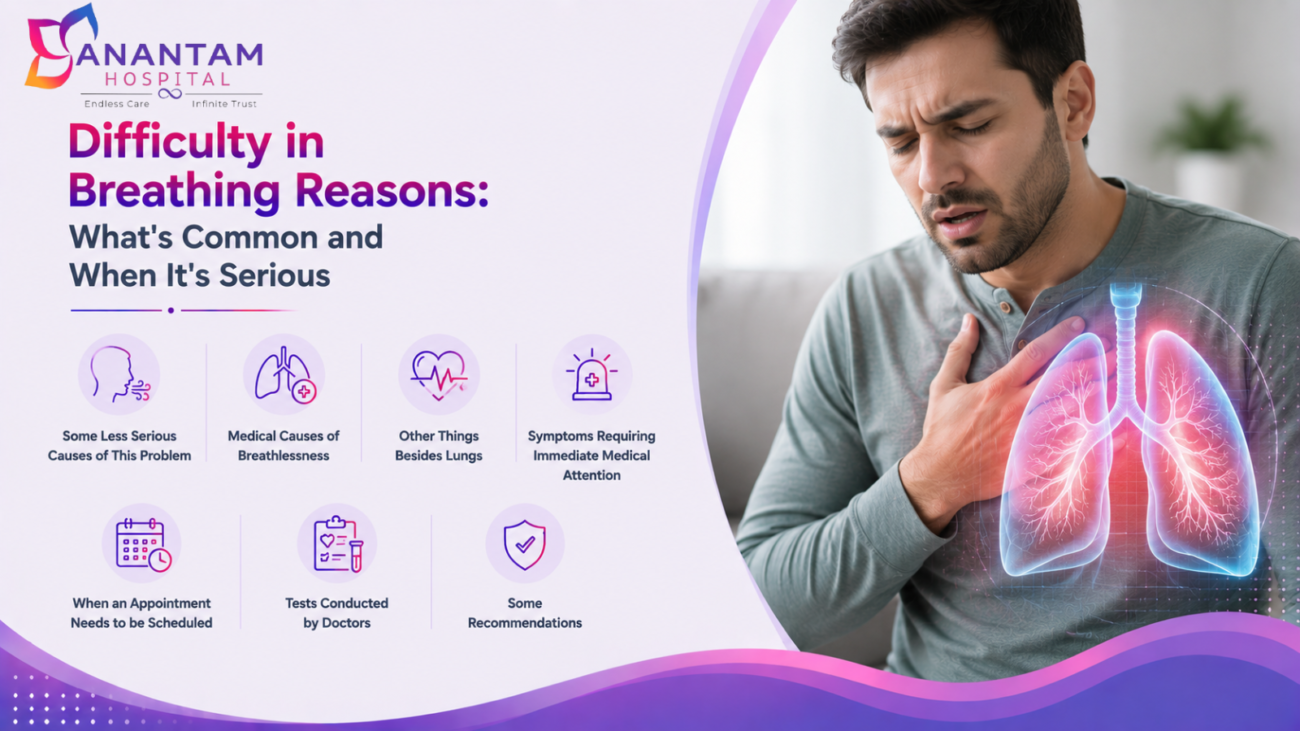
Person experiencing difficulty in breathing at Anantam Hospital

Difficulty in Breathing Reasons: What’s Common and When It’s Serious

Have you ever had trouble getting a proper breath after climbing just one flight of stairs, or felt the same way when you first woke up? Even if it turns out not to be anything serious, this problem needs a bit more exploration. The symptom of breathlessness ranges from being trivial to potentially being life-threatening. Knowing about difficulty in breathing reasons is essential in order to determine what type of condition you might be suffering from.

Some of the Less Serious Causes of This Problem

There are many possible reasons behind a sudden shortage of breath, not all of which are actually very worrying.

The common causes include:

  • Physical exertion when the body was not prepared, especially if you don’t have much physical fitness and did something exhausting;
  • Anxiety or panic attacks when breathlessness happens due to psychological stress rather than any physical reasons;
  • Bad posture, especially if you’re used to slouching a lot and limit yourself in expanding your lungs while doing so;
  • Respiratory infections such as a common cold;
  • Being at high altitudes or excessively hot weather.

None of these will do you any harm other than making you uncomfortable, but they should still draw your attention if you feel them too often.

The Medical Causes of Breathlessness You Need to Be Aware Of

There are several medical conditions which should definitely appear in your list of possible difficulty in breathing reasons. Some of them won’t require permanent treatment but will demand you pay more attention to your health.

Respiratory Diseases

  • Asthma, the disease which leads to swelling of airways and is triggered both by allergy and physical activity;
  • Chronic obstructive pulmonary disease which develops in people who smoke regularly and negatively affects the lungs;
  • Pneumonia that causes fluid build-up in the lungs.

Cardiovascular Diseases

  • Heart failure that makes the pumping function of your heart weak and causes fluid accumulation in the body;
  • Problems with coronary arteries that affect blood flow and make the patient feel breathlessness and pain in the chest.

Other Causes

  • Anemia which lowers your red blood cell count and therefore makes you prone to feeling breathless;
  • Obesity which puts additional load on your lungs and heart.

Sometimes It’s Not About Your Lungs

The common misconception regarding difficulty breathing lies in that not every single case of it means lung problem. In some cases, it can be related to such health issues as heart problems, blood issues, and even psychological problems.

That is exactly why a doctor will not only check your lungs if you claim you have difficulty breathing but he or she will conduct a series of tests that will evaluate other aspects of your health as well.

Symptoms Requiring Immediate Medical Attention

Sometimes certain symptoms of difficulty breathing cannot be neglected. You need to see your doctor immediately in case:

  • You feel sudden and severe breathlessness
  • You have chest pain or pressure along with breathing problems
  • Your lips and/or fingers appear blue
  • You feel difficulty breathing even during rest or lying position
  • You experience confusion or severe fatigue along with breathing problems

You should not put off such symptoms, they require immediate attention.

When You Can Go With a Scheduled Appointment

Of course, not all symptoms of breathlessness require going to the ER. Sometimes, mild and occasional breathing problems caused by physical effort and minor illnesses do not require urgent medical attention.

However, if your difficulty breathing happens regularly, takes place for prolonged periods of time and interferes with your daily routine, you should not postpone your consultation.

Tests Doctors Conduct To Identify The Reason

In most cases, a combination of several simple tests allows determining the exact reason of your breathing difficulty symptoms.

  • Chest X-ray for evaluating the presence of inflammation, infection, or any other problems with your lungs
  • Pulmonary function tests to identify the problems with lung functioning
  • ECG for determining if the reason of difficulty breathing is heart-related
  • Blood test for determining the presence of anemia or any infectious conditions

These simple tests usually give an accurate diagnosis of your problem.

Some Recommendations That Help

Several habits that always help, regardless of the reason of difficulty breathing.

  1. Keep your body weight normal, to reduce the load on your heart and lungs
  2. Never smoke and avoid being around people who smoke
  3. Exercise to improve lung capacity
  4. Keep stress levels low, because anxiety may affect your breathing
  5. Treat respiratory infections timely, do not let them get worse

Conclusion

Shortness of breath may range in meaning from simple shortness of breath to something that requires urgent care. Understanding the usual causes of breathlessness and the warning signs is what will allow you to deal appropriately rather than underestimating the situation or letting yourself get scared unnecessarily.

If you have been dealing with an unusual shortness of breath recently, you should see a doctor immediately rather than hope that it gets better on its own. Anantam Hospital, rated as the best multispeciality hospital in Kalyan with 24/7 emergency care, provides all-round evaluation of your condition through their Pulmonology and Cardiology Departments.

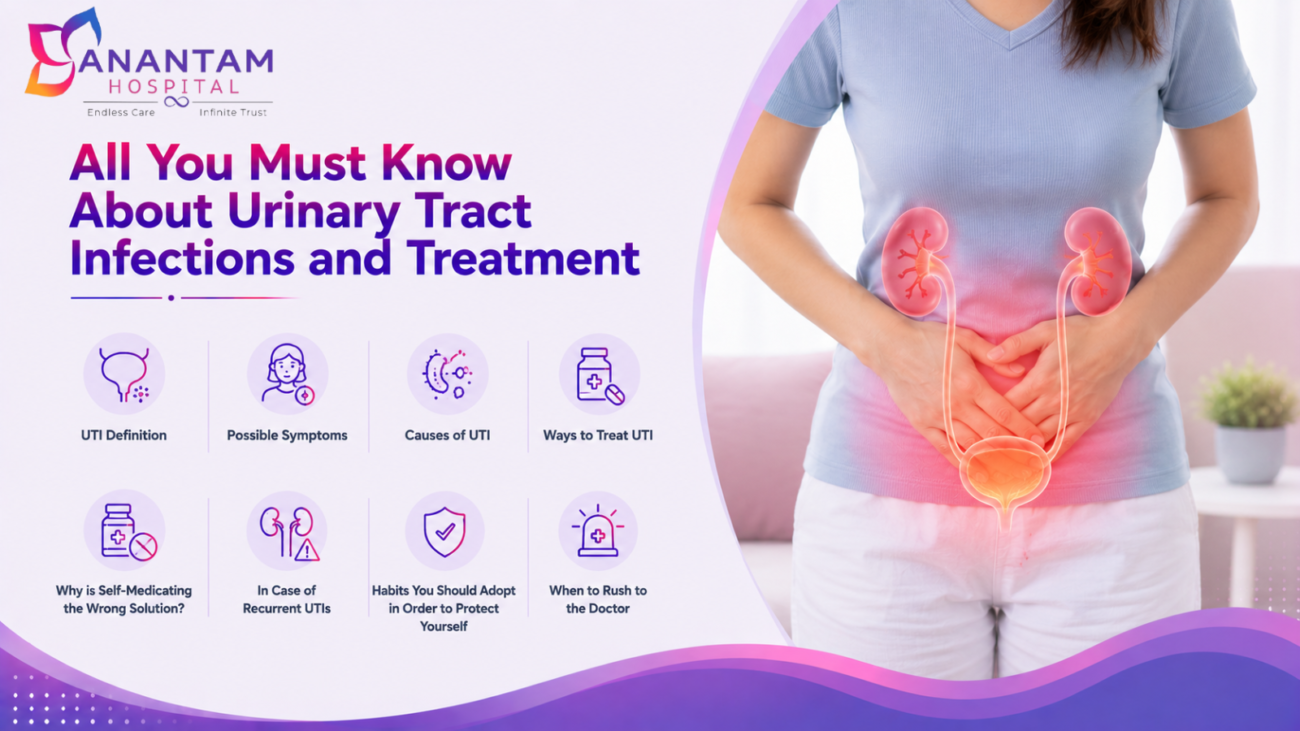
Urinary Tract Infections and Treatment at Anantam Hospital

All You Must Know About Urinary Tract Infections and Treatment

Do you remember that burning sensation every time you urinated followed by urgent feeling that you need to urinate all over again in 5 minutes? Yep, you have most probably got a UTI infection, and this problem affects many people. Urinary tract infections are very common but somehow still under-discussed problem. Proper treatment of urinary tract infections and treatment requires knowing about it in detail.

UTI Definition

UTI stands for urinary tract infection. UTI infection happens when bacteria infect your urinary system. It may affect your bladder, urethra, or even your kidneys in case of advanced infection.

UTIs are more common among women because of their anatomy. Women tend to have shorter urethra and because of that, it is easier for bacteria to enter into their bladder.

Possible Symptoms

You always feel that something is going wrong before realizing that you are sick. Here are the symptoms of UTI infections.

Symptoms of UTIs include:

  • Burning sensation during urination
  • Strong desire to urinate even when only a small amount of urine leaves your body
  • Cloudy or strongly smelling urine
  • Pain in lower abdomen or pelvic area
  • General feeling of weakness

In case if the listed symptoms are accompanied by fever, chills, or pain in back – it is time to visit a doctor for proper UTI treatment.

The Causes of Urinary Tract Infections

Several things may cause UTIs, and the knowledge of them will help you to avoid such problems in the future.

  • Lack of proper hydration, which means less frequent visits to bathroom and inability to flush out the bacteria
  • Holding of urine for too long, which gives the bacteria more time to multiply
  • Using of certain contraceptives (like diaphragm and spermicide)
  • Pregnancy, which is associated with changes of hormonal level and physical changes in the urinary tract
  • Diabetes, because of high levels of sugar in your blood, which encourages bacterial growth
  • Poor hygiene practices, like improper wiping after using a toilet

None of the listed factors guarantees the appearance of UTIs, but they certainly increase your chances to get them, and they are helpful for the doctors to diagnose your situation and provide you with proper UTI treatment.

Ways to Treat UTI Infections

This is the part when people usually mess everything and try to manage the situation without appropriate diagnosis.

Common treatment options for UTIs include:

  • The use of antibiotics, depending on the type of bacteria causing the infection
  • Increase in the intake of water to flush the bacteria along with taking antibiotics
  • Pain killers for dealing with pain while antibiotics work their way
  • Completion of a full antibiotic course even when feeling better after 1-2 days

This is how things really are. Antibiotics should be used with the proper diagnosis; guessing does not do any good.

Why is Self-Medicating the Wrong Solution?

Although it is quite tempting to go for self-medication, this solution poses certain risks.

In particular, inappropriate use of an antibiotic may lead to developing resistance to it, which will make treating the next infection even more difficult. Moreover, the symptoms might just go away while the infection progresses to the kidneys.

In Case of Recurrent UTIs

However, recurrent UTIs are a sign you should look into instead of following the same treatment process.

The cause for the recurrence can be:

  • Some problem with the body’s anatomy
  • The previous infection was not completely cured
  • Some of the daily routines or hygiene practices should change
  • In rare occasions – an altogether different illness like diabetes

You will be advised to take tests to see what the cause for the recurrence is.

Habits You Should Adopt in Order to Protect Yourself

There are some routines and habits that really reduce the chance of UTIs.

  1. Drinking plenty of fluids during the day
  2. Going to the toilet whenever you have the urge to, without holding it in
  3. Wiping from front to back, particularly for females
  4. Urinating after sex, as it flushes bacteria out
  5. Avoiding unnecessary use of strong feminine hygiene products, since it disturbs the balance of bacteria

When to Rush to the Doctor

UTIs are mostly easy to manage, but there are some indications when immediate medical help is needed.

You should go to a doctor when:

  • There are fever or chills along with UTI symptoms
  • There is pain in the sides or back, suggesting kidney involvement
  • You see blood in the urine
  • You have had symptoms for several days, despite home remedies

These are not symptoms to ignore especially if there is a risk of kidneys being involved.

Conclusion

UTIs are common, troublesome and completely treatable if you get the proper care instead of going at it alone. Knowing their causes, symptoms and possible treatments makes it much easier to react to them instead of enduring them unnecessarily.

In case UTI symptoms are dragging on or keep recurring, don’t just tough it out. Anantam Hospital is the best multispeciality hospital in Kalyan and provides dedicated Urology consultations.

ECG heart health check ups on patient at Anantam Hospital

Heart Health Check Ups: Tests Needed & Frequency

When was the last time you had your heart checked, not just the blood pressure at a random pharmacy, but a real checkup? And if you have no idea when you were last screened, you are in good company. We tend to think about our hearts only if we have some chest pain or another alarming symptom. However, heart health check ups aim to detect possible problems in advance, and this is their entire purpose.

Why Checkups Are Important Even if You Feel Fine

One of the major features of heart diseases is that they start developing without showing any visible symptoms. And even when you feel perfectly okay, you may have already accumulated some plaques in your arteries or your blood pressure may have been rising for many months.

And this is exactly the reason why heart health check ups should be done proactively, as screenings are supposed to find some problems before they become an emergency situation.

The Core Tests Included

It is crucial to understand what heart health check ups include, so that you will be ready to undergo your next screening.

ECG (Electrocardiogram)

  • It measures your heart’s electrical activity.
  • It is quick, non-invasive and is usually the first test that doctors conduct.
  • Can reveal arrhythmias or previous problems with heart.

Echocardiogram

  • Ultrasound scan of your heart that evaluates its structure and function.
  • Evaluates the performance of your heart and detects possible valve disorders.

Lipid profile

  • Blood test that measures your cholesterol level.
  • High LDL cholesterol is a significant risk factor of heart disease.

Blood pressure monitoring

  • Simple but the most important indicator of your heart health.
  • Persistent high levels require further tests, even in absence of other symptoms.

Stress test

  • It monitors the performance of your heart under exertion.
  • Usually prescribed if you have some risk factors or unusual symptoms such as breathlessness.

How Often Do You Really Need to Be Checked?

There are several factors determining how often you should have heart health check ups, and age and risk factors are among those.

General recommendations are:

  • Under 30, low-risk patient: every 2-3 years of basic checkups will do.
  • 30 to 45: annual blood pressure and cholesterol checkups will be enough.
  • Over 45: year-round comprehensive checkups are needed, including ECG and lipid profile.
  • High-risk individuals (family history, diabetes, smoking, obesity): More regular screenings, depending on your doctor’s recommendations

If you belong to high-risk patients, do not rely on “standard” screenings. Discuss your situation with a doctor.

Symptoms That Are a Clear Sign to Act Immediately

Some symptoms are a clear sign to get yourself to the nearest heart specialist today, not in your routine appointments in the future.

  • Get yourself to the hospital immediately if you experience: chest pain or tightness (even mild);
  • Shortness of breath when doing light exercises;
  • Irregular heartbeats or palpitations;
  • Excessive fatigue or dizzy spells;
  • Swelling in the legs and/or ankles.

None of these symptoms must be ignored and considered just a stress-induced condition or natural aging process.

What Is Involved in a Cardiac Screening?

Visiting a cardiac specialist for a first-time screening may be stressful. Here’s a brief description of what usually occurs during heart health check ups.

The first step of the procedure will be a discussion of your medical history and risk factors. Then, your heart health specialist will measure your vital signs, including heart rate and blood pressure. Depending on your personal risk profile, he/she will recommend an ECG test, blood work or echocardiogram.

All of the tests mentioned above are non-invasive and rather quick to perform. Most of them will yield the results immediately.

The Importance of Early Diagnosis

The early detection of any issues related to your heart health will significantly affect the approach to your treatment. The issue identified at the early stages might be resolved just by lifestyle modifications and monitoring.

The importance of regular heart screenings lies in providing you and your doctor a chance to catch up the problem before it becomes critical.

In Brief

Unlike other medical conditions, heart screenings are necessary for everyone, not just symptomatic or at risk patients. Being able to detect the problem at an early stage makes your life much easier.

If it has been too long since your last cardiac screening or you have never attended the appointment, it is time to change it. Anantam Hospital, which is known as the best multispeciality hospital in Kalyan, provides cardiological services including comprehensive screenings for your heart health.

Hernia surgery costs with patient at Anantam Hospital

Factors that Influence Hernia Surgery Expenses

Have you been diagnosed with a hernia and now trying to figure out the costs of hernia surgery expenses? Not surprised, it is understandable and natural to want to know how much will it cost you. Let’s see which factors influence the costs to get clarity.

Usually, most patients hesitate to undergo such a procedure not because they are not aware of the necessity of it but because they find the costs of the procedure confusing. Let’s clarify it.

What Is a Hernia, Briefly?

Hernia is a situation when an organ or tissue pushes through the weakness of muscles. Typically, such condition occurs in the abdomen or groin areas. It does not resolve itself and needs surgical intervention.

The most reasonable idea would be to postpone the surgery to save some money but it is a mistake that could lead to additional complications.

Factors Influencing Hernia Surgery Expenses

Several factors combined influence the final hernia surgery expenses and we are going to discuss all of them below.

Type of Hernia

  • Inguinal, umbilical, incisional hernias each require their approach
  • Complex hernias require more time for performing and more resources for the procedure

Surgical Procedure

  • Open surgery is cheaper but the duration of the recovery period is longer
  • Laparoscopic surgery requires more expensive equipment and costs more, but recovery is usually faster

Duration of the Hospital Stay

  • Discharge on the day of the procedure costs less compared to several days of stay in the hospital
  • Complications could lead to additional expenses on the hospital stay

Type of Anesthesia

  • Local, regional or general anesthesia have different prices
  • The decision is made by the surgeon according to the type of the hernia and general state of the patient

Expertise of the Surgeon

  • Experienced and famous surgeon could cost more money but the risk of complications will be lower, the recovery period will be shorter

Open Surgery vs. Laparoscopic One: Cost Comparison

This comparison always appears to be an issue, but let’s solve it.

  • Open surgery is usually cheaper but requires longer hospital stay and recovery period which leads to additional expenses like the loss of income during the recovery period
  • Laparoscopic surgery is more expensive but less painful, leads to shorter hospital stay, the patient returns to his/her everyday activities faster

There is no universal answer, the choice depends on the specific case.

What Is Included in the Price of Hernia Surgery Expenses?

Sometimes the confusion regarding the hernia surgery expenses appears due to the ignorance of the components of the total cost of the procedure.

Usually included:

  • Tests, consultations before the procedure
  • The procedure itself
  • Typical hospital stay
  • Post-op care in the hospital after the surgery

Billed separately:

  • Extended hospital stay in case of complications
  • Specialized implants or mesh in case of complex hernia
  • Additional visits beyond the usual period of the post-op period

It is important to obtain an itemized estimate before the procedure to avoid any surprise.

Will Insurance Cover the Procedure?

As far as the hernia surgery expenses concern, most insurance policies cover it because it is a medically necessary surgery.

Before the procedure, it is important to ask your insurer about:

  • The necessity of the pre-authorization
  • The percentage of the costs to be paid by the insurance company
  • Being the in-network hospital or not
  • The necessary documents for claims

It will save you from additional stress before the surgery.

Why Waiting Makes the Situation Worse?

The most significant thing people neglect while waiting for the surgery – it only delays the procedure, it does not eliminate the problem.

In most cases, untreated hernias become bigger, more painful and can even cause complications like strangulation requiring emergency surgery which is more expensive and risky.

Financial Planning without Compromising the Quality of Treatment

The cost should never interfere with the choice of the quality of the procedure. Some simple steps will help you to take the burden of the costs.

  1. Get the cost breakdown before choosing the hospital and the surgeon
  2. Find out if there is any payment plan in the hospital
  3. Clarify the insurance policy before the surgery
  4. Compare laparoscopic and open surgery options according to the specifics of your case
  5. Do not skip pre-op tests to reduce the risks of complications and save money in the future

So, What Next?

After knowing the factors that influence the hernia surgery expenses, the procedure becomes easier to manage and planning becomes clearer. Now that you know the factors to consider, planning will not be so stressful anymore, and postponement of the procedure appears as the more expensive variant.

If you are facing the problem of a hernia and need to get clear and honest estimation of the costs, do not hesitate to visit an emergency room and undergo the procedure at the right time. Anantam Hospital, the best multispeciality hospital in Kalyan with 24/7 emergency care facilities, will provide you with clear consultations within its General Surgery Department.

Maternity Prenatal Care of a pregnant woman during prenatal ultrasound checkup at Anantam Hospital

Maternity Prenatal Care: A Step-by-Step Guide Through Trimesters For Pregnant Women

Discovering one is pregnant is an incredibly exciting but also scary experience. However, there is no need to worry because maternity prenatal care can help expectant mothers navigate the experience easily.

What Maternity Prenatal Care Is All About

This approach will ensure that a woman receives the right care during her pregnancy at all times. Maternity prenatal care provides comprehensive information on what needs to be done at every stage.

Why Are Regular Visits To Your Doctor Important

Checkups provide an opportunity to detect problems at early stages. That is why they play a very important role in maternity prenatal care.

Every trimester has its own priorities and tests.

First Trimester: Proper Start is Half Done

In fact, this period determines whether future nine months of pregnancy will be easy or challenging.

What happens in this trimester:

  • Blood tests for confirmation and initial ultrasound
  • Introduction of folic acid and other prenatal vitamins and supplements
  • Risk assessment based on the examination of personal and medical history
  • Basic blood tests for establishing blood group and hemoglobin level; checking if there are any infections

Morning sickness and fatigue can become serious problems during this period. Do not hesitate to discuss them with your doctor.

Second Trimester: The Comfortable Period

Usually this period is described by expectant mothers as the most comfortable. At the same time, many important tests take place during this period.

Tests include:

  • Anomaly scan in 18-20 weeks
  • Glucose test to rule out gestational diabetes
  • Regular monitoring of the development of the fetus based on the measurements
  • Constant measurement of blood pressure

This trimester gives enough opportunities to discuss with a doctor some concerns about pregnancy.

Third Trimester: Monitoring During Delivery

In this trimester checkups become more frequent: every two weeks until the last month, and then once a week. Third trimester is characterized by the closest monitoring.

Things to expect:

  • Increased monitoring for potential complications, including blood pressure and edema
  • Checks on position, ensuring the baby will be born head-first
  • Birth plans, discussing your preferences and what happens during delivery
  • Final examinations, confirming that both mother and baby are prepared for birth

This period often seems the longest but frequent visits are made for precaution reasons.

Common Maternity Prenatal Care Tests Explained Easily

Most of the prenatal tests sound scary because you have no idea what they actually are checking.

  • Ultrasound scans: checking on baby’s development and position
  • Blood tests: checking for anemia, infections, and blood type compatibility
  • Glucose tolerance test: checking for gestational diabetes
  • NST (non-stress test): monitoring baby’s heart rate and movements

Symptoms That Require Urgent Action

In most cases, pregnancy progresses without problems but there are some symptoms that require an immediate visit to the hospital.

If you have the following signs, contact your physician immediately:

  • Vaginal bleeding at any stage of pregnancy
  • Headaches
  • Face or hands swelling
  • Decreased or ceased baby’s movements
  • Severe abdominal pain

These are symptoms that can’t be tolerated.

Special Considerations for Risky Pregnancies

Some pregnancies require extra precautions due to certain risk factors.

  • Age: under 18 years or above 35 years
  • Medical history: diabetes, high blood pressure, thyroid problems, etc.
  • Multiple pregnancies: twins or triplets
  • Previous pregnancy problems

If your pregnancy involves one of the risks mentioned above, then your obstetrician will certainly suggest you visit your clinic more frequently.

Self-Care in Your Pregnancy Journey

Besides attending all prenatal appointments, you should pay attention to your daily activities as well.

  1. Consume a healthy diet consisting of iron-rich, calcium-rich and folic acid products
  2. Perform pregnancy-safe exercises if there are no restrictions in doing so
  3. Ensure enough rest as your body has extra work now
  4. Reduce your stress level by means of your favorite relaxing methods
  5. Keep yourself hydrated as the need for water rises as your pregnancy goes

Conclusion

Not every pregnancy is the same; however, regular prenatal care can ensure you will have a problem-free pregnancy from its beginning till the very end. Being aware of everything related to each stage of your pregnancy makes the entire journey much easier than it would be if you didn’t know anything about it. That is the main benefit of good maternity prenatal care.

If you are pregnant or plan on having a baby soon, do not hesitate to start your prenatal journey as soon as possible. Anantam Hospital, being a well-known best multispeciality hospital in Kalyan with 24/7 emergency services, offers special antenatal consultations of the Obstetrics & Gynaecology department.

Reason for swine flu symptoms as doctor checks patient

Swine Flu Alert: The Real Reason for Swine Flu Behind India’s 2026 Surge

Turn on the news this month and you’ll probably catch a headline about H1N1 cases climbing across the country. It’s not your imagination, and it’s not just another flu season scare story either.

Delhi alone has seen its H1N1 numbers shoot up dramatically compared to last year, and states like Rajasthan are logging their highest monthly case counts of 2026 right now. So what’s actually driving this, and more importantly, should you be worried?

What’s Actually Happening Right Now

Health authorities across India have flagged a sharp rise in H1N1 cases this monsoon season. Delhi’s case count this year is running nearly eight times higher than the same period last year, and the Health Ministry has urged anyone with persistent flu-like symptoms to get checked early instead of waiting it out.

Here’s the reassuring part though. Health officials have confirmed there’s no new or more dangerous strain behind this spike. It’s the same seasonal H1N1 virus that’s circulated in India for years, just showing up in higher numbers this season.

What Exactly Is Swine Flu?

Let’s back up for a second. Swine flu, medically known as H1N1, is a strain of influenza that originally jumped from pigs to humans years ago. Knowing this origin is the first step in understanding the reason for swine flu today.

These days, it spreads person to person just like any other flu virus. You don’t need to be anywhere near a pig to catch it, and eating pork has nothing to do with it either.

The Real Reason for Swine Flu Spreading This Season

This is what everyone actually wants answered. The reason for swine flu surging right now comes down to a mix of seasonal, biological, and everyday factors working together.

Monsoon Weather Conditions

  • Humidity and fluctuating temperatures create ideal conditions for flu viruses to spread and survive longer
  • This is exactly why India sees seasonal spikes every year between July and November
  • Your body’s natural defenses also tend to dip during sudden weather shifts

Airborne Transmission in Crowded Spaces

  • The virus spreads through droplets when an infected person coughs, sneezes, or talks
  • Crowded trains, offices, and markets let one infected person expose dozens of others within minutes
  • This is a major reason for swine flu spreading so quickly in dense cities

Dipping Immunity Levels

  • Seasonal illness and weather changes leave many people more vulnerable than usual
  • Existing health conditions like diabetes, asthma, or heart disease weaken your body’s ability to fight off infection
  • Kids, elderly folks, and pregnant women fall into higher-risk categories for this reason

Delayed Testing and Reporting

  • Many mild cases never get tested, which means official numbers likely understate how widespread it actually is, adding another layer to the reason for swine flu case counts looking the way they do
  • People often mistake early symptoms for a regular cold and delay seeking care
  • This delay is part of why case counts appear to jump suddenly once people do get tested

Population Density and Poor Ventilation

  • Cities like Mumbai and Delhi see faster transmission simply due to how many people share tight indoor spaces
  • Offices, schools, and public transport become natural hotspots during outbreak season

Put it all together, and there isn’t one single reason for swine flu spreading this hard. It’s several factors piling up at exactly the same time of year.

Symptoms You Shouldn’t Brush Off

Swine flu often looks like a regular flu at first, which is exactly why people delay getting checked.

Watch out for:

  • Sudden high fever, often above 100.4°F
  • Chills and body aches
  • Sore throat and persistent cough
  • Runny or stuffy nose
  • Headache and fatigue that hits harder than a normal cold
  • In some cases, vomiting or diarrhea

Not everyone develops every symptom, and fever doesn’t always show up either, so don’t rule it out just because one symptom is missing.

Who Should Be Extra Cautious

Higher-risk groups include:

  • Children under 5 years old
  • Adults over 65
  • Pregnant women
  • People with asthma, diabetes, heart disease, or weakened immune systems
  • Healthcare workers with frequent patient exposure

If you fall into any of these categories, don’t wait around hoping symptoms fade on their own.

How to Protect Yourself This Season

Prevention isn’t complicated, it just needs consistency, especially with case numbers climbing.

  1. Wash your hands frequently, especially after commuting or being in crowded places
  2. Avoid touching your face without washing your hands first
  3. Wear a mask in crowded or poorly ventilated indoor spaces
  4. Get vaccinated, particularly if you’re in a high-risk category
  5. Stay home when unwell instead of pushing through work or school
  6. Boost your immunity with proper sleep, hydration, and a balanced diet

None of these guarantee complete immunity, but together they significantly cut your risk during a season like this one.

When to See a Doctor

Most cases resolve with rest, fluids, and basic care within a week. But given the current surge, certain signs mean it’s time to stop self-managing.

Seek medical attention if you notice:

  • Difficulty breathing or chest pain
  • Fever that doesn’t improve after 3 to 4 days
  • Severe weakness or dizziness
  • Symptoms that suddenly worsen after initially improving
  • Bluish tint to lips or face

These aren’t symptoms to sit on, especially with hospitals across the country already reporting increased flu-related admissions this season.

The Takeaway

Swine flu isn’t a new threat, but this season’s numbers are a real reminder to take it seriously. Understanding the reason for swine flu spiking each year, from monsoon weather to crowded spaces to dipping immunity, puts you a step ahead instead of caught off guard when symptoms show up.

If you or someone in your family is running a fever that won’t quit or showing flu symptoms that just won’t let up, don’t wait it out. Anantam Hospital, recognized as the best multispeciality hospital in Kalyan and the best critical care hospital in Kalyan, is among the 24×7 hospitals in Kalyan offering dedicated consultations for flu-related illnesses to help you get diagnosed and treated without delay.