
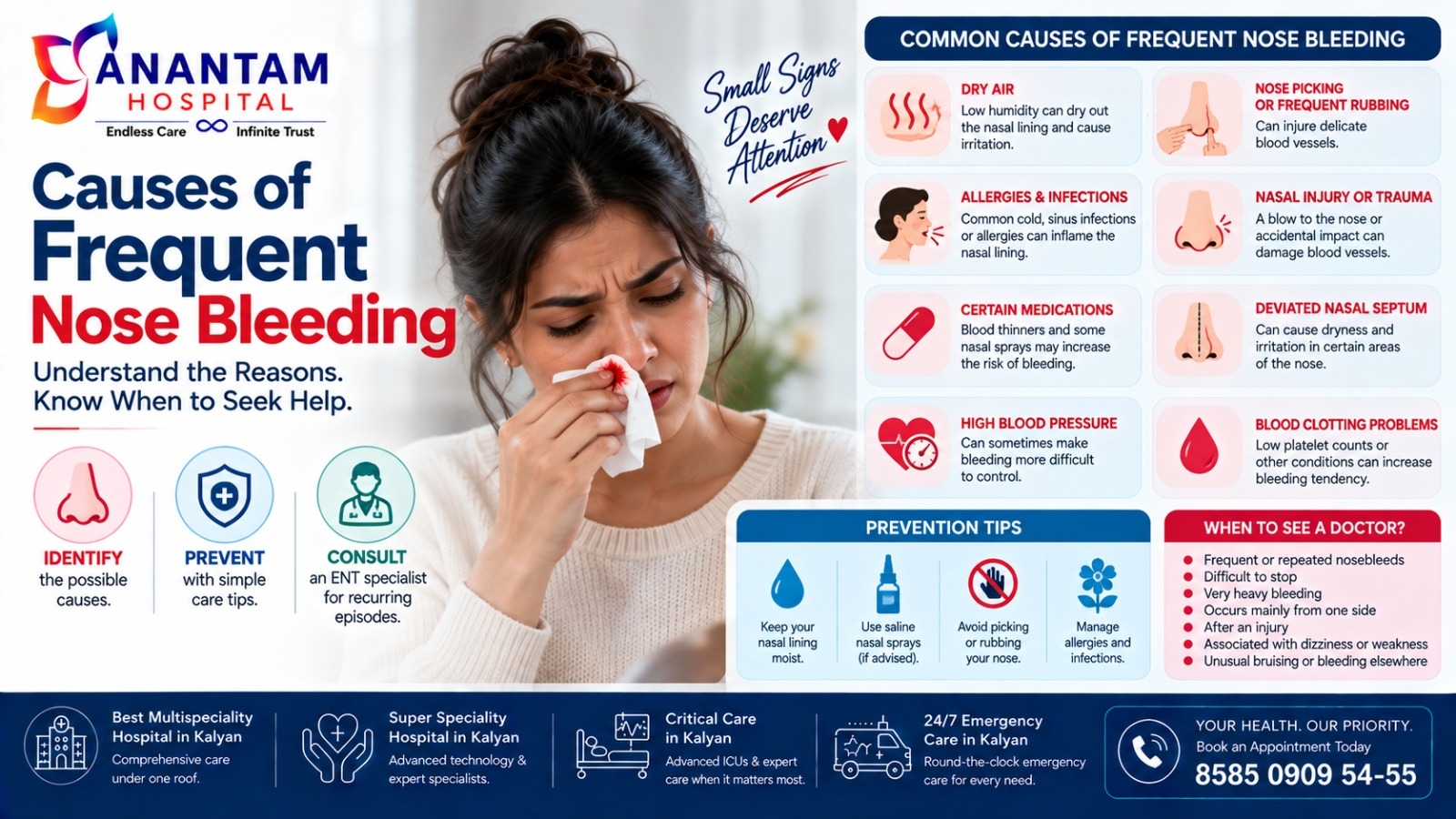
Nosebleeds, medically known as epistaxis, are common and can happen to people of all ages. A nosebleed may occur suddenly and can sometimes look alarming, but most episodes are caused by minor irritation or dryness and stop on their own. However, if nosebleeds happen frequently, last longer than usual, or occur along with other symptoms, they should not be ignored.
Understanding the possible causes of frequent nosebleeds can help you identify when medical evaluation may be necessary. At Anantam Hospital, patients can receive comprehensive ENT evaluation and treatment for recurring nosebleeds and other nose, ear, and throat conditions.
Why Do Nosebleeds Happen?
The inside of the nose contains many small blood vessels close to the surface. These blood vessels can bleed easily when the nasal lining becomes dry, irritated, inflamed, or injured.
Most nosebleeds come from the front part of the nasal septum, where several small blood vessels meet. This type of bleeding is called an anterior nosebleed and is usually easier to control. Bleeding from deeper inside the nose is less common but can sometimes be more serious.
Common Causes of Frequent Nosebleeds
One of the most common causes is dry air. Low humidity can dry out the nasal lining, causing it to become irritated and more likely to crack and bleed. Air conditioning and indoor heating can also contribute to nasal dryness.
Nose picking or frequent rubbing of the nose can injure delicate blood vessels. Even repeated or vigorous nose blowing during a cold can irritate the nasal lining and trigger bleeding.
Allergies and nasal infections can also contribute. Conditions such as allergic rhinitis, sinus infections, and common colds may cause inflammation, congestion, sneezing, and frequent nose blowing, increasing the likelihood of nosebleeds.
Another possible cause is nasal injury or trauma. A blow to the nose, sports injury, or accidental impact can damage blood vessels and cause bleeding. If a nosebleed follows a significant injury, medical assessment may be necessary.
Certain medications can increase the likelihood or duration of bleeding. Blood-thinning medicines such as anticoagulants and antiplatelet drugs can make it harder for bleeding to stop. Some nasal sprays may also irritate the nasal lining when used incorrectly or excessively.
Deviated nasal septum may contribute to dryness and irritation in certain areas of the nose, potentially making nosebleeds more frequent.
In some cases, frequent nosebleeds may be associated with high blood pressure or problems affecting blood clotting. High blood pressure does not usually directly cause a typical nosebleed, but elevated blood pressure can sometimes make bleeding more difficult to control. Certain blood disorders or low platelet counts can also increase bleeding tendency.
Less commonly, recurring nosebleeds can be associated with abnormal growths or other conditions inside the nose. Persistent or one-sided bleeding, particularly when accompanied by nasal blockage or other symptoms, should be evaluated by an ENT specialist.
When Are Frequent Nosebleeds a Warning Sign?
An occasional nosebleed is usually not a reason for concern. However, you should consider medical evaluation if nosebleeds:
– Keep happening repeatedly without an obvious reason – Are difficult to stop – Continue for a prolonged period despite appropriate first aid – Are particularly heavy – Occur mainly from one side of the nose repeatedly – Are accompanied by unusual bruising or bleeding elsewhere – Occur after a significant injury – Are associated with weakness, dizziness, or difficulty breathing
Children with recurrent nosebleeds should also be evaluated if episodes are frequent, heavy, or affecting daily activities.
What Should You Do During a Nosebleed?
If your nose starts bleeding, sit upright and lean slightly forward. This helps prevent blood from flowing toward the back of the throat. Gently pinch the soft part of your nose continuously for about 10–15 minutes while breathing through your mouth.
Avoid tilting your head backward, as this can cause blood to flow down the throat.
If the bleeding does not stop after appropriate first aid, is very heavy, or you feel faint or unwell, seek urgent medical attention.
How Can Frequent Nosebleeds Be Prevented?
Keeping the nasal lining moist can help reduce irritation. Saline nasal sprays or other treatments recommended by a healthcare professional may be useful for people who experience nasal dryness.
Avoid picking or aggressively rubbing the nose, and blow your nose gently. Managing allergies and nasal infections appropriately can also reduce repeated irritation.
If you take medicines that affect blood clotting, do not stop them on your own because of nosebleeds. Discuss recurring bleeding with the doctor who prescribed the medication.
When Should You See an ENT Specialist?
Frequent or unexplained nosebleeds deserve professional evaluation. An ENT specialist can examine the nose to identify potential sources of bleeding and determine whether factors such as dryness, infection, nasal structure, medications, or another underlying condition may be involved.
Depending on the symptoms, your doctor may recommend a nasal examination, blood tests, imaging, or other investigations.
ENT Care at Anantam Hospital
At Anantam Hospital, patients can receive evaluation and treatment for recurring nosebleeds, nasal infections, allergies, sinus problems, and other ENT conditions. The hospital provides multidisciplinary medical care with access to specialist consultation and diagnostic services.
If you are experiencing frequent or unexplained nosebleeds, consulting a qualified ENT specialist can help identify the cause and guide appropriate treatment.
Most nosebleeds are caused by relatively minor factors such as dryness, irritation, allergies, infections, or nose picking. However, frequent or heavy nosebleeds should not simply be considered normal.
Knowing the possible causes and recognizing warning signs can help you seek medical attention at the right time. If nosebleeds keep returning, are difficult to control, or occur with other unusual symptoms, consult an ENT specialist for proper evaluation.
Medical Disclaimer: This article is intended for general health awareness and does not replace professional medical advice. If you experience heavy, prolonged, or recurrent nosebleeds, seek evaluation from a qualified healthcare professional.


Add a Comment