
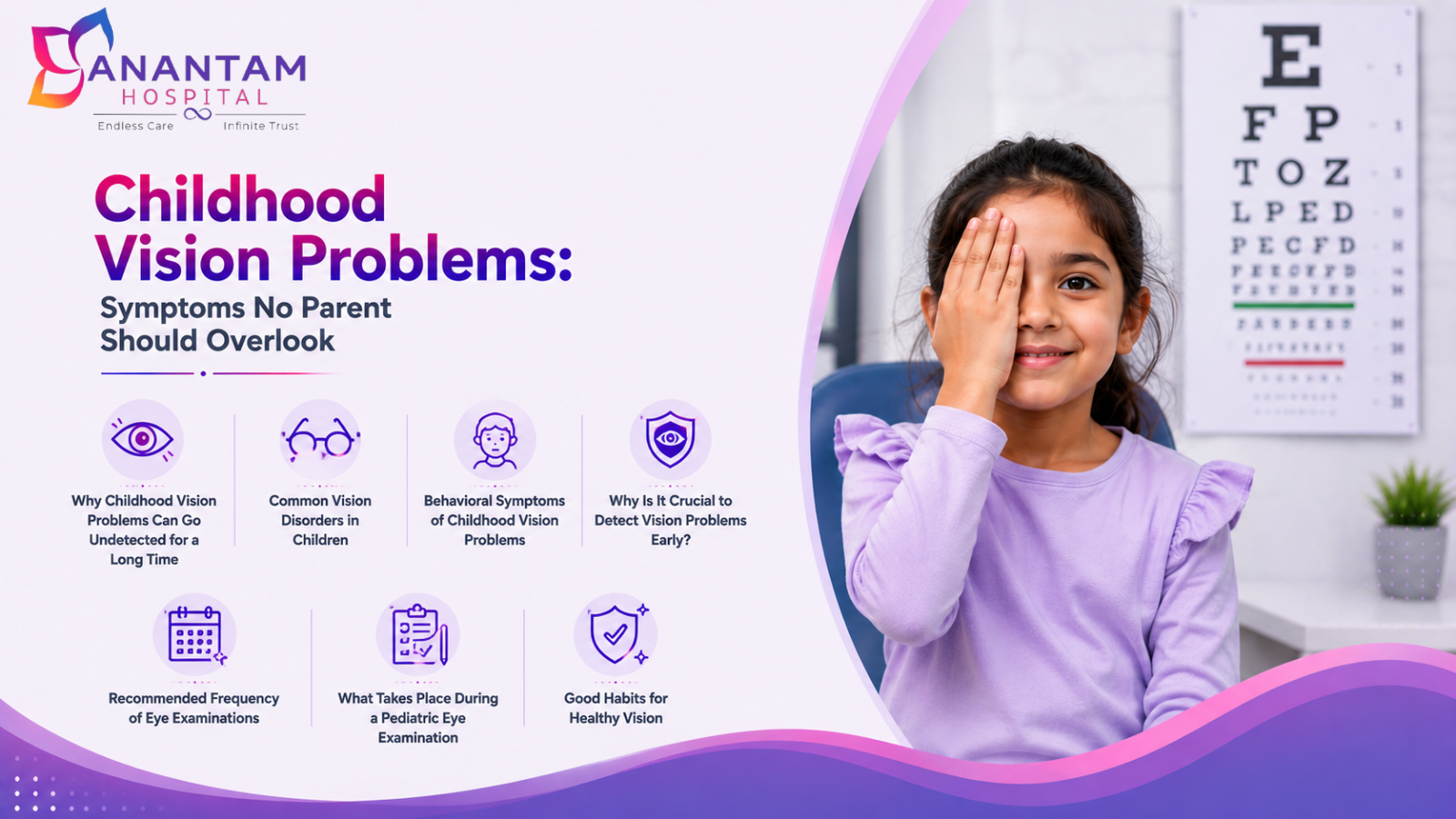
Have you ever found your child sitting uncomfortably close to the TV or squinting their eyes while doing homework? You may think it is only a habit, but, in reality, it can be a signal from your kid saying that their vision is impaired. Here is what makes the whole thing difficult. Children are unlikely to report their childhood vision problems because they cannot distinguish their normal vision from anything else.
Why Childhood Vision Problems Can Remain Undetected for a Long Time
Adults know if their eyesight changes since they have something to compare to. The thing is that children do not have anything to compare their vision with.
That is why it is not surprising that vision impairments in children often go unnoticed, especially when it comes to young kids who cannot express what is going on with their vision.
Common Vision Disorders in Children
Here are the main childhood vision problems you should know about and look out for.
Myopia
- Difficulties perceiving objects at a distance clearly
- May be evident when a child experiences troubles viewing the whiteboard at school
Hyperopia
- Difficulties perceiving objects that are close to the child
- Can result in eye strain, frequent headaches, or unwillingness to read
Astigmatism
- Causes blurred or distorted vision no matter how distant or close the object is
- Usually appears along with either myopia or hyperopia
Strabismus
- Eyes do not work synchronically; they are misaligned
- Requires prompt action because, otherwise, it may influence the development of a child’s depth perception abilities
Amblyopia
- Reduced vision in one eye because the brain prefers the stronger eye
- Harder to fix once the child grows up
Behavioral Symptoms of Childhood Vision Problems
As it was mentioned above, kids are unlikely to tell adults if they see something wrong, but their behavior is the best sign of childhood vision problems in children.
These are behavioral signs you should be looking for:
- Sitting close to the TV or holding books very near to the face
- Squinting frequently, especially when outside or under bright lights
- Constant rubbing of the eyes even when not feeling sleepy
- Turning or tilting the head while viewing
- Complaining about frequent headaches
- Unwillingness to perform activities that require close focus, such as reading and coloring
- Poor hand-eye coordination
- Clumsiness
None of these signs necessarily mean that there are childhood vision problems, but if you notice several of them together, this is a warning sign.
Why It Is Crucial to Detect Vision Problems Early
Here is the crucial part. Some vision disorders of children, in particular, amblyopia, become much harder to treat when the child passes some age.
That is because the visual system develops very quickly in early childhood and the brain tends to lock in certain patterns. Detecting the disorder earlier increases the chance of correcting it effectively.
Recommended Frequency of Eye Examinations
Visiting eye specialists regularly is important for all people, including kids.
Here are some recommendations concerning visiting ophthalmologists:
- First eye examination: around 6 months old especially when there is a family history of eye diseases
- Preschool age (3-5 years old): to check the eyes before starting schooling
- School age: regular eye examinations due to changing vision during growth
- In case of any signs of possible vision disorders: visit an eye specialist as soon as possible despite planned visits
Schools usually organize vision screening of their students, but this kind of examination cannot be considered as a proper eye exam.
What Takes Place During a Pediatric Eye Examination
It is useful to know about the procedure so that you would not be afraid of it.
Typical examination includes visual testing, checking the eye alignment and movements, and dilating the eyes to get the better image of inner eye parts. Specialists in pediatrics are experienced in working with young kids.
Good Habits for Healthy Vision
Here are some easy steps that protect your kid’s eyesight.
- Limit continuous screen time, make a kid take pauses every 20-30 minutes.
- Encourage outdoor activity, which, according to research, decreases myopia risks.
- Provide good illumination while reading or doing homework.
- Make sure your kid consumes vitamins-rich food.
- Do not ignore the results of school vision screening, consult a professional if necessary.
Conclusion
Vision impairments in kids occur quite often, and the sooner they are detected, the easier it is to fix the problem. Just paying attention to behavioral symptoms and conducting regular eye examinations can truly save the eyesight of your children.
If you have noticed any of the above-described symptoms or it has been a long time since your last eye examination, do not wait until it will be detected during school screening. Anantam Hospital, being the best multispeciality hospital in Kalyan, provides pediatric eye checkups in its Ophthalmology department.


Add a Comment