Woman with toothache pain, Anantam Hospital toothache treatment blog banner

Toothache Treatment: Causes, Relief & When to See a Dentist

It’s 2 AM and your tooth is throbbing with pain. You’ve already Googled ‘why does my tooth hurt’ thrice and found no respite. I know how a toothache can turn your world upside down. Let’s discuss what a toothache really is, along with the best methods of toothache treatment.

What constitutes a toothache?

A toothache can often be more than just an unpleasant twinge in a tooth. Sometimes, the pain can radiate down from the sinuses, or be caused by a problem in the jaw or even in the ear.

These are referred to as pseudo-toothaches, and identifying the source is a part of the toothache treatment process

Common causes of tooth pain

There are several common causes of tooth pain. Here are the most common causes of toothache:

  1. Cavities and tooth decay
  2. Cracked tooth
  3. Gum infection
  4. Dental abscess
  5. Tooth sensitivity
  6. Impacted or erupting wisdom tooth
  7. Teeth grinding

Most cases of toothache have their origin in the above reasons. Tooth sensitivity occurs due to worn-off enamel or exposed roots. Teeth grinding can lead to cracks or extreme wear and tear on the teeth. A dental abscess is a collection of pus near the root of the tooth, often extremely painful. Wisdom tooth pain is usually a combination of swelling, pressure and the proximity of other teeth. Gum infection can also make the pain from the affected teeth radiate to other teeth and the jaw.

Warning signs for severe toothache

If your tooth only aches when you eat something sweet, it’s not a cause for alarm. However, if you notice any of the following signs, make sure to get professional help:

  • Swelling on your face, cheek or gums
  • Fever
  • Unpleasant taste or discharge in the mouth
  • Worsening pain on lying down
  • Pulsating pain that lasts for more than a day or two
  • Inability to open the mouth fully

These are symptoms which demand immediate toothache treatment.

Some home remedies for toothache

There are several home remedies for toothache that can offer pain relief until a dentist can be consulted. You may try any of the following home remedies for toothache:

  • Using salt water rinses
  • Applying a cold compress to the affected area
  • Taking painkillers
  • Clove oil application for pain relief

But keep in mind that these are only temporary measures. The root cause of your toothache still needs to be addressed for proper toothache treatment

When to see a dentist for tooth pain?

It’s only natural to want to give your teeth a chance to ‘heal on their own’. However, if your tooth has been hurting for more than two days, or if you notice any of the following signs, it’s time to see a dentist for toothache treatment:

  • Pain lasting for more than two days
  • Visible swelling anywhere on your face
  • Fever accompanying the toothache
  • Sharp pain while biting down
  • Looseness or visible damage to a tooth

The sooner the cause of the toothache is diagnosed, the easier it is to treat.

Commonly performed toothache treatment procedures

For most cases of toothache, the type of treatment depends a lot on what’s causing the pain. However, there are some general procedures which are a part of toothache treatment:

Treatment for cavities generally consists of filling the cavity. This is a routine procedure which can easily be done in-clinic. Root canal treatment may also be necessary if the decay has reached the innermost layer of the tooth.

In the case of an infection, antibiotics are prescribed, followed by root canal treatment or draining the abscess, if required.

For cracked or broken teeth, a crown may be required in order to prevent further damage. In severe cases, the entire tooth may have to be extracted.

For sensitivity, desensitizing toothpastes and fluoride treatment may be prescribed.

Finally, impacted wisdom teeth may have to be extracted, if the pain persists for too long.

Preventive measures for future toothaches

After the initial cause of your toothache has been treated, you’ll need to follow some basic preventive measures in order to keep future toothaches at bay.

Some of these measures include brushing your teeth twice a day, flossing everyday, eating less sugar, having routine dental check-ups and avoiding using your teeth as tools. You must also consider using a night guard, if you have a habit of teeth grinding.

Your tooth deserves more than a simple ‘I’ll deal with it later’

The pain caused by toothaches can be pretty inconvenient. You might stop brushing on one side, or avoid drinking cold beverages, but it doesn’t mean the toothache has been dealt with.

The best kind of toothache treatment can get you back to enjoying cold desserts without a second thought. If you’re facing any of the symptoms mentioned in this blog, don’t wait for the pain to become unbearable. If you’re looking for a reliable dentist in Kalyan, book a consultation with the Oral & Maxillofacial team at Anantam Hospital, the best multispeciality hospital in Kalyan and get it looked at by a specialist, before it becomes a problem!

Plastic surgery for accident injuries showing wound closure, fracture repair, tissue reconstruction and scar revision

Plastic Surgery for Accident Injuries & Repair of Cuts, Fractures & Scars

One wrong turn on the road and the entire face’s appearance can be altered permanently in mere seconds. If you or someone you know has ever suffered an accident, you can only imagine the panic that occurs post-incident – the lasting ramifications of the injury can be terrifying, and one’s primary concern, after the initial panic fades, is whether or not the injury would forever be an unpleasant reminder of the incident. That is what plastic surgery for accident injuries seeks to correct, and I aim to explain the process in detail below.

Plastic surgery for accident injuries encompasses everything from the deep cuts incurred during a two-wheel mishap to the facial fractures sustained at a construction site.

Facial/Body Injuries & Why a Plastic Surgeon Is Needed

While there is no doubt that a plastic surgeon may not be necessary for minor lacerations, more severe wounds call for the expertise of a plastic surgeon due to the permanent nature of an uneven, badly-closed scar.

Plastic surgery for accident injuries therefore addresses both the functional implications of the injury and the aesthetic ramifications of such an injury and is concerned with restoring a person to his/her pre-injury condition.

The three types of injuries that commonly necessitate seeing a plastic surgeon are:

  1. Severe Lacerations
  2. Facial Fractures
  3. Soft Tissue Losses

Lacerations, Fractures & Soft Tissue Loss: What You Should Know

Road accidents, slips, and workplace mishaps are known to cause one or more of the following injuries:

  1. Severe Lacerations- These pertain to deep cuts or wounds that are often irregular in shape and require the expertise of a plastic surgeon for optimal healing.
  2. Facial Fractures- This is the layman’s term for fractures that occur in any of the facial bones including the cheekbones, zygoma, and the bones surrounding the eye sockets.
  3. Soft Tissue Losses- This refers to the loss of skin and tissue that may or may not be associated with bony defects and is most commonly associated with road accidents.

Why Time Is of the Essence

There is what is commonly referred to as the ‘golden hour’ in trauma management – the sooner the patient arrives at the facility post-injury, the lesser the risks associated with the injury. This goes for both the functional and aesthetic management of the injury.

We advise against waiting to see whether or not the injury heals on its own, particularly with regard to injuries involving the facial region and joints since timely plastic surgery for accident injuries can make a marked difference in the final appearance of a given scar.

What to Expect During Treatment

Plastic surgery for accident injuries is a multi-step process that includes, amongst other steps, wound assessment, debridement, reconstruction, and appropriate scar management. Each of these steps plays an important role and skipping any step could be severely detrimental in the long-term course of healing.

Laceration repair surgery is one such procedure that differs from a standard suture in that it entails wound edge approximations and meticulous layer closure with an eye towards optimal aesthetics. The same principle applies to other procedures involved in plastic surgery for accident injuries.

Facial Fracture: What You Should Know

Most people are under the impression that a facial fracture is a simple procedure that entails a few minutes at the emergency room and is over with. The truth, however, is that this can range from simple plastering of the nose in certain conditions to titanium plating and screwing of complex facial fractures. This is done with a view to restoring normal anatomy and function post-fracture.

Soft Tissue Injury Repair: What You Should Know

As mentioned above, soft tissue losses are those wherein the skin and underlying tissue are lost, in whole or in part, usually as a result of a road accident (wherein skin can be skinned off in a particular region as a result of friction). There are two possible courses of action (with a third possibly being considered depending on the nature of the injury) – a skin graft (wherein skin is transferred from one region of the body to another) and a tissue flap where the tissue is transferred from one region to another, along with its blood supply.

In some cases, scar revision surgery may be considered as a secondary procedure, months down the line, once the wound has healed.

Reconstructive Surgery After Trauma Isn’t All Cosmetic

When people think of plastic surgery, the first thing that comes to mind is cosmetic surgery. Reconstructive surgery after trauma, however, pertains to restoring a person’s appearance, as well as, function following an accident. This procedure therefore restores not only one’s form, but also function, and is a form of functional medicine in cosmetic surgery.

Healing & Recovery

Healing following trauma is not linear and people tend to underestimate the amount of time that it takes for the wounds to heal and the scars to fade.

Swelling tends to peak on day 2-3 and then subsides over a period of two weeks. Scars, as well, tend to look at their worst between 6-8 weeks post-surgery and progressively improve over the next year, making it important to follow up with your surgeon for any post-operative concerns.

Sunscreen, massaging (as advised by your surgeon), and patience go a long way in determining how well your scars heal and your final aesthetic outcome. This is why good plastic surgery for accident injuries always involves a follow-up plan to ensure optimal healing.

Consulting a Plastic Surgeon for Accident & Injury Repair: When & Why

As mentioned above, not all injuries require the intervention of a plastic surgeon. Plastic surgeons, however, are often called upon to intervene in the following scenarios:

  1. Injuries involving the facial region, hands, or any other region that is highly visible.
  2. Presence of fat, muscle, or bone tissue visible through the wound.
  3. Obvious facial asymmetry post-accident.
  4. Skin and tissue loss (as opposed to loss of skin alone).
  5. Facial, oral, or hand fractures.
  6. Bite, crush, or degloving injuries.

When in doubt, it is best to seek consultation with a plastic surgeon as same-day consults are generally quick and are always a good idea. You also have the option of speaking to your primary care physician if you have one and seeking his/her opinion – in either case, a same-day consult with a plastic surgeon is always a good idea.

Healing Wounds Can Be Complicated: Here’s What to Do

Plastic surgery for accident injuries is multi-faceted and requires the expertise of a specialist. Accidents occur in an instant, but the healing process thereafter can take much longer and has lasting implications for the patient following such an incident.

In case you or someone you know is considering plastic surgery for accident injuries, I urge you to speak to a specialist in the field of trauma and ask him/her any questions that you may have.

Good plastic surgery for accident injuries is about restoring form as well as function, and it goes a long way in terms of returning the person to his/her pre-accident state.

At Anantam Hospital, the best multispeciality hospital in Kalyan West that provides 24/7 emergency care, you don’t have to choose between speed and quality when every minute counts. Our team is right there when you need them, ready to treat the injury and think ahead to how you’ll look and feel months down the line.

Your face, your hands, and your comfort are worth it.

Patient with toe bone fracture treatment options at Anantam Hospital

Toe Bone Fracture Treatment: What To Do After Incurring An Accident

Have you ever stubbed your toe so hard it left you seeing stars? You may have a broken toe. It is no surprise that toe injuries are not always as they seem. In this article, we will go over how to identify a broken toe, what toe bone fracture treatment consists of, and when it is necessary to seek medical attention instead of waiting it out.

How You Could Have Broken Your Toe

A toe injury can happen in a number of ways, from stubbing your toe running into furniture or doorways, dropping something heavy on your foot, or playing sports. You may have fallen or slid and landed on your foot awkwardly or simply misjudged the height of a step.

It does not take a lot of force to break your toe.

Fracture, Sprain Or Bruise

It is understandable you might not know if your leg injury is a simple fracture, sprain, or a bruise. These are the signs that lead to the diagnosis of a fracture:

  • Noticeable swelling beginning soon after the injury
  • Bruising or discoloration
  • Inability to put weight or pressure on your foot
  • Disfigured, deformed toe
  • Pain localized on the site of injury

The signs of a sprained toe are similar, but typically less severe. If you are unsure what kind of injury you have, it is best to assume the worst and seek medical attention.

It is important to get an x-ray of the injured toe to determine what the appropriate course of action is.

Understanding Toe Fractures

Once diagnosed, it is important to understand what kind of fracture you have so you know what to expect with regards to toe bone fracture treatment as well as your course of recovery. Simple fractures are also known as non-displaced fractures. These fractures do not require surgery. Displaced fractures, on the other hand, do require surgery.

Toe Bone Fracture Treatment

There are several types toe bone fracture treatment, varying in severity. The most common treatment for a fractured toe is buddy taping. Other toe bone fracture treatment may consist of splints, casts or surgery. Surgery is typically only required for displaced fractures.

RICE Therapy

Rice therapy is a part of toe bone fracture treatment as well as recovery. Even if you have to go through toe bone fracture treatment, following this method can hasten your road to recovery and keep you from experiencing discomfort. The RICE method consists of:

  • Rest
  • Ice
  • Compression
  • Elevation

Toes are very sensitive and toe injuries are very painful. Luckily, there are drugs available to help you alleviate some of the discomfort you may be feeling.

How Long Will It Take To Heal

The healing process of a fractured toe varies depending on the severity of the fracture and how well the toe is taken care of. Simple fractures typically take around 6 weeks to heal. It is not advised to put any weight or pressure on the injured toe throughout the healing process. A displaced fracture may take longer to heal fully and in some cases require surgery.

Even if the fracture has healed completely, it may still take a few more weeks for the toe to re-gain full mobility. Although a fractured toe may seem simple, it is very important to take proper care of your foot if you are to make a swift, full recovery. It is important to remember to get the injured toe examined if you are not sure what kind of injury you have.

The right kind of toe bone fracture treatment will assist you in a swift and full recovery.

When Should You See A Doctor

Although it may seem that your injury can wait, in some cases, a fractured toe can be an emergency. A trip to the ER is necessary if you experience any of the following:

  • Deformed toe
  • Numbness
  • Blue toes
  • Open wounds near the fracture
  • Inability to put any weight or pressure on your foot
  • Increasing pain after a few days

If you experience any of the above symptoms, medical attention is required.

Conclusion

Getting your toe examined will enable you to receive the necessary toe bone fracture treatment and help you recover faster and with less discomfort. It is not uncommon for minor injuries to be self-diagnosed, however, a fracture is much more serious than it seems.

If you are experiencing pain and discomfort in your toe, do not wait to get it examined. Anantam Hospital, the best multispeciality hospital in Kalyan, offers 24×7 Emergency Care and Orthopedic consultations to help you determine what the best course of action is.

Parent holding newborn baby with essential of newborn care guidance at Anantam Hospital

Essential of Newborn Care: A Guide for First-Time Parents

The birth of a child, despite the joy it brings to the parents who have longed for it, comes with its fair share of anxieties. New parents do not always feel prepared to cope with the responsibilities of childcare. However with the knowledge of the essential of newborn care, each phase becomes surmountable.

Key Aspects of Newborn Care: Feeding

Feeding is often the first order of the essential of newborn care, though it is an aspect in which there is no definitive answer.

Some of the basic rules include:

  • Breastfeeding or formula, both are valid options, and the most important is that the baby is well-fed and develops;
  • Frequency, a newborn may need to be fed every 2-3 hours throughout the day, including at night;
  • Hunger, the signs can be manifold, such as rooting for the breast, moving the lips, or putting their hands in their mouth, and not necessarily crying;
  • Burping, it is crucial to burp the baby after each feeding to avoid gas pains.

Sleep Basics for Newborn Care

The sleep of a newborn can be exhausting for the parents since, for the first few months, newborns do not sleep through the night.

Safety tips for essential of newborn care and sleep basics are:

  • Always put the baby to sleep on his back;
  • The mattress should be firm, without any bedding and soft toys;
  • It is safer to room share rather than bed share;
  • Newborns sleep, on average, 14–17 hours a day, albeit in segments.

Since the baby sleeps so little, the parents should also get their share of rest; asking a family member to help out while the parents sleep is a good idea.

Essential of Newborn Care: Umbilical Cord and Skin

The umbilical cord and the skin require special care, including keeping the navel dry and avoiding topical lotions and creams as much as possible.

Things to remember for the essential of newborn care in this category:

  • Keep the umbilical stump dry, changing the diaper so that it is folded below the navel until it is gone;
  • Sponge Baths, until the navel is gone;
  • Skin Conditions, normal occurrences, such as rashes and patches, and baby acne should be ignored;
  • Lotions and creams, are not recommended due to the sensitivity of the skin.

Essential of Newborn Care: Diapering

For the first few months of an infant’s life, parents must change a baby’s diaper many times a day. In the case of essential of newborn care, some things to remember are:

  • Frequency, a baby can soil 8-10 times a day;
  • Stool consistency, can vary greatly in the first few days;
  • Diaper rash prevention, frequent checks are necessary and the bottom should be exposed to air where possible;
  • When to see a doctor, fewer wet diapers than normal should be brought up to the pediatrician, as well as stools of an abnormal color.

Essential of Newborn Care: When to See a Doctor

Although there are lots of normal conditions in the first few months of a child’s life, there are red flags that require urgent attention from a medical professional.

Those include:

  • Fever, especially in children under 3 months old;
  • Poor feeding;
  • Excessive crying;
  • Yellowish eyes and skin;
  • Difficult breathing.

Essential of Newborn Care: Shots and Vaccinations

One of the most overlooked parts of essential of newborn care, in the early stages, is keeping track of shots and vaccinations.

The pediatrician will explain the vaccination schedule and recommend the most appropriate option; usually, vaccines begin shortly after birth and continue until the child reaches 6 months of age. Although one dose is not a big problem, it is better not to miss any.

Essential of Newborn Care: Bonding and Comfort

Besides the practical parts mentioned in the essential of newborn care, bonding with the baby is critical.

The following activities have proven to be helpful in building a connection:

  1. Skin-to-skin contact;
  2. Rocking or swaying as a means to calm the baby;
  3. Talking or even singing to the child;
  4. Swaddling securely;
  5. Consistent response to a baby’s cries helps to build trust.

Essential of Newborn Care: Self-Care

New parents often neglect their own comfort in the first few weeks of their child’s life. Taking care of the baby, and especially breastfeeding, can be physically and emotionally draining. This is why it is essential to take advantage of any help offered.

Essential of Newborn Care: Remember, You Are Human Too

Remembering that learning the essential of newborn care is a process that happens over time helps to be patient and not put undue pressure on yourself. Asking for advice from experienced family members and parents is helpful. If you feel physically or emotionally uncomfortable, contacting a doctor is always an option.

In case of any queries regarding feeding, sleep, or other matters in these initial weeks, there’s no need to wait until your next appointment. Anantam Hospital, known as the best multispeciality hospital in Kalyan west, provides specialized Pediatric and Obstetrics & Gynaecology services to assist you with newborn care and your postpartum recovery.

Banner for Anantam Hospital about Childhood Vision Problems

Childhood Vision Problems: Symptoms No Parent Should Overlook

Have you ever found your child sitting uncomfortably close to the TV or squinting their eyes while doing homework? You may think it is only a habit, but, in reality, it can be a signal from your kid saying that their vision is impaired. Here is what makes the whole thing difficult. Children are unlikely to report their childhood vision problems because they cannot distinguish their normal vision from anything else.

Why Childhood Vision Problems Can Remain Undetected for a Long Time

Adults know if their eyesight changes since they have something to compare to. The thing is that children do not have anything to compare their vision with.

That is why it is not surprising that vision impairments in children often go unnoticed, especially when it comes to young kids who cannot express what is going on with their vision.

Common Vision Disorders in Children

Here are the main childhood vision problems you should know about and look out for.

Myopia

  • Difficulties perceiving objects at a distance clearly
  • May be evident when a child experiences troubles viewing the whiteboard at school

Hyperopia

  • Difficulties perceiving objects that are close to the child
  • Can result in eye strain, frequent headaches, or unwillingness to read

Astigmatism

  • Causes blurred or distorted vision no matter how distant or close the object is
  • Usually appears along with either myopia or hyperopia

Strabismus

  • Eyes do not work synchronically; they are misaligned
  • Requires prompt action because, otherwise, it may influence the development of a child’s depth perception abilities

Amblyopia

  • Reduced vision in one eye because the brain prefers the stronger eye
  • Harder to fix once the child grows up

Behavioral Symptoms of Childhood Vision Problems

As it was mentioned above, kids are unlikely to tell adults if they see something wrong, but their behavior is the best sign of childhood vision problems in children.

These are behavioral signs you should be looking for:

  • Sitting close to the TV or holding books very near to the face
  • Squinting frequently, especially when outside or under bright lights
  • Constant rubbing of the eyes even when not feeling sleepy
  • Turning or tilting the head while viewing
  • Complaining about frequent headaches
  • Unwillingness to perform activities that require close focus, such as reading and coloring
  • Poor hand-eye coordination
  • Clumsiness

None of these signs necessarily mean that there are childhood vision problems, but if you notice several of them together, this is a warning sign.

Why It Is Crucial to Detect Vision Problems Early

Here is the crucial part. Some vision disorders of children, in particular, amblyopia, become much harder to treat when the child passes some age.

That is because the visual system develops very quickly in early childhood and the brain tends to lock in certain patterns. Detecting the disorder earlier increases the chance of correcting it effectively.

Recommended Frequency of Eye Examinations

Visiting eye specialists regularly is important for all people, including kids.

Here are some recommendations concerning visiting ophthalmologists:

  • First eye examination: around 6 months old especially when there is a family history of eye diseases
  • Preschool age (3-5 years old): to check the eyes before starting schooling
  • School age: regular eye examinations due to changing vision during growth
  • In case of any signs of possible vision disorders: visit an eye specialist as soon as possible despite planned visits

Schools usually organize vision screening of their students, but this kind of examination cannot be considered as a proper eye exam.

What Takes Place During a Pediatric Eye Examination

It is useful to know about the procedure so that you would not be afraid of it.

Typical examination includes visual testing, checking the eye alignment and movements, and dilating the eyes to get the better image of inner eye parts. Specialists in pediatrics are experienced in working with young kids.

Good Habits for Healthy Vision

Here are some easy steps that protect your kid’s eyesight.

  1. Limit continuous screen time, make a kid take pauses every 20-30 minutes.
  2. Encourage outdoor activity, which, according to research, decreases myopia risks.
  3. Provide good illumination while reading or doing homework.
  4. Make sure your kid consumes vitamins-rich food.
  5. Do not ignore the results of school vision screening, consult a professional if necessary.

Conclusion

Vision impairments in kids occur quite often, and the sooner they are detected, the easier it is to fix the problem. Just paying attention to behavioral symptoms and conducting regular eye examinations can truly save the eyesight of your children.

If you have noticed any of the above-described symptoms or it has been a long time since your last eye examination, do not wait until it will be detected during school screening. Anantam Hospital, being the best multispeciality hospital in Kalyan, provides pediatric eye checkups in its Ophthalmology department.

Person experiencing difficulty in breathing at Anantam Hospital

Difficulty in Breathing Reasons: What’s Common and When It’s Serious

Have you ever had trouble getting a proper breath after climbing just one flight of stairs, or felt the same way when you first woke up? Even if it turns out not to be anything serious, this problem needs a bit more exploration. The symptom of breathlessness ranges from being trivial to potentially being life-threatening. Knowing about difficulty in breathing reasons is essential in order to determine what type of condition you might be suffering from.

Some of the Less Serious Causes of This Problem

There are many possible reasons behind a sudden shortage of breath, not all of which are actually very worrying.

The common causes include:

  • Physical exertion when the body was not prepared, especially if you don’t have much physical fitness and did something exhausting;
  • Anxiety or panic attacks when breathlessness happens due to psychological stress rather than any physical reasons;
  • Bad posture, especially if you’re used to slouching a lot and limit yourself in expanding your lungs while doing so;
  • Respiratory infections such as a common cold;
  • Being at high altitudes or excessively hot weather.

None of these will do you any harm other than making you uncomfortable, but they should still draw your attention if you feel them too often.

The Medical Causes of Breathlessness You Need to Be Aware Of

There are several medical conditions which should definitely appear in your list of possible difficulty in breathing reasons. Some of them won’t require permanent treatment but will demand you pay more attention to your health.

Respiratory Diseases

  • Asthma, the disease which leads to swelling of airways and is triggered both by allergy and physical activity;
  • Chronic obstructive pulmonary disease which develops in people who smoke regularly and negatively affects the lungs;
  • Pneumonia that causes fluid build-up in the lungs.

Cardiovascular Diseases

  • Heart failure that makes the pumping function of your heart weak and causes fluid accumulation in the body;
  • Problems with coronary arteries that affect blood flow and make the patient feel breathlessness and pain in the chest.

Other Causes

  • Anemia which lowers your red blood cell count and therefore makes you prone to feeling breathless;
  • Obesity which puts additional load on your lungs and heart.

Sometimes It’s Not About Your Lungs

The common misconception regarding difficulty breathing lies in that not every single case of it means lung problem. In some cases, it can be related to such health issues as heart problems, blood issues, and even psychological problems.

That is exactly why a doctor will not only check your lungs if you claim you have difficulty breathing but he or she will conduct a series of tests that will evaluate other aspects of your health as well.

Symptoms Requiring Immediate Medical Attention

Sometimes certain symptoms of difficulty breathing cannot be neglected. You need to see your doctor immediately in case:

  • You feel sudden and severe breathlessness
  • You have chest pain or pressure along with breathing problems
  • Your lips and/or fingers appear blue
  • You feel difficulty breathing even during rest or lying position
  • You experience confusion or severe fatigue along with breathing problems

You should not put off such symptoms, they require immediate attention.

When You Can Go With a Scheduled Appointment

Of course, not all symptoms of breathlessness require going to the ER. Sometimes, mild and occasional breathing problems caused by physical effort and minor illnesses do not require urgent medical attention.

However, if your difficulty breathing happens regularly, takes place for prolonged periods of time and interferes with your daily routine, you should not postpone your consultation.

Tests Doctors Conduct To Identify The Reason

In most cases, a combination of several simple tests allows determining the exact reason of your breathing difficulty symptoms.

  • Chest X-ray for evaluating the presence of inflammation, infection, or any other problems with your lungs
  • Pulmonary function tests to identify the problems with lung functioning
  • ECG for determining if the reason of difficulty breathing is heart-related
  • Blood test for determining the presence of anemia or any infectious conditions

These simple tests usually give an accurate diagnosis of your problem.

Some Recommendations That Help

Several habits that always help, regardless of the reason of difficulty breathing.

  1. Keep your body weight normal, to reduce the load on your heart and lungs
  2. Never smoke and avoid being around people who smoke
  3. Exercise to improve lung capacity
  4. Keep stress levels low, because anxiety may affect your breathing
  5. Treat respiratory infections timely, do not let them get worse

Conclusion

Shortness of breath may range in meaning from simple shortness of breath to something that requires urgent care. Understanding the usual causes of breathlessness and the warning signs is what will allow you to deal appropriately rather than underestimating the situation or letting yourself get scared unnecessarily.

If you have been dealing with an unusual shortness of breath recently, you should see a doctor immediately rather than hope that it gets better on its own. Anantam Hospital, rated as the best multispeciality hospital in Kalyan with 24/7 emergency care, provides all-round evaluation of your condition through their Pulmonology and Cardiology Departments.

Urinary Tract Infections and Treatment at Anantam Hospital

All You Must Know About Urinary Tract Infections and Treatment

Do you remember that burning sensation every time you urinated followed by urgent feeling that you need to urinate all over again in 5 minutes? Yep, you have most probably got a UTI infection, and this problem affects many people. Urinary tract infections are very common but somehow still under-discussed problem. Proper treatment of urinary tract infections and treatment requires knowing about it in detail.

UTI Definition

UTI stands for urinary tract infection. UTI infection happens when bacteria infect your urinary system. It may affect your bladder, urethra, or even your kidneys in case of advanced infection.

UTIs are more common among women because of their anatomy. Women tend to have shorter urethra and because of that, it is easier for bacteria to enter into their bladder.

Possible Symptoms

You always feel that something is going wrong before realizing that you are sick. Here are the symptoms of UTI infections.

Symptoms of UTIs include:

  • Burning sensation during urination
  • Strong desire to urinate even when only a small amount of urine leaves your body
  • Cloudy or strongly smelling urine
  • Pain in lower abdomen or pelvic area
  • General feeling of weakness

In case if the listed symptoms are accompanied by fever, chills, or pain in back – it is time to visit a doctor for proper UTI treatment.

The Causes of Urinary Tract Infections

Several things may cause UTIs, and the knowledge of them will help you to avoid such problems in the future.

  • Lack of proper hydration, which means less frequent visits to bathroom and inability to flush out the bacteria
  • Holding of urine for too long, which gives the bacteria more time to multiply
  • Using of certain contraceptives (like diaphragm and spermicide)
  • Pregnancy, which is associated with changes of hormonal level and physical changes in the urinary tract
  • Diabetes, because of high levels of sugar in your blood, which encourages bacterial growth
  • Poor hygiene practices, like improper wiping after using a toilet

None of the listed factors guarantees the appearance of UTIs, but they certainly increase your chances to get them, and they are helpful for the doctors to diagnose your situation and provide you with proper UTI treatment.

Ways to Treat UTI Infections

This is the part when people usually mess everything and try to manage the situation without appropriate diagnosis.

Common treatment options for UTIs include:

  • The use of antibiotics, depending on the type of bacteria causing the infection
  • Increase in the intake of water to flush the bacteria along with taking antibiotics
  • Pain killers for dealing with pain while antibiotics work their way
  • Completion of a full antibiotic course even when feeling better after 1-2 days

This is how things really are. Antibiotics should be used with the proper diagnosis; guessing does not do any good.

Why is Self-Medicating the Wrong Solution?

Although it is quite tempting to go for self-medication, this solution poses certain risks.

In particular, inappropriate use of an antibiotic may lead to developing resistance to it, which will make treating the next infection even more difficult. Moreover, the symptoms might just go away while the infection progresses to the kidneys.

In Case of Recurrent UTIs

However, recurrent UTIs are a sign you should look into instead of following the same treatment process.

The cause for the recurrence can be:

  • Some problem with the body’s anatomy
  • The previous infection was not completely cured
  • Some of the daily routines or hygiene practices should change
  • In rare occasions – an altogether different illness like diabetes

You will be advised to take tests to see what the cause for the recurrence is.

Habits You Should Adopt in Order to Protect Yourself

There are some routines and habits that really reduce the chance of UTIs.

  1. Drinking plenty of fluids during the day
  2. Going to the toilet whenever you have the urge to, without holding it in
  3. Wiping from front to back, particularly for females
  4. Urinating after sex, as it flushes bacteria out
  5. Avoiding unnecessary use of strong feminine hygiene products, since it disturbs the balance of bacteria

When to Rush to the Doctor

UTIs are mostly easy to manage, but there are some indications when immediate medical help is needed.

You should go to a doctor when:

  • There are fever or chills along with UTI symptoms
  • There is pain in the sides or back, suggesting kidney involvement
  • You see blood in the urine
  • You have had symptoms for several days, despite home remedies

These are not symptoms to ignore especially if there is a risk of kidneys being involved.

Conclusion

UTIs are common, troublesome and completely treatable if you get the proper care instead of going at it alone. Knowing their causes, symptoms and possible treatments makes it much easier to react to them instead of enduring them unnecessarily.

In case UTI symptoms are dragging on or keep recurring, don’t just tough it out. Anantam Hospital is the best multispeciality hospital in Kalyan and provides dedicated Urology consultations.

Hernia surgery costs with patient at Anantam Hospital

Factors that Influence Hernia Surgery Expenses

Have you been diagnosed with a hernia and now trying to figure out the costs of hernia surgery expenses? Not surprised, it is understandable and natural to want to know how much will it cost you. Let’s see which factors influence the costs to get clarity.

Usually, most patients hesitate to undergo such a procedure not because they are not aware of the necessity of it but because they find the costs of the procedure confusing. Let’s clarify it.

What Is a Hernia, Briefly?

Hernia is a situation when an organ or tissue pushes through the weakness of muscles. Typically, such condition occurs in the abdomen or groin areas. It does not resolve itself and needs surgical intervention.

The most reasonable idea would be to postpone the surgery to save some money but it is a mistake that could lead to additional complications.

Factors Influencing Hernia Surgery Expenses

Several factors combined influence the final hernia surgery expenses and we are going to discuss all of them below.

Type of Hernia

  • Inguinal, umbilical, incisional hernias each require their approach
  • Complex hernias require more time for performing and more resources for the procedure

Surgical Procedure

  • Open surgery is cheaper but the duration of the recovery period is longer
  • Laparoscopic surgery requires more expensive equipment and costs more, but recovery is usually faster

Duration of the Hospital Stay

  • Discharge on the day of the procedure costs less compared to several days of stay in the hospital
  • Complications could lead to additional expenses on the hospital stay

Type of Anesthesia

  • Local, regional or general anesthesia have different prices
  • The decision is made by the surgeon according to the type of the hernia and general state of the patient

Expertise of the Surgeon

  • Experienced and famous surgeon could cost more money but the risk of complications will be lower, the recovery period will be shorter

Open Surgery vs. Laparoscopic One: Cost Comparison

This comparison always appears to be an issue, but let’s solve it.

  • Open surgery is usually cheaper but requires longer hospital stay and recovery period which leads to additional expenses like the loss of income during the recovery period
  • Laparoscopic surgery is more expensive but less painful, leads to shorter hospital stay, the patient returns to his/her everyday activities faster

There is no universal answer, the choice depends on the specific case.

What Is Included in the Price of Hernia Surgery Expenses?

Sometimes the confusion regarding the hernia surgery expenses appears due to the ignorance of the components of the total cost of the procedure.

Usually included:

  • Tests, consultations before the procedure
  • The procedure itself
  • Typical hospital stay
  • Post-op care in the hospital after the surgery

Billed separately:

  • Extended hospital stay in case of complications
  • Specialized implants or mesh in case of complex hernia
  • Additional visits beyond the usual period of the post-op period

It is important to obtain an itemized estimate before the procedure to avoid any surprise.

Will Insurance Cover the Procedure?

As far as the hernia surgery expenses concern, most insurance policies cover it because it is a medically necessary surgery.

Before the procedure, it is important to ask your insurer about:

  • The necessity of the pre-authorization
  • The percentage of the costs to be paid by the insurance company
  • Being the in-network hospital or not
  • The necessary documents for claims

It will save you from additional stress before the surgery.

Why Waiting Makes the Situation Worse?

The most significant thing people neglect while waiting for the surgery – it only delays the procedure, it does not eliminate the problem.

In most cases, untreated hernias become bigger, more painful and can even cause complications like strangulation requiring emergency surgery which is more expensive and risky.

Financial Planning without Compromising the Quality of Treatment

The cost should never interfere with the choice of the quality of the procedure. Some simple steps will help you to take the burden of the costs.

  1. Get the cost breakdown before choosing the hospital and the surgeon
  2. Find out if there is any payment plan in the hospital
  3. Clarify the insurance policy before the surgery
  4. Compare laparoscopic and open surgery options according to the specifics of your case
  5. Do not skip pre-op tests to reduce the risks of complications and save money in the future

So, What Next?

After knowing the factors that influence the hernia surgery expenses, the procedure becomes easier to manage and planning becomes clearer. Now that you know the factors to consider, planning will not be so stressful anymore, and postponement of the procedure appears as the more expensive variant.

If you are facing the problem of a hernia and need to get clear and honest estimation of the costs, do not hesitate to visit an emergency room and undergo the procedure at the right time. Anantam Hospital, the best multispeciality hospital in Kalyan with 24/7 emergency care facilities, will provide you with clear consultations within its General Surgery Department.

Pathology services in a lab with microscope and blood test samples at Anantam Hospital

How Pathology Services Are Crucial in Diagnostics and Treatments

Going to the lab, getting poked, and leaving without even looking back is something we all did several times in our life, but what really happens after you leave – most likely, you don’t even give it a second thought. It turns out, this small process influences each of your treatment choices in a huge way. This is the part of diagnostic process in pathology services which gets overlooked the most often, but behind each diagnosis lies the lab diagnosing what’s happening inside your body.

What We Mean by This Term?

While many people assume “the lab” equals blood draws, this particular field covers many more aspects of diagnostics.

Typically, it includes:

  • blood tests ranging from general health check-ups to complicated panels;
  • biopsy – testing samples of tissue for presence of any diseases;
  • analysis of urine and feces in order to detect any abnormalities and infections;
  • histopathology – analyzing tissue structure using a microscope;
  • microbiology which identifies bacteria, viruses, fungi infections;
  • molecular diagnostics which analyzes DNA for a particular disorder.

Although their roles may be very different, these are crucial parts of diagnostics process.

What Exactly Does the Pathologist Do in Your Case

Although you’re unlikely to ever meet the pathologist who works on your case, his or her input will directly affect the treatment plan.

Concluding that you have an infection, that there are cancer cells in a sample of tissue, that you do not have a particular disease – this is where pathology services make their diagnostic contribution.

Why Good Results Are Crucial for Healthcare

Delayed or incorrect results not only cause discomfort but can significantly affect the treatment. That’s exactly the reason why good pathology services are crucial in current healthcare industry.

  • timely diagnosis allows you to get treated faster in case of any urgent cases;
  • accurate results reduce unnecessary treatment or missings of certain conditions;
  • detailed reports provide doctors with the whole information about the condition;
  • reliable quality control of all lab procedures leads to trustworthy results.

Commonly Conducted Tests

Now let’s discuss several commonly conducted tests most of you are familiar with without understanding what exactly is being checked during the examination.

  • CBC (Complete Blood Count) – checks patients for infections, anemia, etc.;
  • Lipid Profile – checks your cholesterol to determine your chances of having heart disease;
  • Biopsy Reports – confirm or exclude certain conditions, such as cancer;
  • Tests for liver and kidneys functioning;
  • Tests of blood sugar;

Understanding the purposes of these procedures will significantly improve communication with your physician.

How Advanced Diagnostics Alter the Process

In addition to traditional methods, modern laboratory diagnostics is now able to use molecular and genetic testing to identify various diseases at early stages and provide a more accurate individual treatment.

In such way, the shift towards personalized medicine changes the process, making the treatment plan based on laboratory diagnostics rather than on your symptoms.

What Happens during Testing?

Testing is not scary anymore when you know the basics of the process.

  • Collecting of samples – blood, urine, tissues or other type of material
  • Laboratory diagnostics – analysis of collected material by trained specialists
  • Report generation – creation of report to be sent to the doctor
  • Turnaround time – period during which you will receive results of the procedure (depending on the procedure it might take from minutes to few days)

Presence of the in-house, accredited laboratory ensures more prompt delivery of the reports and better cooperation between the laboratory and your physician.

Summary

Pathology services are not always mentioned, but still, they are involved in almost every important medical decision. Accuracy and promptness of your laboratory test results are the base of your whole further diagnosis and treatment.

When you have to undergo routine tests or need special diagnostics, choosing a hospital with quality laboratory services will be crucial for the process of your treatment. You should choose Anantam Hospital as one of the best multispeciality hospitals in Kalyan with 24/7 emergency care.

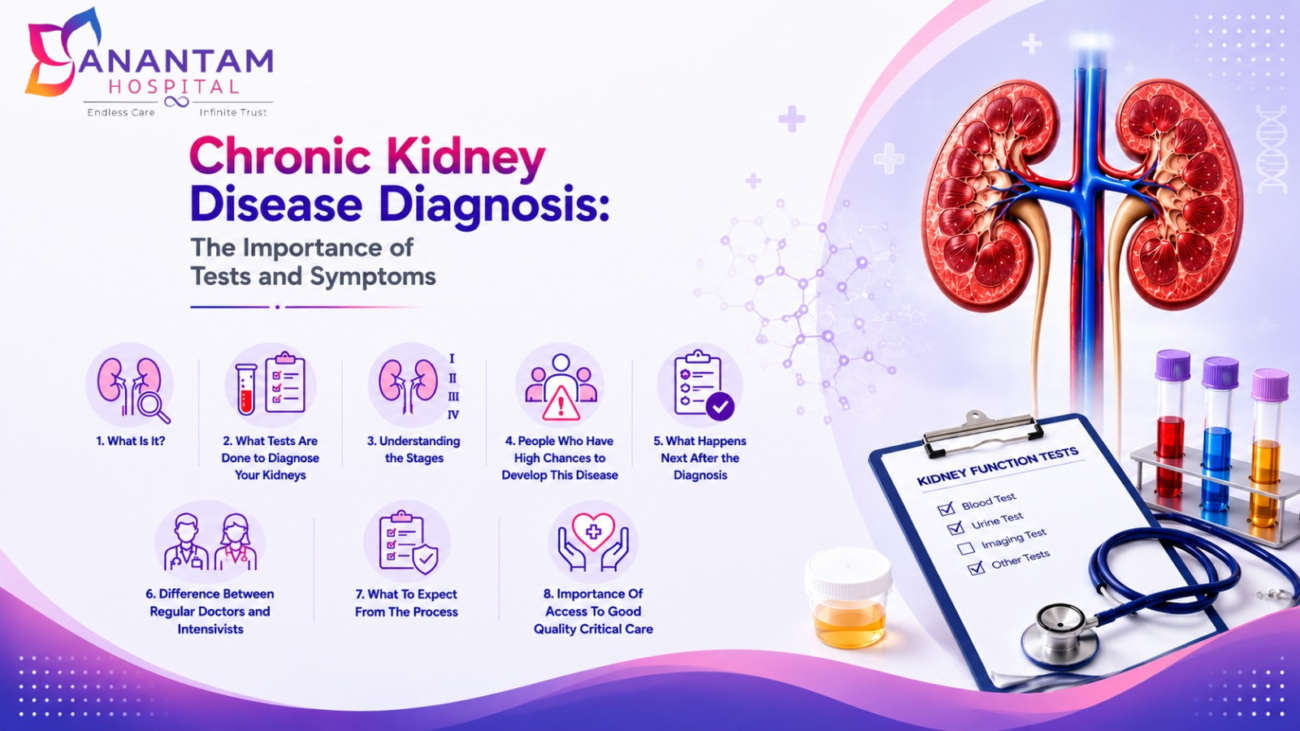
Chronic Kidney Disease Diagnosis at Anantam Hospital

Chronic Kidney Disease Diagnosis: The Importance of Tests and Symptoms

Your kidneys function continuously to cleanse your blood from toxins, yet you only pay attention to them once something goes wrong. By the time you notice the problem, lots of things may have been going on under the surface. That’s why chronic kidney disease diagnosis is so important. They usually appear slowly and develop silently, which means that an early detection becomes crucial for you to take appropriate action.

What Is Chronic Kidney Disease?

Chronic kidney disease, commonly known as CKD, is a slow decrease in kidney function due to some internal issues. Unlike acute cases, it takes a lot of time to develop, sometimes many years.

Your kidneys cleanse your blood from metabolic waste, adjust fluid balance, and maintain blood pressure levels. If something starts happening with kidneys, the consequences will affect the whole organism, not only the urinary system.

The First Signs that You Might Overlook

This illness is really hard to detect, and that is why chronic kidney disease diagnosis becomes so important.

Be careful about these symptoms:

  • Frequent tiredness despite rest
  • Leg swelling
  • Unusual urination patterns, including color changes
  • High blood pressure
  • Loss of appetite or a metallic taste

They do not indicate any specific kidney problem at all, which is exactly why people ignore them.

What Tests Are Done to Diagnose Your Kidneys

Diagnosing kidney issues is pretty simple and does not require any sophisticated procedure.

Blood Tests

  • Shows your creatinine level, a waste that should be filtered by your kidneys
  • Determines your eGFR, which is your estimated glomerular filtration rate (it shows how well your kidneys work)

Urine Tests

  • Detects presence of protein or albumin in urine, which should not be there
  • Allows you to diagnose your kidney issues even before any symptom appears

Imaging Test

  • Ultrasound helps you find the kidney’s size, structure, or blockages and cysts

Biopsy (If Needed)

  • It’s done if it’s difficult to understand the reason of your illness after all blood and urine tests

These tests create a full picture, and this is the reason why chronic kidney disease diagnosis rarely requires one single test.

Understanding the Stages of CKD

After you get your result, doctors will divide your disease into 5 stages according to your eGFR results.

Stage 1: normal kidney function but other signs of kidney damage present
Stage 2: mild reduction in kidney function
Stage 3: moderate reduction in kidney function (stage 3b is usually accompanied with symptoms appearance)
Stage 4: severe reduction in kidney function
Stage 5: kidney failure

Each stage will allow you to plan the appropriate treatment for your kidney disease.

People Who Have High Chances to Develop This Disease

There are a few factors, which increase your chances to develop chronic kidney disease.

Diabetes – is one of the main reasons for the appearance of this illness.
High blood pressure – puts additional stress on the blood vessels of the kidneys.
Family history of kidney disease
Obesity – it increases the workload on your kidneys.

Knowing your risks allows you to prevent this illness before it appears.

What Happens Next After the Chronic Kidney Disease Diagnosis?

After the diagnosis, you have to create an appropriate treatment plan, which depends on your stage.

It includes the following steps:

Lifestyle changes – it’s needed to control blood sugar, reduce salt intake, and to exercise.
Medication – to control high blood pressure.
Monitoring – regular blood and urine tests to control kidney function.
Dialysis or transplant – it’s used in advanced stages of this disease.

Timely treatment allows you to slow down the process of chronic kidney disease development.

Summary

CKD is really hard to spot, which is the main reason why the knowledge of this illness symptoms becomes so important. Getting your diagnosis in time will give you the opportunity to manage it successfully.

If you have diabetes or high blood pressure, or you haven’t got checked recently, it’s better to do it now. Anantam Hospital, which is the best multispeciality hospital in Kalyan with 24/7 emergency care, provides consultations for Nephrology.