
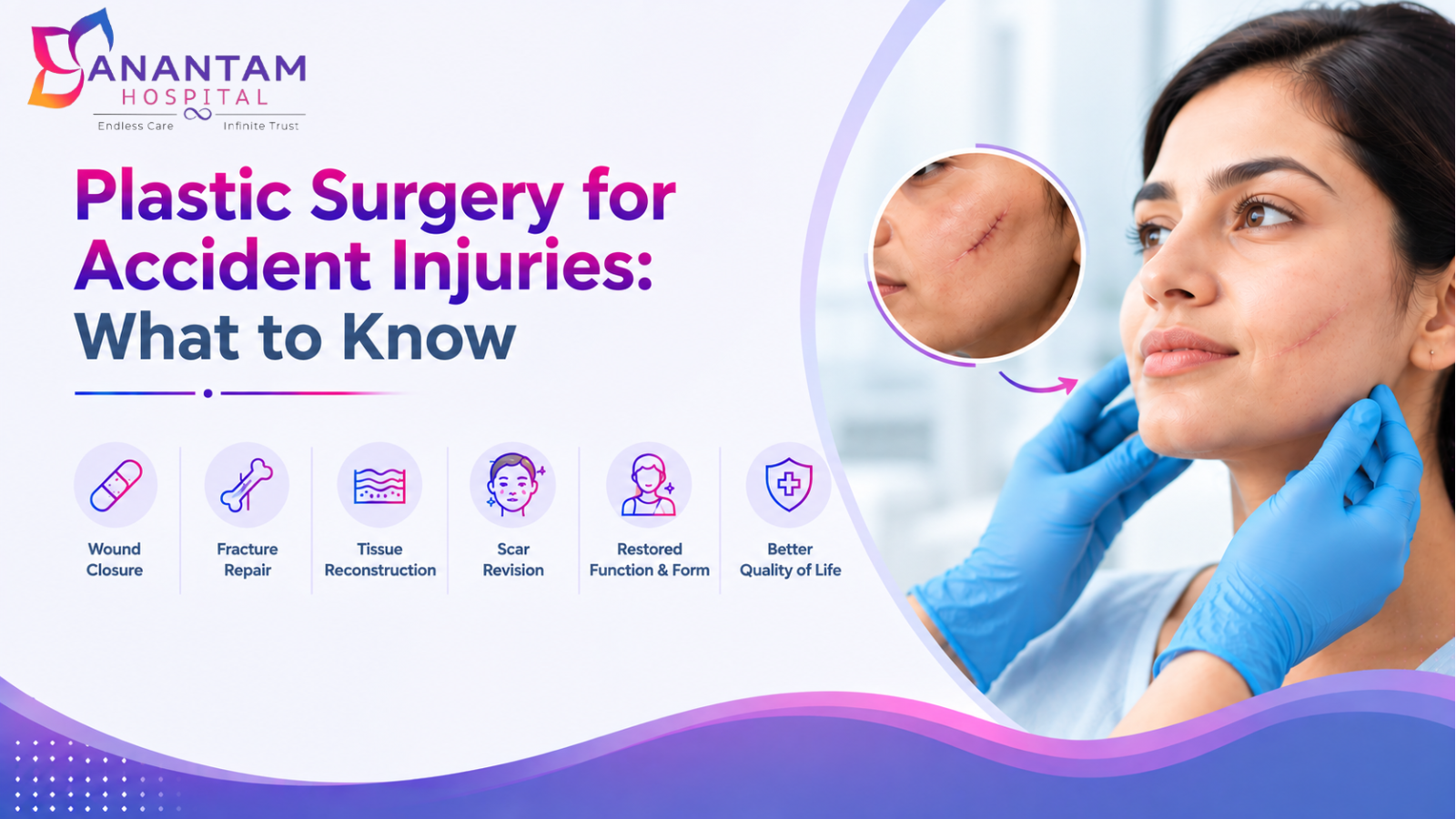
One wrong turn on the road and the entire face’s appearance can be altered permanently in mere seconds. If you or someone you know has ever suffered an accident, you can only imagine the panic that occurs post-incident – the lasting ramifications of the injury can be terrifying, and one’s primary concern, after the initial panic fades, is whether or not the injury would forever be an unpleasant reminder of the incident. That is what plastic surgery for accident injuries seeks to correct, and I aim to explain the process in detail below.
Plastic surgery for accident injuries encompasses everything from the deep cuts incurred during a two-wheel mishap to the facial fractures sustained at a construction site.
Facial/Body Injuries & Why a Plastic Surgeon Is Needed
While there is no doubt that a plastic surgeon may not be necessary for minor lacerations, more severe wounds call for the expertise of a plastic surgeon due to the permanent nature of an uneven, badly-closed scar.
Plastic surgery for accident injuries therefore addresses both the functional implications of the injury and the aesthetic ramifications of such an injury and is concerned with restoring a person to his/her pre-injury condition.
The three types of injuries that commonly necessitate seeing a plastic surgeon are:
- Severe Lacerations
- Facial Fractures
- Soft Tissue Losses
Lacerations, Fractures & Soft Tissue Loss: What You Should Know
Road accidents, slips, and workplace mishaps are known to cause one or more of the following injuries:
- Severe Lacerations- These pertain to deep cuts or wounds that are often irregular in shape and require the expertise of a plastic surgeon for optimal healing.
- Facial Fractures- This is the layman’s term for fractures that occur in any of the facial bones including the cheekbones, zygoma, and the bones surrounding the eye sockets.
- Soft Tissue Losses- This refers to the loss of skin and tissue that may or may not be associated with bony defects and is most commonly associated with road accidents.
Why Time Is of the Essence
There is what is commonly referred to as the ‘golden hour’ in trauma management – the sooner the patient arrives at the facility post-injury, the lesser the risks associated with the injury. This goes for both the functional and aesthetic management of the injury.
We advise against waiting to see whether or not the injury heals on its own, particularly with regard to injuries involving the facial region and joints since timely plastic surgery for accident injuries can make a marked difference in the final appearance of a given scar.
What to Expect During Treatment
Plastic surgery for accident injuries is a multi-step process that includes, amongst other steps, wound assessment, debridement, reconstruction, and appropriate scar management. Each of these steps plays an important role and skipping any step could be severely detrimental in the long-term course of healing.
Laceration repair surgery is one such procedure that differs from a standard suture in that it entails wound edge approximations and meticulous layer closure with an eye towards optimal aesthetics. The same principle applies to other procedures involved in plastic surgery for accident injuries.
Facial Fracture: What You Should Know
Most people are under the impression that a facial fracture is a simple procedure that entails a few minutes at the emergency room and is over with. The truth, however, is that this can range from simple plastering of the nose in certain conditions to titanium plating and screwing of complex facial fractures. This is done with a view to restoring normal anatomy and function post-fracture.
Soft Tissue Injury Repair: What You Should Know
As mentioned above, soft tissue losses are those wherein the skin and underlying tissue are lost, in whole or in part, usually as a result of a road accident (wherein skin can be skinned off in a particular region as a result of friction). There are two possible courses of action (with a third possibly being considered depending on the nature of the injury) – a skin graft (wherein skin is transferred from one region of the body to another) and a tissue flap where the tissue is transferred from one region to another, along with its blood supply.
In some cases, scar revision surgery may be considered as a secondary procedure, months down the line, once the wound has healed.
Reconstructive Surgery After Trauma Isn’t All Cosmetic
When people think of plastic surgery, the first thing that comes to mind is cosmetic surgery. Reconstructive surgery after trauma, however, pertains to restoring a person’s appearance, as well as, function following an accident. This procedure therefore restores not only one’s form, but also function, and is a form of functional medicine in cosmetic surgery.
Healing & Recovery
Healing following trauma is not linear and people tend to underestimate the amount of time that it takes for the wounds to heal and the scars to fade.
Swelling tends to peak on day 2-3 and then subsides over a period of two weeks. Scars, as well, tend to look at their worst between 6-8 weeks post-surgery and progressively improve over the next year, making it important to follow up with your surgeon for any post-operative concerns.
Sunscreen, massaging (as advised by your surgeon), and patience go a long way in determining how well your scars heal and your final aesthetic outcome. This is why good plastic surgery for accident injuries always involves a follow-up plan to ensure optimal healing.
Consulting a Plastic Surgeon for Accident & Injury Repair: When & Why
As mentioned above, not all injuries require the intervention of a plastic surgeon. Plastic surgeons, however, are often called upon to intervene in the following scenarios:
- Injuries involving the facial region, hands, or any other region that is highly visible.
- Presence of fat, muscle, or bone tissue visible through the wound.
- Obvious facial asymmetry post-accident.
- Skin and tissue loss (as opposed to loss of skin alone).
- Facial, oral, or hand fractures.
- Bite, crush, or degloving injuries.
When in doubt, it is best to seek consultation with a plastic surgeon as same-day consults are generally quick and are always a good idea. You also have the option of speaking to your primary care physician if you have one and seeking his/her opinion – in either case, a same-day consult with a plastic surgeon is always a good idea.
Healing Wounds Can Be Complicated: Here’s What to Do
Plastic surgery for accident injuries is multi-faceted and requires the expertise of a specialist. Accidents occur in an instant, but the healing process thereafter can take much longer and has lasting implications for the patient following such an incident.
In case you or someone you know is considering plastic surgery for accident injuries, I urge you to speak to a specialist in the field of trauma and ask him/her any questions that you may have.
Good plastic surgery for accident injuries is about restoring form as well as function, and it goes a long way in terms of returning the person to his/her pre-accident state.
At Anantam Hospital, the best multispeciality hospital in Kalyan West that provides 24/7 emergency care, you don’t have to choose between speed and quality when every minute counts. Our team is right there when you need them, ready to treat the injury and think ahead to how you’ll look and feel months down the line.
Your face, your hands, and your comfort are worth it.


Add a Comment