
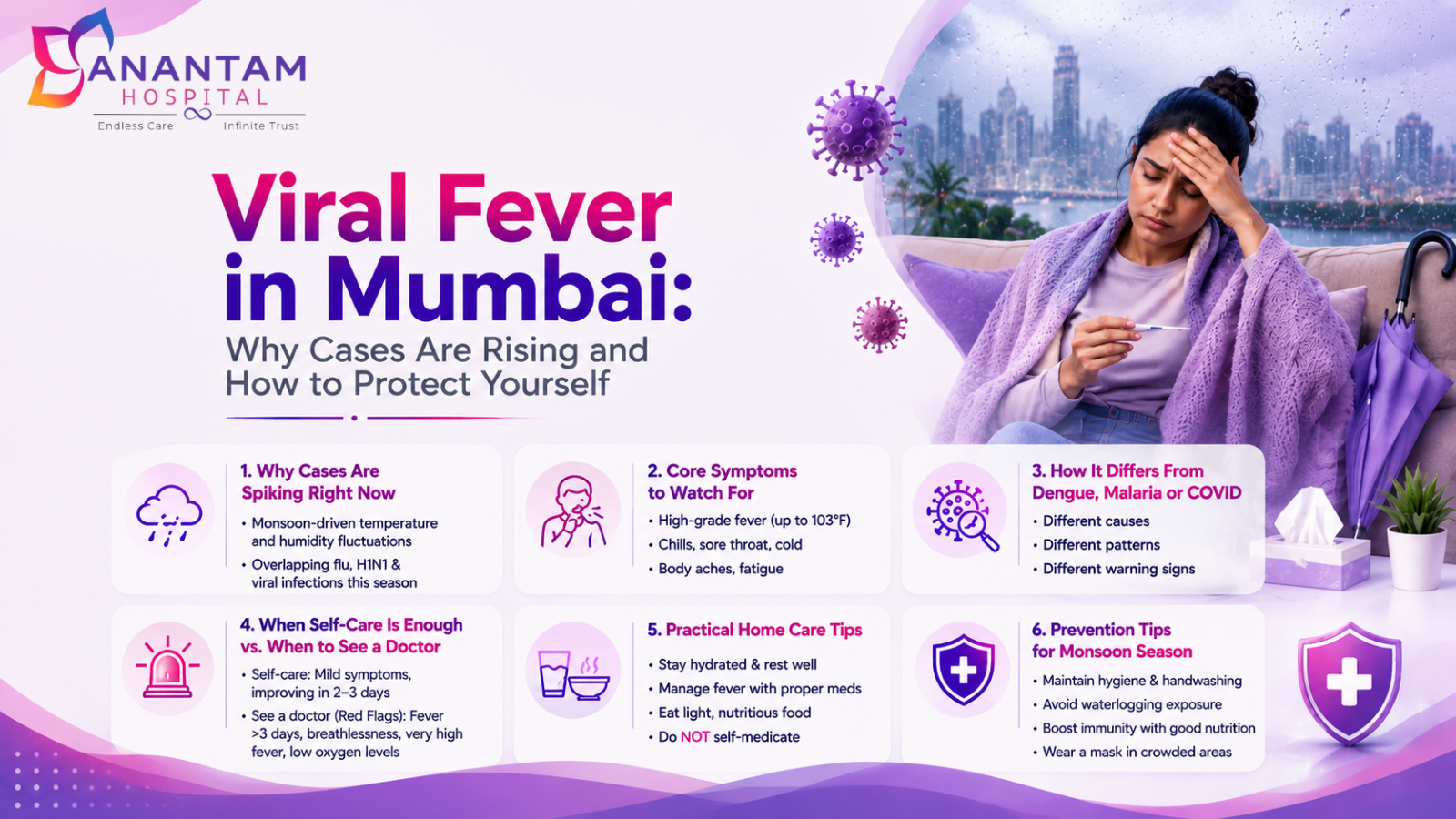
Feels like everyone around you is either coughing, running a fever, or nursing a sore throat right now, doesn’t it? You’re not imagining it. Mumbai is seeing a real spike in viral fever cases this season, and if you haven’t caught it yet, chances are someone in your house, office, or building has.
Why Is Viral Fever Spiking Right Now?
Blame it on the weather. Mumbai’s monsoon brings that classic combo of high humidity and sudden temperature swings, and viruses love that environment.
Here’s what’s fueling the surge:
- Fluctuating temperatures that weaken your body’s natural defenses
- High humidity that lets viruses spread and survive longer in the air
- Crowded indoor spaces where people gather to escape the rain
- Waterlogging and stagnant water, which brings its own set of infections into the mix
Doctors across the city are reporting a noticeable jump in OPD visits for fever, cough, and cold this month. If it feels like this year is worse than usual, that’s not just a coincidence.
What Does It Actually Feel Like?
Not every fever is the same, so let’s talk symptoms. Most cases right now show up with a fairly predictable pattern.
Common symptoms include:
- High-grade fever, sometimes touching 102 to 103°F
- Chills and body shivering, even indoors
- Sore throat that makes swallowing uncomfortable
- Persistent cold and a blocked or runny nose
- Body aches and general fatigue
- Mild cough that sticks around
It’s not fun, but for most people, it’s manageable at home with the right care.
Viral Fever vs. Dengue, Malaria, and COVID
This is where things get confusing, and honestly, that confusion is valid. A lot of monsoon illnesses share overlapping symptoms.
Here’s a quick way to think about it:
- This kind of fever usually comes with cold, sore throat, and body aches, and tends to ease up within a few days
- Dengue often brings a much higher fever along with severe joint pain, rashes, and a sharp drop in platelet count
- Malaria typically causes fever that comes in cycles, often paired with intense chills and sweating
- COVID can look similar to viral fever but may include loss of taste or smell and breathing difficulty in some cases
If you’re unsure which one you’re dealing with, that’s exactly the kind of guessing game you shouldn’t play alone.
When Should You Actually See a Doctor?
Most viral infections run their course in three to five days with rest and basic care. But certain signs mean it’s time to stop waiting it out.
Get checked if you notice:
- Fever lasting more than three days without improvement
- Very high fever that isn’t responding to medication
- Breathlessness or chest discomfort
- Severe weakness or dizziness
- Persistent vomiting or inability to keep fluids down
- Any drop in oxygen levels if you’re monitoring at home
None of these should be brushed off, especially if you’re managing symptoms in an elderly family member or a young child.
How to Manage It at Home
If your case is mild, here’s what actually helps:
- Hydrate constantly. Water, ORS, coconut water, and soups keep you from getting dehydrated
- Rest properly. Your body needs energy to fight off the infection, not to push through work
- Manage fever sensibly. Use paracetamol as needed, but don’t self-medicate with random combinations
- Gargle for sore throat. Warm salt water works better than people give it credit for
- Monitor your symptoms daily. If things aren’t improving by day three or four, that’s your cue to get checked
One thing worth repeating: don’t self-medicate with antibiotics. Most cases of viral fever are, well, viral, and antibiotics won’t do a thing against a virus.
Prevention Tips for Monsoon Season
A little effort now saves you a miserable week later. Here’s what actually makes a difference:
- Avoid wading through waterlogged streets whenever you can help it
- Keep your surroundings dry to cut down mosquito breeding near your home
- Wash your hands frequently, especially after commuting or being in crowded spaces
- Eat warm, home-cooked food and avoid roadside food during this season
- Boost your immunity with enough sleep, hydration, and a balanced diet
- Wear a mask in crowded indoor spaces if you’re around anyone who’s unwell
None of this guarantees you’ll dodge it completely, but it meaningfully lowers your odds.
Don’t Wait It Out If Something Feels Off
Mumbai’s monsoon season brings this wave every year, and this year is proving no different. Most cases of viral fever resolve on their own, but knowing when to seek help is what keeps a mild illness from turning into something more serious.
If you or your family have been dealing with fever, sore throat, or persistent cold for more than a couple of days, don’t just push through it. Anantam Hospital, recognized as the best multispeciality hospital in Kalyan, offers a dedicated Fever OPD and General Medicine department to help you get checked, diagnosed, and back on your feet quickly.


Add a Comment