
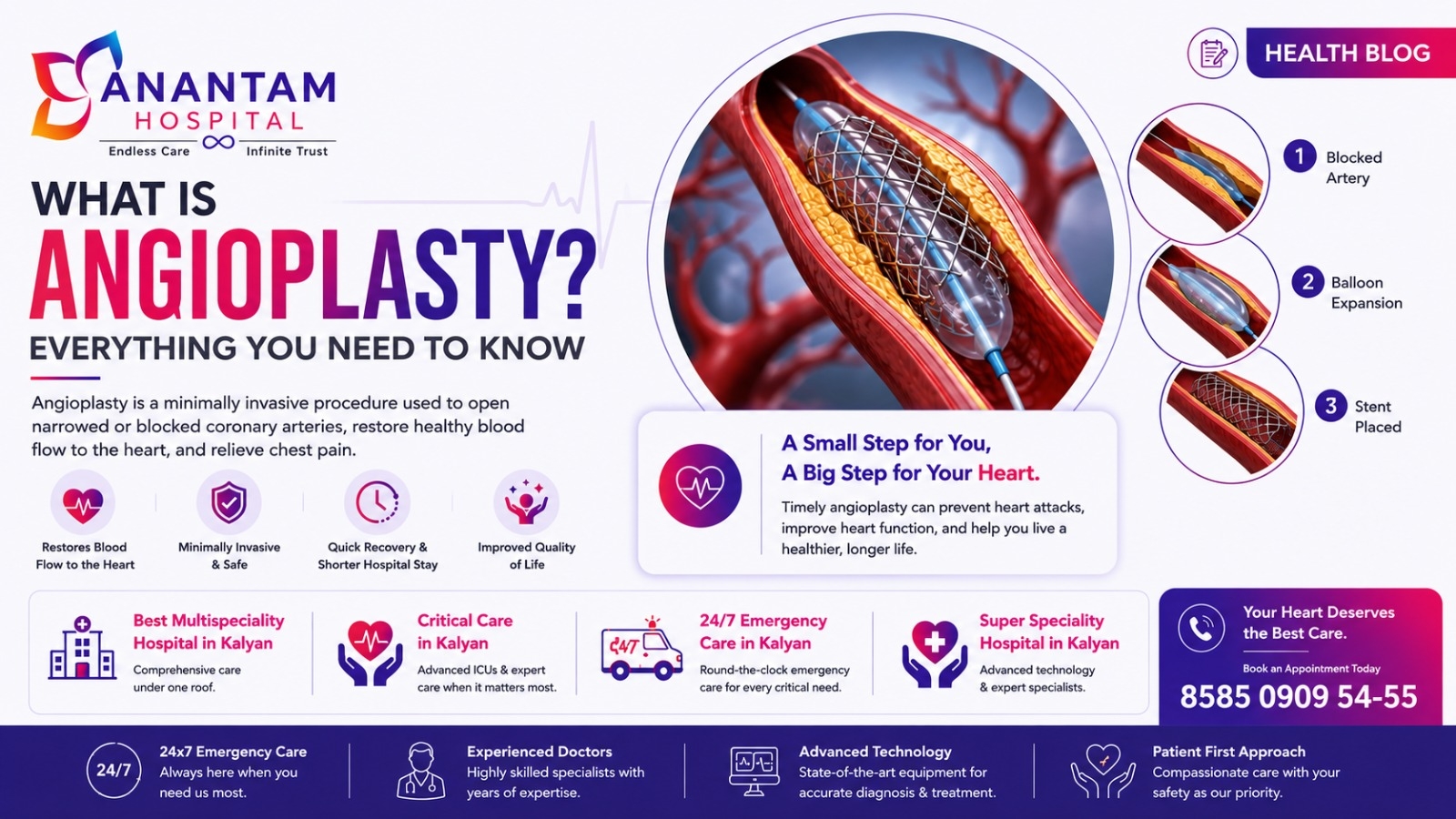
Heart disease remains one of the leading causes of death worldwide, and one of the most common reasons behind heart attacks is the narrowing or blockage of the coronary arteries. These arteries supply oxygen-rich blood to the heart muscle, and when blood flow is restricted, it can lead to chest pain, breathlessness, or even a life-threatening heart attack. Fortunately, advancements in medical science have made it possible to restore blood flow quickly through a minimally invasive procedure known as angioplasty.
If you or a loved one has been advised to undergo angioplasty, it is natural to have several questions about the procedure, its benefits, recovery process, and long-term outcomes. Understanding how angioplasty works can help reduce anxiety and prepare you for a smoother treatment journey.
At Anantam Hospital, recognized as the Best Multispeciality Hospital in Kalyan, our experienced cardiologists, state-of-the-art cardiac care unit, and advanced catheterization laboratory provide world-class heart care with a strong focus on patient safety and successful outcomes.
What is Angioplasty?
Angioplasty, also known as Percutaneous Coronary Intervention (PCI), is a minimally invasive procedure performed to open blocked or narrowed coronary arteries. Instead of performing open-heart surgery, doctors use a thin flexible tube called a catheter, which is inserted through an artery in the wrist or groin and carefully guided to the blocked artery.
Once the catheter reaches the affected area, a small balloon attached to its tip is inflated. This balloon compresses the plaque against the artery walls, restoring normal blood flow to the heart. In most cases, a small wire mesh tube called a stent is also placed inside the artery to keep it open and reduce the chances of future blockage.
Because angioplasty does not require large surgical incisions, patients usually experience less pain, shorter hospital stays, and faster recovery compared to traditional heart surgery.
Why is Angioplasty Needed?
The coronary arteries can gradually become narrowed due to the buildup of fatty deposits, cholesterol, calcium, and other substances, collectively known as plaque. This condition is called coronary artery disease (CAD). As the arteries narrow, the heart receives less oxygen-rich blood, making it difficult to function efficiently.
Doctors may recommend angioplasty for patients experiencing persistent chest pain (angina), shortness of breath, reduced blood supply to the heart, or after diagnostic tests reveal significant artery blockage. In emergency situations such as an acute heart attack, angioplasty is often performed immediately to restore blood flow and minimize damage to the heart muscle.
Early intervention significantly improves survival rates and reduces long-term complications associated with heart disease.
Symptoms That May Indicate Blocked Heart Arteries
Blocked arteries often develop gradually, and many people ignore the early warning signs. Some of the most common symptoms include persistent chest discomfort or pressure, pain radiating to the left arm, jaw, shoulder, or back, shortness of breath during physical activity, excessive fatigue, dizziness, cold sweats, irregular heartbeat, and nausea. In some individuals, particularly those with diabetes, symptoms may be mild or completely absent until a heart attack occurs.
Seeking immediate medical attention when these symptoms appear can be life-saving.
How is Angioplasty Performed?
The angioplasty procedure is usually completed within one to two hours, depending on the complexity of the blockage. Patients are given local anesthesia at the catheter insertion site, ensuring minimal discomfort while remaining awake throughout the procedure.
A catheter is inserted through an artery in the wrist or groin and guided toward the heart using real-time X-ray imaging. A contrast dye is injected to clearly visualize the blocked coronary artery. Once the blockage is identified, a balloon catheter is positioned and inflated to widen the artery. A stent is then deployed to keep the artery open and maintain healthy blood flow.
After the procedure, the catheter is removed, and pressure is applied to prevent bleeding. Patients are monitored closely before being shifted to recovery.
Types of Stents Used During Angioplasty
Modern angioplasty commonly involves the placement of a stent. Drug-Eluting Stents (DES) slowly release medication that helps prevent the artery from narrowing again, making them the most commonly used option today. Bare Metal Stents (BMS), although less frequently used, may still be appropriate for selected patients based on their medical condition and treatment requirements.
The choice of stent depends on the patient’s overall health, medical history, and recommendations made by the treating cardiologist.
Benefits of Angioplasty
Angioplasty provides rapid relief from symptoms by restoring blood flow to the heart. Patients often experience a significant reduction in chest pain and improved ability to perform daily activities. The procedure reduces the risk of heart attacks, improves heart function, shortens hospital stays, and allows for quicker recovery compared to conventional surgery. Since only a small incision is required, there is less pain, minimal scarring, and a lower risk of infection.
For patients experiencing a heart attack, emergency angioplasty can preserve heart muscle, improve survival rates, and prevent permanent damage.
Are There Any Risks?
Like any medical procedure, angioplasty carries some risks, although serious complications are uncommon when performed by experienced specialists. Possible risks include bleeding at the catheter insertion site, allergic reactions to contrast dye, blood clots, artery damage, irregular heartbeat, infection, kidney complications in susceptible individuals, and rarely, re-narrowing of the treated artery.
At Anantam Hospital, advanced technology, experienced cardiologists, and strict safety protocols significantly reduce these risks while ensuring the highest standards of patient care.
Recovery After Angioplasty
Recovery following angioplasty is generally quick. Most patients are able to walk within a few hours and return home within one or two days, depending on their condition. During the recovery period, patients should avoid strenuous activities for a short time, take prescribed medications regularly, attend scheduled follow-up appointments, maintain adequate hydration, and monitor the catheter insertion site for any unusual swelling or bleeding.
Complete recovery varies from person to person, but many individuals resume their normal routine within a week after consulting their doctor.
Lifestyle Changes After Angioplasty
While angioplasty restores blood flow, it does not cure coronary artery disease. Maintaining long-term heart health requires healthy lifestyle choices. Patients should adopt a balanced diet rich in fruits, vegetables, whole grains, and lean proteins while reducing the intake of saturated fats, processed foods, and excess salt. Regular physical activity, maintaining a healthy weight, controlling blood pressure, diabetes, and cholesterol levels, quitting smoking, limiting alcohol consumption, managing stress, and following prescribed medications all play a crucial role in preventing future heart problems.
These lifestyle modifications significantly improve long-term outcomes and reduce the chances of repeat procedures.
When Should You Seek Emergency Medical Care?
Never ignore symptoms that could indicate a heart attack. Severe chest pain lasting more than a few minutes, pain spreading to the arm, jaw, or back, sudden breathlessness, excessive sweating, fainting, nausea, or loss of consciousness require immediate medical attention.
Prompt treatment during the “golden hour” can save heart muscle and greatly improve survival. Anantam Hospital provides 24/7 Emergency Care in Kalyan, ensuring that experienced emergency physicians and cardiologists are available round the clock to respond to cardiac emergencies without delay.
Why Choose Anantam Hospital for Cardiac Care?
Choosing the right hospital is one of the most important decisions when it comes to heart health. As a Super Speciality Hospital in Kalyan, Anantam Hospital offers comprehensive cardiac services under one roof, supported by advanced medical technology and a multidisciplinary team of specialists.
Patients benefit from experienced interventional cardiologists, advanced cardiac catheterization facilities, modern diagnostic imaging, comprehensive cardiac rehabilitation, intensive monitoring, and personalized treatment plans. Our dedicated Critical Care in Kalyan unit is equipped to manage complex cardiac emergencies with continuous monitoring and expert medical support.
Whether it is emergency angioplasty, preventive heart screening, or long-term cardiac care, our commitment is to provide safe, evidence-based treatment focused on improving patient outcomes and quality of life.
Angioplasty has transformed the treatment of coronary artery disease by offering a safe, effective, and minimally invasive solution for restoring blood flow to the heart. Early diagnosis, timely intervention, and appropriate lifestyle changes can significantly reduce the risk of future cardiac events and help patients lead healthier lives.
If you experience persistent chest pain, breathlessness, or any symptoms suggestive of heart disease, do not delay seeking medical attention. At Anantam Hospital the Best Multispeciality Hospital in Kalyan, our expert cardiologists, advanced cardiac facilities, Critical Care in Kalyan, 24/7 Emergency Care in Kalyan, and comprehensive healthcare services ensure you receive the highest standard of treatment when every second matters.


Add a Comment