
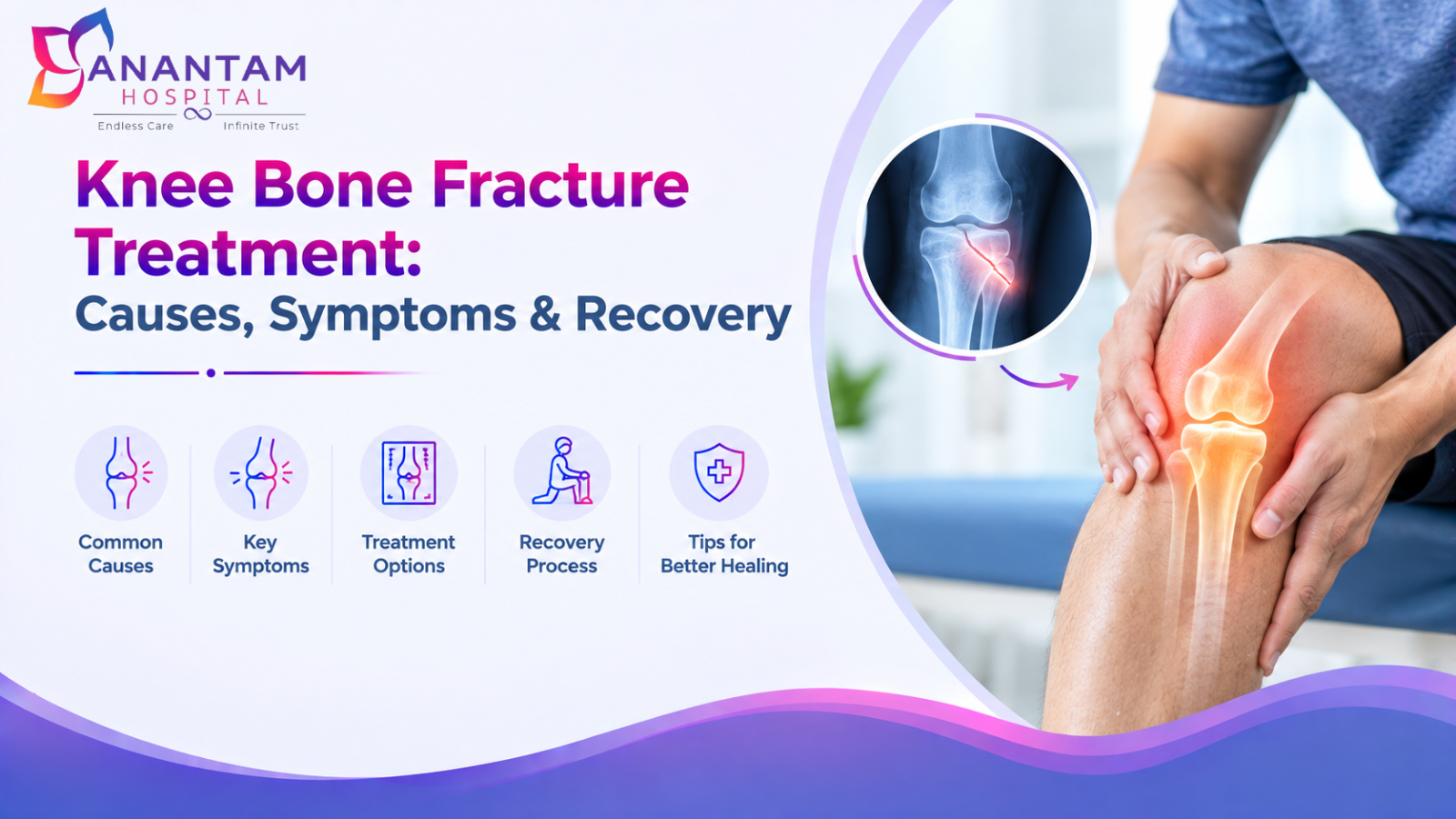
One misstep on the stairs, one clumsy fall off your bike and suddenly you are unable to put on any weight on your leg. Your knee has puffed up like a balloon and any movement brings jarring pain, if this rings any bells, you might currently be suffering from a knee fracture. Let’s talk about knee bone fracture treatment, knee fracture symptoms and knee fracture recovery in this guide.
A timely knee bone fracture treatment has the potential to make or break your road to recovery.
Understanding the Knee Fracture
Your knee, as you may be aware, consists of three bones, your thighbone, your shin bone and your kneecap, that come together to form the joint.
A knee fracture refers to a crack in any of these bones at the joint and the kind of treatment required to fix it can vary greatly depending on which one is injured.
The Different Types of Fractures
Not all fractures are the same and understanding what you are dealing with can help you understand how to deal with it.
The Three Basic Types of Knee Fracture Are:
- Patella Fracture: This is a break in your kneecap that is typically caused by a direct impact to the front part of the knee
- Tibial Plateau Fracture: This refers to a break in the top of your shin bone, the part that joins to your knee joint
- Distal Femur Fracture: This is a break towards the bottom of your thigh bone, right above your knee
What Causes a Knee Fracture?
There is no single cause that can be pointed at for a knee fracture, but a number of factors are typically involved in a knee injury.
The Common Causes of a Knee Fracture Include:
- Falls: Landing awkwardly on the knee is one of the most common reasons for a knee fracture
- Road Accidents: A blow to the knee is quite easily achievable on the roads and can result in an immediate fracture
- Sports Injury: Contact sports and those involving a lot of jumping can put a lot of pressure on your knee
- Direct Impact: This is pretty much a catch-all for any injury caused by a direct blow to the knee with an object or during a fall
- Osteoporosis: If the bones in your knee are weak from this condition, any minor incident can potentially cause a fracture
If you’ve been active lately or are of an age where osteoporosis frequently occurs, you are more likely to suffer from a knee fracture.
Knee Fracture Symptoms
Not every knee injury indicates a fracture, here are some knee fracture symptoms that should give you pause for thought if you experience them.
Some Common Knee Fracture Symptoms Are:
- Intense pain in the knee area
- Swelling
- Deformity
- Difficulty extending your leg or putting any weight on it
- Bruising
- Sensation of grinding when moving the knee
If you experience two or more of these, you should consider a knee bone fracture treatment at the earliest convenience.
The Importance of Diagnostic Imaging
I know how much an X-ray or CT scan can suck when you’re in pain but this is where diagnostic imaging steps in as an important factor in your treatment.
A physical examination cannot indicate to your doctor, the precise nature of a knee fracture, which is why imaging is an important part of determining the knee bone fracture treatment required.
Knee Bone Fracture Treatment: What to Expect
Now, on to the important part and that would be an overview of knee bone fracture treatment options, which can vary widely based on the type of fracture you have
For Stable, Non-Displaced Fractures
- Immobilization: Usually with a brace or cast to ensure that your knee is completely off-limits to movement
- Crutches: To avoid putting any weight on the affected leg
- Follow-Up Imaging: To determine the rate of healing and adjust treatment as required
For Displaced Fractures
- Surgical Repair: To ensure that the bones heal correctly and the joint functions normally, this may involve the use of surgical hardware to stabilize the fracture
- This applies primarily to a tibial plateau fracture, a patella fracture may also require wiring if it is in multiple pieces
When does knee fracture surgery become necessary? A knee fracture surgery is often indicated in cases where the displaced bones need manipulation to heal in the correct position or the knee joint is compromised, a cast alone will not suffice in such situations
None of this should scare you however as most fractures, even the surgically repaired ones, heal well with the right knee bone fracture treatment and time.
Knee Fracture Recovery Time
Asking about the timeline for return after a knee fracture is probably the most common question and the answer to it varies depending on the type of fracture you have.
A stable fracture that requires a brace or a cast usually heals anywhere between 6-8 weeks whereas surgical fractures can take up to 3-6 months to fully heal, with additional physiotherapy involved for a complete return to activity.
Similarly, returning to a physically taxing job or sport can take a number of additional months.
Knee fracture recovery time is also determined by the extent of damage to the muscles around the knee, which can also need to be rehabilitated along with the joint.
Physiotherapy and the Road to Recovery
Many people who have been through a knee fracture treatment make a swift return to their daily lives but in their eagerness forget that the slow and steady approach is the best approach.
Here’s what a physiotherapy regime should consist of:
- Gentle range of motion exercises to aid in mobility
- Strengthening exercises to rebuild the quads, hamstrings, balance and agility
- Slow and progressive return to strenuous activity
- Returning to stairs and sports, once again, at a slow pace
Avoiding this gradual return after a knee bone fracture treatment is one of the biggest knee fracture recovery mistakes one can make, as it can lead to long-term complications.
Knowing When To Seek Emergency Care
Many knee injuries can be scheduled for a same-day appointment, but if you notice any of the following symptoms, you should seek emergency care
The Following Are Signs of a Medical Emergency Related to a Knee Fracture:
- Visible deformity or misalignment of the leg
- Numbness or loss of pulses in the leg
- Open wound with exposed bones
- Severe pain that is rapidly worsening
If you notice any of these symptoms, head straight to an emergency room instead of scheduling a regular appointment.
Getting the Right Care as Soon as Possible
Knee injuries have a way of sneaking up on us and giving us just enough false confidence to attempt standing and walking on our own. This is when the window closes for timely intervention and additional complications arise.
To avoid this, if you have been involved in an incident or have noticed any knee fracture symptoms and suspect a knee fracture, book an appointment with an orthopedic doctor in Kalyan at the earliest.
The right knee bone fracture treatment at the right time is key to a smooth recovery. Book a consultation with the Orthopedics team at Anantam Hospital, the best multispeciality hospital in Kalyan and get on the road to a swift and painless recovery.


Add a Comment