
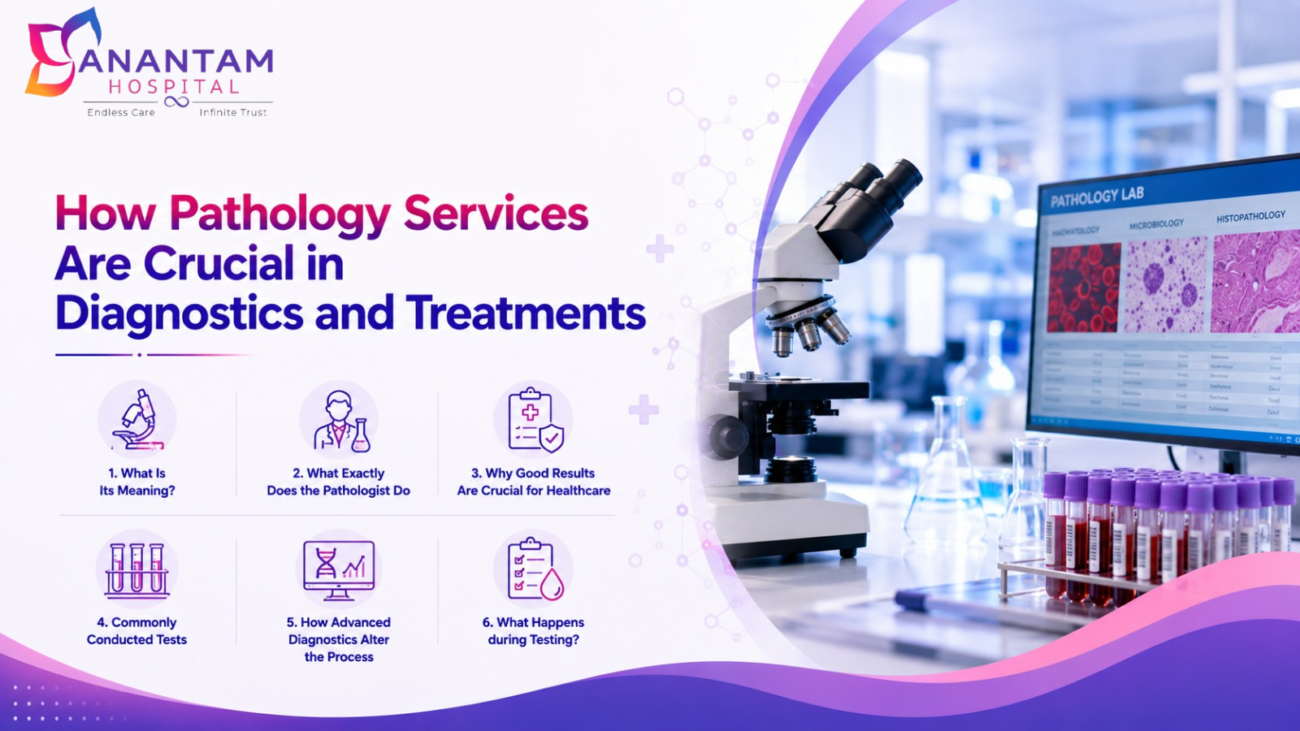
Pathology services in a lab with microscope and blood test samples at Anantam Hospital

How Pathology Services Are Crucial in Diagnostics and Treatments

Going to the lab, getting poked, and leaving without even looking back is something we all did several times in our life, but what really happens after you leave – most likely, you don’t even give it a second thought. It turns out, this small process influences each of your treatment choices in a huge way. This is the part of diagnostic process in pathology services which gets overlooked the most often, but behind each diagnosis lies the lab diagnosing what’s happening inside your body.

What We Mean by This Term?

While many people assume “the lab” equals blood draws, this particular field covers many more aspects of diagnostics.

Typically, it includes:

  • blood tests ranging from general health check-ups to complicated panels;
  • biopsy – testing samples of tissue for presence of any diseases;
  • analysis of urine and feces in order to detect any abnormalities and infections;
  • histopathology – analyzing tissue structure using a microscope;
  • microbiology which identifies bacteria, viruses, fungi infections;
  • molecular diagnostics which analyzes DNA for a particular disorder.

Although their roles may be very different, these are crucial parts of diagnostics process.

What Exactly Does the Pathologist Do in Your Case

Although you’re unlikely to ever meet the pathologist who works on your case, his or her input will directly affect the treatment plan.

Concluding that you have an infection, that there are cancer cells in a sample of tissue, that you do not have a particular disease – this is where pathology services make their diagnostic contribution.

Why Good Results Are Crucial for Healthcare

Delayed or incorrect results not only cause discomfort but can significantly affect the treatment. That’s exactly the reason why good pathology services are crucial in current healthcare industry.

  • timely diagnosis allows you to get treated faster in case of any urgent cases;
  • accurate results reduce unnecessary treatment or missings of certain conditions;
  • detailed reports provide doctors with the whole information about the condition;
  • reliable quality control of all lab procedures leads to trustworthy results.

Commonly Conducted Tests

Now let’s discuss several commonly conducted tests most of you are familiar with without understanding what exactly is being checked during the examination.

  • CBC (Complete Blood Count) – checks patients for infections, anemia, etc.;
  • Lipid Profile – checks your cholesterol to determine your chances of having heart disease;
  • Biopsy Reports – confirm or exclude certain conditions, such as cancer;
  • Tests for liver and kidneys functioning;
  • Tests of blood sugar;

Understanding the purposes of these procedures will significantly improve communication with your physician.

How Advanced Diagnostics Alter the Process

In addition to traditional methods, modern laboratory diagnostics is now able to use molecular and genetic testing to identify various diseases at early stages and provide a more accurate individual treatment.

In such way, the shift towards personalized medicine changes the process, making the treatment plan based on laboratory diagnostics rather than on your symptoms.

What Happens during Testing?

Testing is not scary anymore when you know the basics of the process.

  • Collecting of samples – blood, urine, tissues or other type of material
  • Laboratory diagnostics – analysis of collected material by trained specialists
  • Report generation – creation of report to be sent to the doctor
  • Turnaround time – period during which you will receive results of the procedure (depending on the procedure it might take from minutes to few days)

Presence of the in-house, accredited laboratory ensures more prompt delivery of the reports and better cooperation between the laboratory and your physician.

Summary

Pathology services are not always mentioned, but still, they are involved in almost every important medical decision. Accuracy and promptness of your laboratory test results are the base of your whole further diagnosis and treatment.

When you have to undergo routine tests or need special diagnostics, choosing a hospital with quality laboratory services will be crucial for the process of your treatment. You should choose Anantam Hospital as one of the best multispeciality hospitals in Kalyan with 24/7 emergency care.
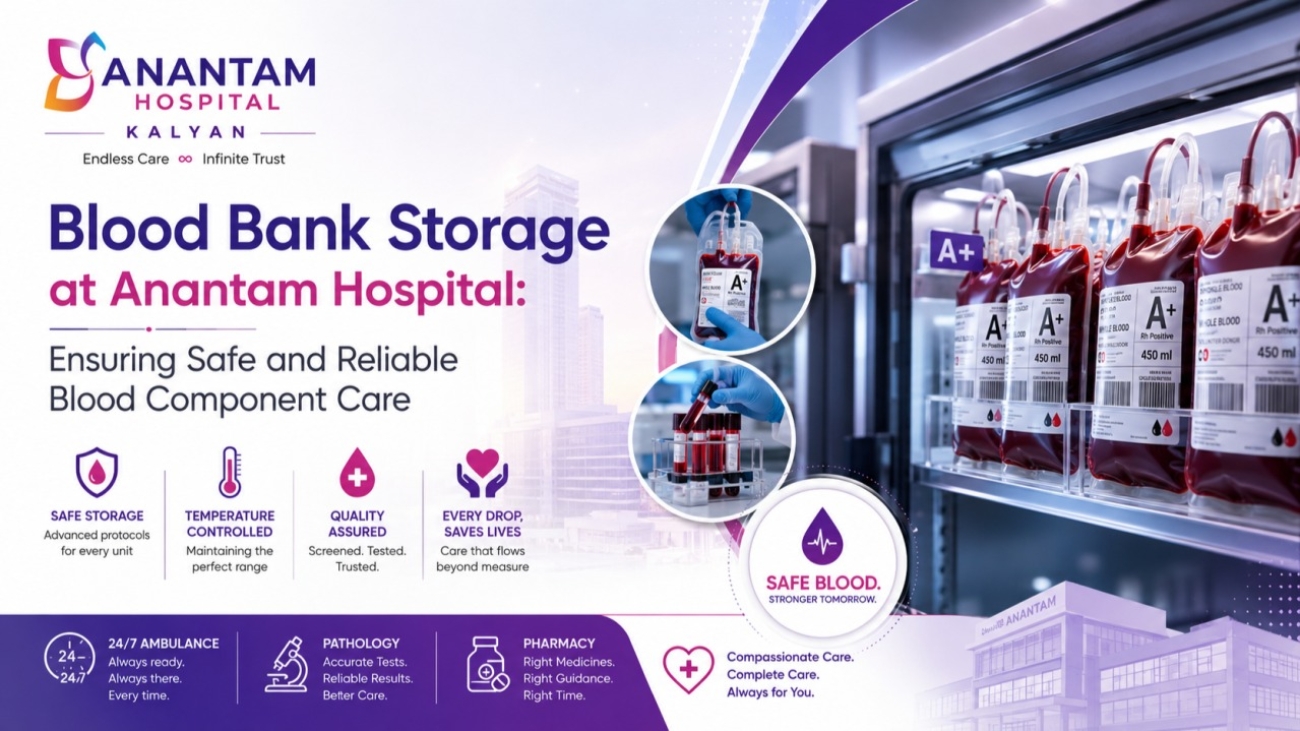
Blood Storage Services in Kalyan at Anantam Hospital

Blood Bank Storage at Anantam Hospital: Ensuring Safe and Reliable Blood Component Care

Blood is one of the most critical resources in healthcare. During emergencies, surgeries, childbirth, trauma care, cancer treatment, and several medical procedures, timely access to safe blood and blood components can be life-saving. Proper blood bank storage plays a crucial role in maintaining the quality, safety, and availability of blood for patients who require transfusion support.

At Anantam Hospital, blood bank storage is an important part of our commitment to comprehensive and patient-centred healthcare. Properly collected and stored blood components require controlled conditions, systematic monitoring, and strict safety protocols to ensure they remain suitable for use when needed.

Why Proper Blood Storage Is Important
Blood and its components are biological products that require specific storage conditions. Maintaining the correct temperature and monitoring storage conditions are essential for preserving the quality and effectiveness of blood components.

Different blood components have different storage requirements. Red blood cells, plasma, platelets, and other components must be handled and stored according to established medical and safety protocols. Continuous monitoring helps ensure that the required conditions are maintained and that any variation can be identified promptly.

Proper storage also helps healthcare teams access the required blood components efficiently during planned procedures and emergency situations.

Supporting Emergency and Surgical Care
Timely availability of blood can be extremely important during medical emergencies. Patients experiencing severe blood loss due to accidents, trauma, complications during surgery, or other critical medical conditions may require urgent transfusion support.

Blood bank storage facilities help hospitals maintain access to essential blood components for patients who need them. This is particularly important for a multispeciality hospital that provides services across emergency medicine, surgery, critical care, cardiology, oncology, and other departments.

At Anantam Hospital, the availability of reliable healthcare support services contributes to coordinated patient care, especially when immediate medical intervention is required.

Importance of Safety and Monitoring
Blood bank storage involves more than simply keeping blood units in a refrigerator. It requires careful monitoring, proper documentation, appropriate handling, and adherence to strict safety procedures.

Blood units and components must be carefully identified, tracked, and stored under appropriate conditions. Regular monitoring helps support the safety and quality of blood products throughout the storage period. Proper procedures also help reduce the risk of errors and ensure that blood is made available for the right patient when required.

Every step, from blood collection and testing to storage and transfusion, is an important part of maintaining safe blood transfusion practices.

Blood Storage and Patient-Centred Healthcare
For patients and their families, knowing that essential medical support is available when needed can provide reassurance during challenging medical situations. Blood bank services form an important part of the larger healthcare system and support various treatments and procedures.

Patients undergoing major surgeries, cancer treatment, critical care, or emergency medical procedures may require blood or blood components as part of their treatment plan. Proper blood bank storage helps hospitals prepare for these requirements and support timely medical care.

Integrated Healthcare at Anantam Hospital
As the best multispeciality hospital in Kalyan West, Anantam Hospital is committed to providing comprehensive medical care supported by essential healthcare services and experienced medical professionals.

The hospital offers a wide range of medical services, including emergency care, critical care, surgery, cardiology, oncology, nephrology, diagnostics, and other specialised treatments. Access to appropriate blood bank support plays an important role in supporting patients across multiple departments.

As a super speciality hospital in Kalyan West, Anantam Hospital focuses on providing coordinated and patient-focused healthcare. For individuals looking for a best hospital near Khadakpada Kalyan West, comprehensive medical support and essential facilities are important considerations when choosing healthcare services.

Patients requiring specialised treatment can also benefit from access to departments such as cardiology, oncology, critical care, and nephrology. This makes integrated healthcare particularly important for individuals with complex medical conditions.

Every Unit Can Make a Difference
Blood donation and proper blood storage are both essential parts of a strong healthcare system. Every unit of blood can potentially help support a patient during an emergency, surgery, or medical treatment.

By maintaining proper blood bank storage practices and supporting safe transfusion procedures, hospitals play an important role in ensuring that patients receive timely medical care when they need it most.

At Anantam Hospital, our commitment to patient safety extends across every aspect of healthcare from diagnosis and treatment to emergency support and essential medical services. Through comprehensive facilities, experienced healthcare professionals, and a focus on safety and quality, we remain committed to providing dependable care to patients and families in Kalyan and surrounding areas.

Because in healthcare, every detail matters and timely access to safe blood can make a life-saving difference.