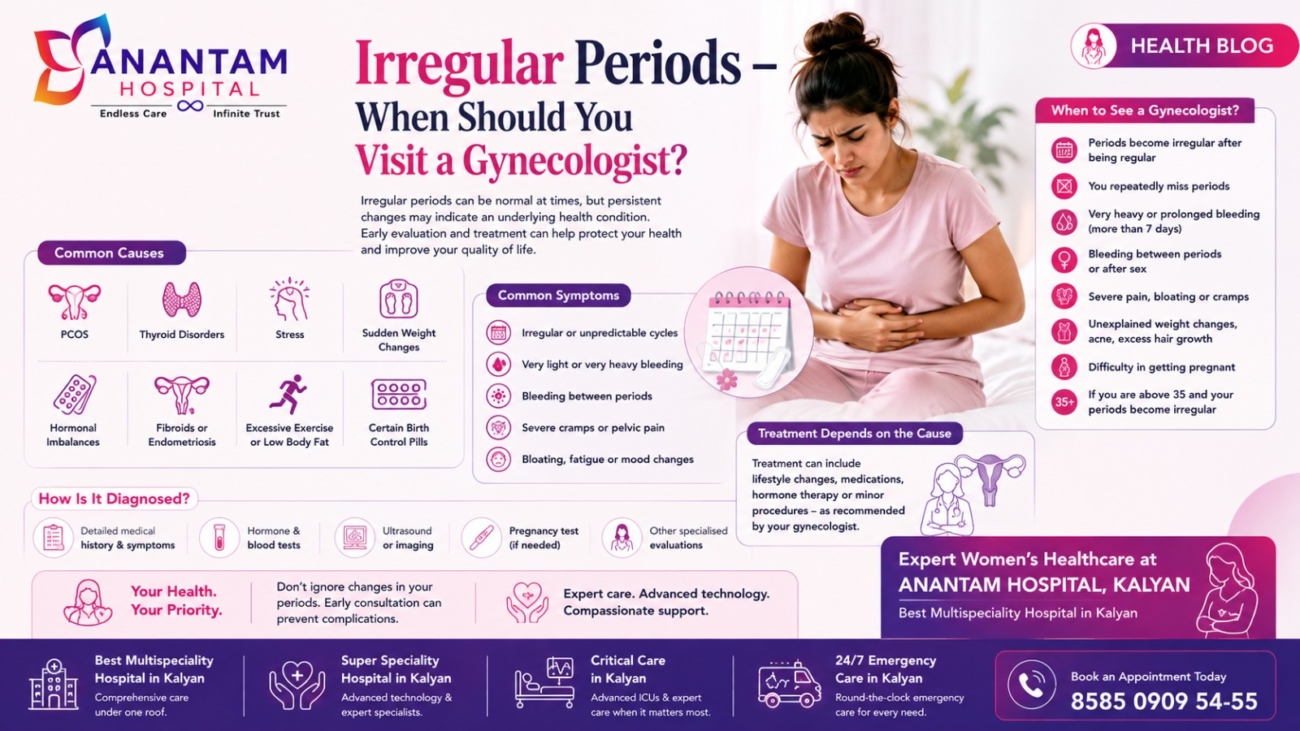
Infographic about irregular periods and when to see a gynecologist, from Anantam Hospital, with symptoms, causes, and treatment tips.

Irregular Periods – When Should You Visit a Gynecologist?

Irregular periods are a common concern among women and can happen at different stages of life. A menstrual cycle does not have to occur on exactly the same day every month, and some variation can be normal. However, a noticeable change in your usual menstrual pattern, repeated missed periods, unusually heavy bleeding, or bleeding between periods may sometimes indicate an underlying health condition that needs medical evaluation.

Understanding your menstrual cycle is an important part of women’s healthcare. Tracking when your period starts, how long it lasts, how heavy the bleeding is, and any associated symptoms can help you and your gynecologist identify changes more easily. A menstrual cycle is generally counted from the first day of one period to the first day of the next. While cycle length varies from person to person, persistent changes from your usual pattern are worth discussing with a healthcare professional.

What Are Irregular Periods?
Irregular periods refer to menstrual cycles that do not follow a predictable pattern. This may mean that periods arrive earlier or later than expected, occur at widely varying intervals, last longer than usual, or sometimes do not occur at all. During the first few years after periods begin, irregular cycles can be common as the body adjusts to hormonal changes. Irregularity can also occur around the transition toward menopause.

However, if periods that were previously regular suddenly become irregular, or if changes continue for several months, it is advisable to consult a doctor rather than assuming that the problem will resolve on its own.

What Causes Irregular Periods?
There are many possible causes of irregular periods, and not every irregular cycle indicates a serious medical problem. Hormonal changes are one of the most common reasons. Conditions such as polycystic ovary syndrome, thyroid disorders, and other hormonal imbalances can affect ovulation and change the menstrual cycle.

Stress can also affect the menstrual cycle. Significant changes in body weight, excessive physical activity, certain hormonal contraceptives, pregnancy, breastfeeding, and the transition toward menopause can also result in periods becoming irregular. In some cases, conditions affecting the uterus or reproductive organs, including fibroids or endometriosis, may contribute to abnormal bleeding or changes in the menstrual pattern.

When Should You Visit a Gynecologist?
You do not necessarily need to worry about an occasional early or late period. However, you should consider consulting a gynecologist if your periods have become irregular after previously being regular, if you repeatedly miss periods, or if your menstrual pattern changes significantly without an obvious explanation.

Medical evaluation is particularly important when irregular periods occur alongside symptoms such as unexplained weight changes, unusual tiredness, increased facial hair, significant acne, pelvic pain, or difficulty becoming pregnant. These symptoms may help a doctor identify an underlying hormonal or gynecological condition.

Bleeding between periods or bleeding after sexual activity should also be discussed with a healthcare professional because there can be several possible causes and some require treatment.

Is Heavy Period Bleeding a Sign to See a Doctor?
Yes. Very heavy or prolonged menstrual bleeding should not simply be considered a normal part of having periods. If bleeding lasts longer than about seven days, becomes significantly heavier than usual, or interferes with your daily activities, medical evaluation can help identify the cause.

Very heavy bleeding accompanied by dizziness, light-headedness, weakness, or a racing heartbeat requires prompt medical attention.

Can Irregular Periods Affect Fertility?
Irregular periods do not automatically mean that a woman cannot become pregnant. However, irregular cycles can sometimes indicate that ovulation is not occurring regularly. Conditions such as PCOS and certain hormonal disorders may affect ovulation and therefore make conception more difficult for some women.

If you are trying to conceive and have consistently irregular periods, consulting a gynecologist can help determine whether an underlying condition is affecting your menstrual cycle or ovulation.

How Does a Gynecologist Diagnose the Cause?
The evaluation usually begins with a detailed discussion about your menstrual history, symptoms, medications, lifestyle factors, and overall health. Your doctor may ask you to maintain a period or bleeding diary so that patterns can be identified more clearly.

Depending on your symptoms, the doctor may recommend blood tests to evaluate factors such as hormones or thyroid function. Pregnancy testing may also be appropriate when relevant. Imaging such as an ultrasound may be recommended when a structural problem involving the uterus or ovaries is suspected. The exact investigations depend on your individual symptoms and medical history.

How Are Irregular Periods Treated?
Treatment depends entirely on the underlying cause. Some women may not require treatment if the irregularity is temporary or related to a normal stage of life. If an underlying condition is identified, treatment focuses on managing that condition and restoring a healthier menstrual pattern where possible.

For example, hormonal problems may require specific medical treatment, while conditions affecting the thyroid may improve when the thyroid disorder is appropriately managed. Treatment for irregular periods should always be selected by a qualified healthcare professional rather than through self-medication.

Why Should You Track Your Period?
Keeping track of your menstrual cycle is a simple way to understand your reproductive health. Record the first day of each period, the number of days you bleed, how heavy the bleeding is, and symptoms such as pain or unusual bleeding between periods. You can use a calendar, diary, or suitable period-tracking application.

This information can be extremely useful during a gynecology consultation because it gives the doctor a clearer picture of how your cycle has changed over time.

Why Choose Anantam Hospital for Women’s Healthcare?
Women’s health concerns require accurate diagnosis, specialized expertise, and compassionate care. At Anantam Hospital, the Best Multispeciality Hospital in Kalyan, patients can access comprehensive women’s healthcare services supported by experienced gynecologists and advanced diagnostic facilities.

As a Super Speciality Hospital in Kalyan, Anantam Hospital provides coordinated care for gynecological conditions, hormonal concerns, pregnancy-related healthcare, diagnostic investigations, and surgical requirements. The hospital’s multidisciplinary approach allows patients to receive appropriate specialist care based on their individual needs.

For conditions that require closer monitoring or urgent intervention, the hospital also provides Critical Care in Kalyan and 24/7 Emergency Care in Kalyan, ensuring that medical support is available when unexpected complications arise.

Conclusion
Irregular periods are common, but they should not always be dismissed as a normal part of life. Occasional changes can happen because of stress, hormonal fluctuations, lifestyle changes, or different stages of life. However, persistent irregular cycles, sudden changes in your usual pattern, very heavy bleeding, bleeding between periods, severe pain, or difficulty conceiving should be discussed with a gynecologist.

Early evaluation can help identify conditions such as hormonal disorders, PCOS, thyroid problems, fibroids, or endometriosis and allow appropriate treatment to begin. If you are concerned about changes in your menstrual cycle, consult the experienced gynecology team at Anantam Hospital, the Best Multispeciality Hospital in Kalyan for personalized evaluation and comprehensive women’s healthcare.

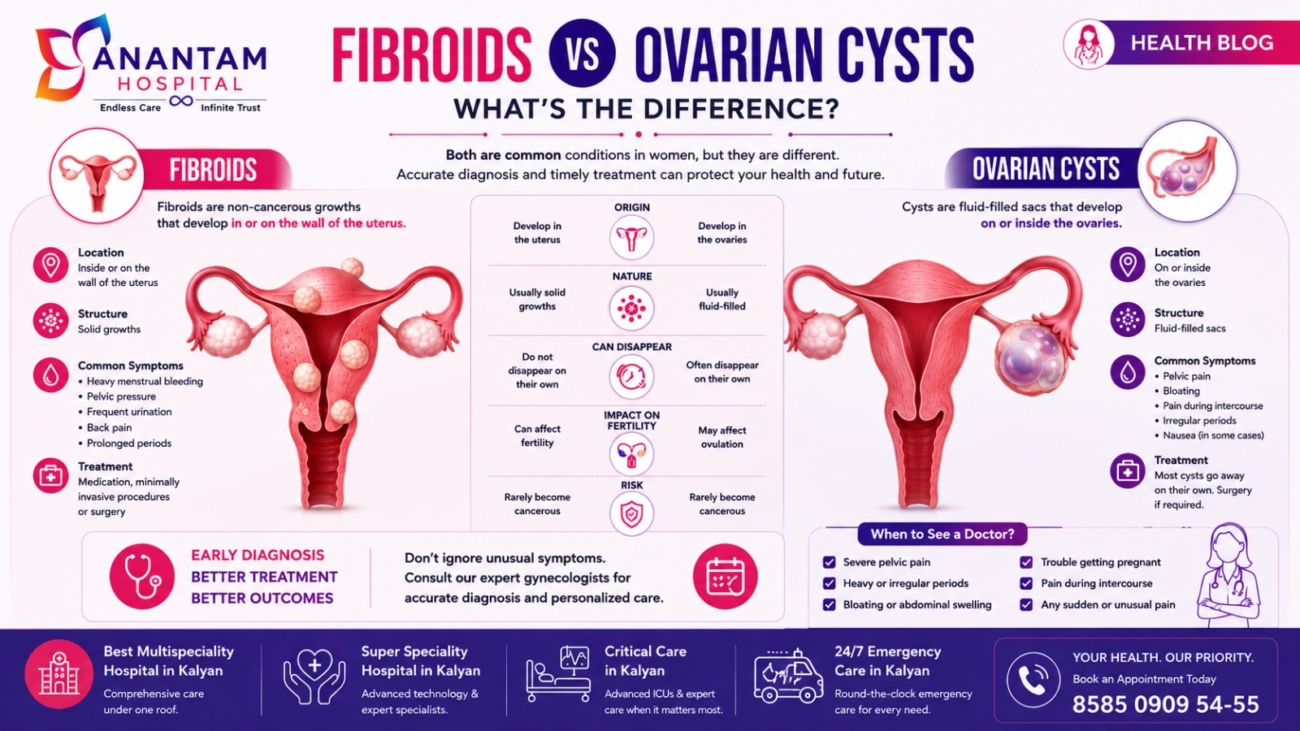
Infographic comparing fibroids and ovarian cysts by the best multispeciality hospital in Kalyan-Anantam

Fibroids vs Ovarian Cysts – What’s the Difference?

Women’s reproductive health plays a vital role in overall well-being, yet many gynecological conditions often go unnoticed until they begin affecting daily life. Among the most common conditions affecting women are uterine fibroids and ovarian cysts. Although these conditions may share certain symptoms such as pelvic pain, abdominal discomfort, and irregular menstrual cycles, they are entirely different in terms of where they develop, why they occur, and how they are treated.

Many women become anxious after hearing terms like “fibroid” or “ovarian cyst” during a routine ultrasound. While both conditions are common and often non-cancerous, understanding the difference between them is essential for timely diagnosis, appropriate treatment, and peace of mind.

At Anantam Hospital, the Best Multispeciality Hospital in Kalyan, our experienced gynecologists provide comprehensive women’s healthcare using advanced diagnostic technology and personalized treatment plans designed to meet every patient’s unique needs.

What Are Uterine Fibroids?
Uterine fibroids, also known as leiomyomas, are non-cancerous growths that develop within or on the walls of the uterus. They are made up of smooth muscle and connective tissue and can vary greatly in size, ranging from tiny seed-like growths to large masses that enlarge the uterus.

Fibroids are extremely common among women during their reproductive years, particularly between the ages of 30 and 50. Although the exact cause remains unknown, hormonal factors such as estrogen and progesterone are believed to contribute to their growth. Genetics, obesity, and family history may also increase the likelihood of developing fibroids.

Many women with fibroids experience no symptoms at all, while others may suffer from heavy menstrual bleeding, prolonged periods, pelvic pressure, frequent urination, constipation, lower back pain, or difficulty becoming pregnant.

What Are Ovarian Cysts?
Ovarian cysts are fluid-filled sacs that develop on or inside the ovaries. Unlike fibroids, ovarian cysts do not grow in the uterus. Most ovarian cysts develop naturally during the menstrual cycle and disappear on their own without requiring treatment.

Functional ovarian cysts are the most common type and generally resolve within a few menstrual cycles. However, certain cysts may continue to grow, cause pain, or require medical intervention if they become large or complicated.

While many ovarian cysts produce no symptoms, larger cysts may cause pelvic pain, bloating, abdominal swelling, pain during intercourse, irregular menstrual cycles, or a feeling of fullness in the lower abdomen.

Fibroids vs Ovarian Cysts: Understanding the Difference
Although both conditions affect the female reproductive system, they differ significantly in their origin and structure. Fibroids are solid muscular tumors that grow in the uterus, whereas ovarian cysts are fluid-filled sacs that develop in the ovaries. Fibroids commonly cause heavy menstrual bleeding and pelvic pressure, while ovarian cysts are more likely to cause sharp pelvic pain or discomfort, especially if they rupture or twist.

Fibroids usually remain stable or grow slowly over time under the influence of hormones. In contrast, many ovarian cysts disappear naturally without treatment. Accurate diagnosis through ultrasound or other imaging tests helps doctors determine the exact condition and recommend appropriate treatment.

What Causes Fibroids?
Although researchers have not identified a single cause, several factors contribute to fibroid development. Hormonal changes, particularly increased estrogen and progesterone levels, play an important role. Family history, obesity, early onset of menstruation, vitamin D deficiency, and certain lifestyle factors may also increase the risk.

Fibroids often shrink naturally after menopause as hormone levels decline.

What Causes Ovarian Cysts?
Most ovarian cysts develop as part of the normal ovulation process. However, hormonal imbalances, endometriosis, pregnancy, pelvic infections, and conditions such as Polycystic Ovary Syndrome (PCOS) may also contribute to cyst formation.

Unlike fibroids, ovarian cysts are not always permanent and often resolve without any medical treatment.

Common Symptoms of Fibroids
Women with uterine fibroids may experience heavy or prolonged menstrual bleeding, pelvic pressure, frequent urination due to pressure on the bladder, constipation, lower back pain, painful periods, abdominal enlargement, discomfort during intercourse, and fertility-related issues in some cases.

The severity of symptoms often depends on the size, number, and location of the fibroids.

Common Symptoms of Ovarian Cysts
Most ovarian cysts are discovered during routine examinations because they produce no symptoms. However, when symptoms occur, they may include one-sided pelvic pain, abdominal bloating, pain during sexual intercourse, irregular menstrual cycles, difficulty emptying the bladder, nausea, vomiting, or sudden severe pain if the cyst ruptures or twists.

A ruptured ovarian cyst or ovarian torsion requires immediate medical attention.

How Are Fibroids and Ovarian Cysts Diagnosed?
Diagnosis begins with a detailed medical history and pelvic examination. Doctors may recommend imaging tests such as pelvic ultrasound, transvaginal ultrasound, MRI, CT scan, or blood investigations depending on the patient’s symptoms and medical condition.

Ultrasound is usually the first and most effective investigation because it clearly distinguishes fibroids from ovarian cysts. In some cases, additional investigations may be necessary to rule out other gynecological conditions.

At Anantam Hospital, advanced diagnostic imaging ensures accurate and timely diagnosis, allowing patients to receive the most appropriate treatment.

Treatment for Fibroids
Treatment depends on the size of the fibroids, symptoms, patient’s age, and future pregnancy plans. Small fibroids without symptoms may simply require regular monitoring. Symptomatic fibroids may be treated with medications that control bleeding or shrink the fibroids temporarily.

For larger fibroids causing significant symptoms, minimally invasive procedures or surgery may be recommended. Treatment options include myomectomy, which removes only the fibroids while preserving the uterus, uterine artery embolization to reduce blood supply to the fibroids, or hysterectomy in selected cases where childbearing is complete.

Treatment for Ovarian Cysts
Most functional ovarian cysts disappear naturally within a few weeks or months and require only observation with repeat ultrasound examinations. Pain-relieving medications or hormonal therapy may be recommended in selected cases.

Surgical removal may become necessary if the cyst is large, persistent, causing severe pain, appears suspicious on imaging, or results in complications such as rupture or ovarian torsion.

Early diagnosis allows doctors to determine whether immediate treatment is necessary or if simple observation is sufficient.

Can Fibroids or Ovarian Cysts Affect Fertility?
Both fibroids and ovarian cysts can influence fertility in certain situations, although many women with these conditions conceive naturally and have healthy pregnancies.

Fibroids located inside the uterine cavity may interfere with implantation or increase the risk of miscarriage. Similarly, certain ovarian cysts, particularly those associated with endometriosis or PCOS, may affect ovulation and fertility.

Women planning pregnancy should consult an experienced gynecologist for appropriate evaluation and individualized treatment planning.

When Should You Consult a Gynecologist?
You should seek medical attention if you experience unusually heavy menstrual bleeding, severe pelvic pain, persistent bloating, sudden abdominal pain, irregular menstrual cycles, pain during intercourse, frequent urination, difficulty conceiving, or any noticeable increase in abdominal size.

Ignoring these symptoms can delay diagnosis and allow certain conditions to progress.

Why Choose Anantam Hospital for Women’s Healthcare?
Women’s health requires compassionate, specialized, and comprehensive medical care. As a Super Speciality Hospital in Kalyan, Anantam Hospital provides complete gynecological services under one roof, including preventive health checkups, advanced imaging, minimally invasive surgery, fertility evaluation, pregnancy care, and emergency gynecological services.

Our experienced gynecologists use the latest diagnostic technologies to accurately identify fibroids, ovarian cysts, and other reproductive health conditions while offering personalized treatment plans focused on preserving long-term health and fertility whenever possible.

Supported by modern operation theatres, advanced imaging facilities, and 24/7 Emergency Care in Kalyan, we ensure timely intervention for gynecological emergencies requiring immediate attention.

Although uterine fibroids and ovarian cysts may appear similar because they share certain symptoms, they are two distinct medical conditions that require different approaches to diagnosis and treatment. Understanding the difference between them allows women to seek timely medical care, avoid unnecessary anxiety, and make informed healthcare decisions.

If you are experiencing pelvic pain, heavy periods, abdominal bloating, or irregular menstrual cycles, do not ignore these symptoms. Consult the experienced gynecology team at Anantam Hospital – the Best Multispeciality Hospital in Kalyan, where advanced diagnostics, expert specialists, compassionate care, and comprehensive women’s health services ensure you receive the highest standard of treatment for every stage of life.

White discharge awareness by Anantam Hospital with expert gynecological care for women in Kalyan West.

Understanding White Discharge: Causes, Prevention, and When to Seek Medical Care

White vaginal discharge is a common occurrence in women and is often a natural way for the body to maintain vaginal health and cleanliness. However, changes in the color, consistency, smell, or amount of discharge may sometimes indicate an underlying infection or medical condition that requires professional attention. At Anantam Hospital, we provide compassionate gynecological care focused on early diagnosis, effective treatment, and women’s overall well-being.

Normal white discharge helps maintain a healthy vaginal environment and may vary during different stages of the menstrual cycle. However, excessive discharge accompanied by itching, burning sensation, unpleasant odor, pelvic pain, or irritation can be caused by infections, hormonal imbalances, poor hygiene, or other gynecological concerns.

Maintaining proper intimate hygiene, wearing breathable cotton clothing, avoiding unnecessary chemical products, following a balanced diet, and attending regular gynecological check-ups can help prevent many vaginal health issues. Early consultation with a healthcare professional can prevent minor concerns from developing into serious complications.

As a trusted super speciality hospital in Kalyan West and one of the best multispeciality hospitals in Kalyan West, Anantam Hospital offers advanced women’s healthcare services supported by experienced specialists and modern diagnostic facilities. Our team ensures personalized treatment plans based on every patient’s individual needs.

In certain situations, women may require additional medical support, including emergency care or surgical treatment. As a 24 hour emergency hospital in Kalyan West and a preferred choice for the best hospital in Kalyan for surgery, Anantam Hospital is equipped to provide timely medical intervention whenever required.

Beyond gynecology, we provide comprehensive healthcare services including cardiology, oncology, critical care, nephrology, and advanced ICU facilities. This integrated approach has made Anantam Hospital a trusted cardiology hospital in Kalyan West, oncology hospital in Kalyan West, critical care hospital in Kalyan, kidney specialist hospital in Kalyan West, and one of the best ICU hospitals in Kalyan.

Located conveniently for families across the city, Anantam Hospital is also recognized as a preferred hospital near Khadakpada Kalyan West for quality healthcare, expert guidance, and compassionate patient care.

Women’s intimate health should never be ignored. With awareness, timely consultations, and expert medical support, most concerns related to abnormal white discharge can be effectively diagnosed and managed, helping women maintain confidence and better health.

Doctor providing PCOS and PCOD care for women's hormonal health at Anantam Hospital Kalyan West.

Comprehensive PCOS/PCOD Care at Anantam Hospital: Supporting Women’s Hormonal Health

PCOS (Polycystic Ovary Syndrome) and PCOD (Polycystic Ovarian Disease) are among the most common hormonal conditions affecting women today. Irregular periods, weight changes, acne, excessive hair growth, difficulty conceiving, and hormonal imbalance can significantly impact physical and emotional well-being. At Anantam Hospital, we provide comprehensive diagnosis, treatment, and personalized care plans to help women effectively manage PCOS and PCOD.

As a trusted super speciality hospital in Kalyan West and one of the best multispeciality hospitals in Kalyan West, Anantam Hospital focuses on women’s health with a patient-centric approach, advanced diagnostic facilities, and experienced medical professionals. Our gynecology team helps identify the root cause of hormonal concerns and guides patients with lifestyle modifications, medications, and fertility-related support whenever required.

Early diagnosis and timely treatment play a crucial role in preventing long-term complications associated with PCOS and PCOD, such as diabetes, heart-related concerns, and metabolic disorders. With the support of our multidisciplinary healthcare services, including our expertise as a cardiology hospital in Kalyan West, we ensure complete health assessment and holistic patient care.

At Anantam Hospital, we offer comprehensive healthcare services under one roof, including advanced surgical procedures, making us a preferred choice for patients looking for the best hospital in Kalyan for surgery. Our hospital also provides specialized care through oncology services, critical care support, kidney care, and advanced intensive care facilities, establishing us as a trusted oncology hospital in Kalyan West, critical care hospital in Kalyan, kidney specialist hospital in Kalyan West, and one of the best ICU hospitals in Kalyan.

Medical concerns can arise at any time, and our team is prepared to provide immediate attention as a 24 hour emergency hospital in Kalyan West. Conveniently located and easily accessible, Anantam Hospital is also recognized by many patients as a preferred hospital near Khadakpada Kalyan West for quality and compassionate healthcare.

Women’s hormonal health should never be ignored. With timely consultations, regular check-ups, and expert medical guidance, PCOS and PCOD can be effectively managed, helping women lead healthier and more confident lives.

At Anantam Hospital, our commitment is to provide personalized treatment, advanced medical support, and compassionate care at every stage of a woman’s healthcare journey.