Kidney stones causes, symptoms & treatment – Anantam Hospital

Kidney Stones – Causes, Symptoms & Treatment

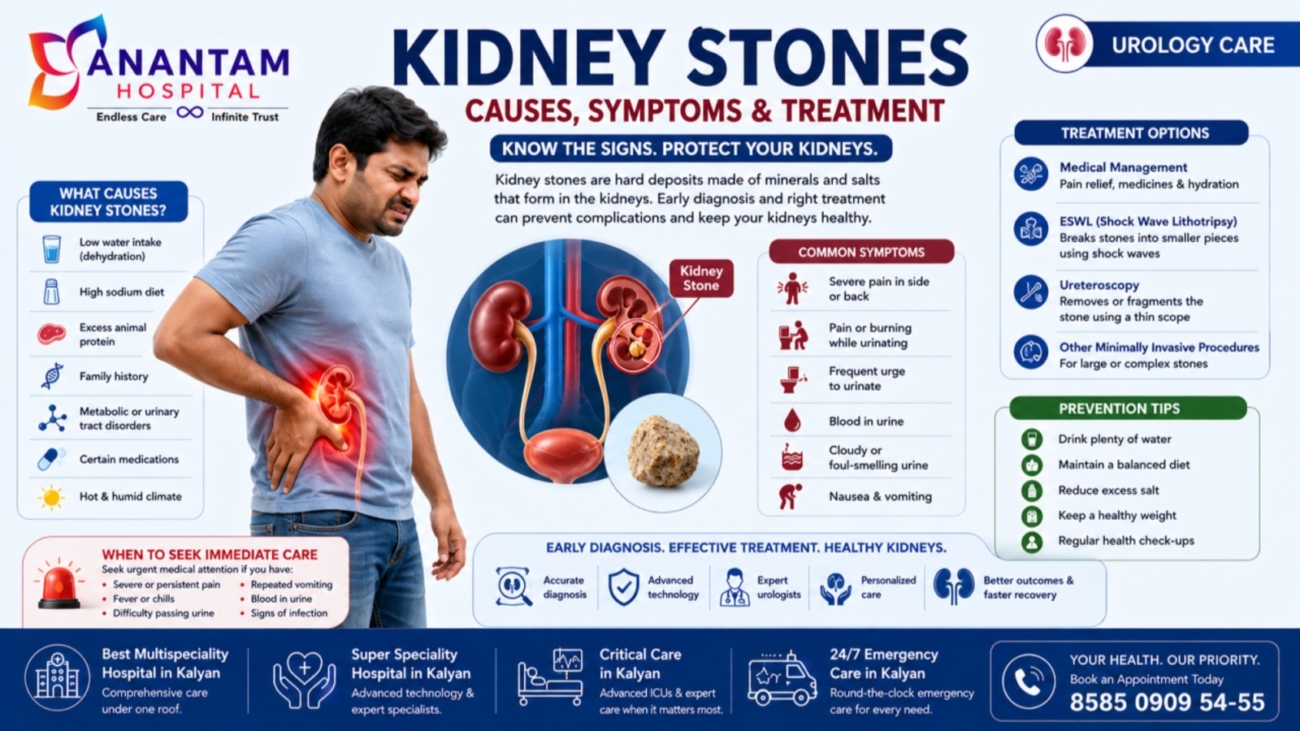
Kidney stones are a common urinary system problem that can affect people of different ages. They develop when certain minerals and salts present in urine become highly concentrated and form hard deposits inside the kidneys. Some kidney stones are very small and may pass naturally through the urinary tract, while larger stones can cause significant pain, blockage, infection, and other complications.

Understanding the causes, symptoms, treatment options, and prevention of kidney stones can help you recognize the condition early and seek appropriate medical care.

At Anantam Hospital, the Best Multispeciality Hospital in Kalyan, our experienced specialists provide comprehensive evaluation and treatment for kidney and urinary tract conditions using advanced diagnostic facilities and patient-focused care.

What Are Kidney Stones?

Kidney stones are hard, crystal-like deposits that form inside the kidneys when substances such as calcium, oxalate, uric acid, or other minerals become concentrated in the urine. A stone may remain inside the kidney without causing symptoms or travel through the ureter, the tube connecting the kidney to the bladder.

The size and location of a stone largely determine whether it will cause symptoms. Smaller stones may pass through the urinary tract without medical intervention, whereas larger stones can become lodged and obstruct the normal flow of urine.

What Causes Kidney Stones?

Several factors can contribute to kidney stone formation. Not drinking enough water is one of the most important risk factors because concentrated urine makes it easier for minerals to crystallize. A diet high in sodium may also increase the risk of certain stones, while excessive intake of some animal proteins can contribute to stone formation in susceptible individuals.

Family history can increase the likelihood of developing kidney stones. People who have had kidney stones previously may also be more likely to develop them again. Certain medical conditions, metabolic disorders, urinary tract problems, and some medications can increase the risk as well.

Hot and humid environments can also contribute indirectly because excessive sweating without adequate fluid replacement may lead to dehydration and more concentrated urine.

Common Symptoms of Kidney Stones

A small kidney stone may not cause any symptoms until it begins moving. When a stone travels through the urinary tract, it can cause sudden and intense pain. The pain may occur in the side or back and can sometimes spread toward the lower abdomen or groin.

Other symptoms may include pain or burning while urinating, a frequent urge to urinate, blood in the urine, cloudy or foul-smelling urine, nausea, and vomiting. Some people may experience pain that comes and goes in waves as the stone moves.

A kidney stone accompanied by fever or chills may indicate an infection and requires prompt medical evaluation.

Where Does Kidney Stone Pain Occur?

Kidney stone pain can vary depending on where the stone is located. It commonly begins in the back or side below the ribs and may move toward the lower abdomen or groin as the stone travels down the ureter.

The intensity of the pain can also change as the stone moves. Some people describe it as severe, cramping pain that comes in waves. However, symptoms can vary considerably from person to person.

How Are Kidney Stones Diagnosed?

Doctors begin with a medical history and physical examination. Urine and blood tests may be performed to look for signs of infection, blood in the urine, or factors that may contribute to stone formation.

Imaging plays an important role in diagnosis. An ultrasound may be used to identify stones and assess whether urine flow is obstructed. Depending on the situation, doctors may recommend additional imaging such as a CT scan to determine the size and exact location of the stone.

Accurate diagnosis helps doctors decide whether the stone can pass naturally or requires medical or surgical treatment.

How Are Kidney Stones Treated?

Treatment depends on the stone’s size, location, composition, symptoms, and whether it is causing an obstruction or infection. Small stones may pass naturally with adequate fluid intake and appropriate pain management under medical guidance.

When a stone is unlikely to pass on its own or is causing significant symptoms, a urologist may recommend a procedure to remove or break it into smaller pieces.

One commonly used treatment is Extracorporeal Shock Wave Lithotripsy (ESWL), which uses focused shock waves to break certain kidney stones into smaller fragments that can then pass through the urinary tract.

Another option is ureteroscopy, where a thin specialized instrument is passed through the urinary tract to locate and remove or fragment the stone. For larger or more complex stones, other minimally invasive procedures may be recommended depending on the patient’s condition.

The appropriate treatment should always be decided by a qualified urologist after evaluating the individual patient.

When Does a Kidney Stone Become an Emergency?

Most kidney stones can be treated effectively, but certain symptoms require urgent medical attention. Severe or persistent pain, fever or chills, difficulty passing urine, repeated vomiting, significant blood in the urine, or symptoms suggesting a urinary infection should not be ignored.

A blocked urinary tract combined with an infection can become a serious medical emergency. Prompt treatment is essential to prevent complications and protect kidney function.

If you experience severe symptoms, seek immediate medical attention rather than attempting to manage the condition on your own.

Can Kidney Stones Be Prevented?

Once someone has developed a kidney stone, making certain lifestyle changes may help reduce the risk of recurrence. Drinking enough water throughout the day is one of the most important preventive measures. Your doctor may recommend a specific fluid intake depending on your health and individual risk factors.

Reducing excessive salt intake, maintaining a balanced diet, and avoiding unnecessary dietary restrictions without medical advice can also help. The recommended diet may vary depending on the type of stone, so people with recurrent kidney stones may benefit from a metabolic evaluation and personalized dietary guidance.

Maintaining a healthy weight and managing medical conditions that increase stone risk are also important for long-term prevention.

Why Do Kidney Stones Keep Coming Back?

Some people experience kidney stones repeatedly. Recurrence can be associated with inadequate fluid intake, dietary factors, family history, certain medical conditions, or the chemical composition of previous stones.

If you have had kidney stones more than once, your doctor may recommend testing the stone itself, analyzing urine, or performing blood tests to understand why the stones are forming. Identifying the underlying cause can help create a more effective prevention plan.

Why Choose Anantam Hospital for Kidney Stone Treatment?

Kidney stone treatment requires accurate diagnosis and the right treatment approach based on the individual patient’s condition. At Anantam Hospital, the Best Multispeciality Hospital in Kalyan, patients receive comprehensive evaluation and treatment supported by experienced specialists and advanced diagnostic facilities.

As a Super Speciality Hospital in Kalyan, Anantam Hospital provides multidisciplinary care for complex kidney and urinary tract conditions. Patients can access advanced imaging, laboratory investigations, specialist consultations, minimally invasive treatment options, and postoperative care under one roof.

For patients requiring close monitoring or advanced medical support, our Critical Care in Kalyan provides specialized care, while our 24/7 Emergency Care in Kalyan ensures that urgent medical conditions can be assessed and treated without unnecessary delay.

Kidney stones can range from small stones that pass naturally to larger stones that cause severe pain, urinary obstruction, or infection. Recognizing symptoms early and obtaining an accurate diagnosis can help prevent complications and ensure timely treatment.

Adequate hydration, a balanced diet, and appropriate medical evaluation can also play an important role in preventing future stones. If you experience severe side or back pain, painful urination, blood in the urine, fever, vomiting, or difficulty passing urine, consult a healthcare professional promptly.

At Anantam Hospital – the Best Multispeciality Hospital in Kalyan, our experienced specialists and advanced facilities provide comprehensive kidney and urinary care with a patient-first approach. Whether you require diagnostic evaluation, medical management, minimally invasive treatment, Critical Care in Kalyan, or 24/7 Emergency Care in Kalyan, our team is committed to helping you receive timely and appropriate care.

Urological health and urinary system care services at Anantam Hospital

Understanding Urological Health as Part of Overall Wellness

Introduction:
When people think about staying healthy they usually think about what they eat how
much they exercise or how to keep their heart strong.. There is something else that is
just as important and that is taking care of our urinary system. Our urinary system does
important jobs every day. It gets rid of waste makes sure we have the right amount of
fluid in our body and helps our body stay stable. Even though it is very important a lot
of people do not pay attention to problems with their system until it starts to affect
their daily life.
Taking care of our system is not just about feeling better when we have an infection or
are in pain. It is a part of being physically healthy. Our urinary system helps our kidneys
work properly and gets rid of things in our body, which affects how much energy we
have how our body works and how healthy we will be in the long run.
At Anantam Hospital they think it is very important to teach patients about their health
and how to prevent problems. When people understand how their urinary system
affects their health they can make good choices, about how they live and go to the
doctor when they need to.
Overview of the Urological System
The urinary system helps get rid of waste and extra fluids from our body. It has organs
that work well together:
Kidneys – They clean our blood and get rid of bad stuff through pee
Ureters – They take pee from kidneys to the bladder
Bladder – It holds pee until we go to the bathroom
Urethra – It lets pee come out of our body
Male reproductive organs – Doctors who specialize in health also take care of these for
men
Our kidneys filter a lot of blood every day. This helps keep stuff from building up in our
body. It also helps keep our body’s balance of salts right makes sure we have water
and keeps our blood pressure healthy.
We don’t usually think about how much our health relies on our system working
properly. This is because it all happens on its own.. Even small problems with this system
can affect many parts of our health.
Why Urological Health Is Essential for Overall
Wellness
Urological health is more than the urinary tract. A healthy urinary system helps the
body work properly.
Healthy kidneys remove stuff and waste from the body. When they do not work well
bad things can build up. Make you feel tired. Kidney health also helps control blood
pressure. If kidney health is not good it can affect heart health.
Urinary health affects how you feel every day. If you have to urinate a lot, get
infections or feel uncomfortable it can keep you up at night making it hard to focus and
stress you out. Some people feel less confident. Do not want to be around others
because of urinary problems.
The kidneys also help control how much water is in the body. When the kidneys work
well the body stays balanced. That helps with digestion, skin health and fighting off
sickness.
Understanding that urological health is connected to health helps people see that
taking care of their urinary system is not just treating a problem, it is taking care of
their health for the long term.
Common Urological Conditions Across Age Groups
People can have problems at any age. It is good to know about urological conditions so
people can get help early and feel better.
Urinary Tract Infections (UTIs): UTIs happen when bacteria get into the tract. This
can cause pain when people urinate or make them urinate a lot. UTIs are more
common in women. Anyone can get them. If people get help early they can avoid
problems.
Kidney Stones: Kidney stones are like rocks that form in the kidneys. They can form
when people do not drink water or eat certain foods. Sometimes kidney stones can
cause back pain or stomach pain. People may also feel sick & have trouble urinating.
Drinking water and getting help early can help prevent kidney stones.
Prostate Conditions: As men get older their prostate can get bigger. This can cause
problems like urine flow or needing to urinate a lot at night. If men get help early they
can feel better. Manage their symptoms.
Urinary Incontinence: Sometimes people lose control of their bladder. This can happen
when people get older have babies or have nerve problems. Even though people might
be embarrassed to talk about it urinary incontinence can be treated with medical help.
Overactive Bladder: This condition makes people need to urinate a lot and suddenly.
Sometimes people might even leak urine. This can affect life and sleep but people can
manage it by making lifestyle changes and getting medical help.
Chronic Kidney Disease (CKD): Chronic kidney disease happens slowly. People might
not notice symptoms at first. People with diabetes, high blood pressure or a family
history of kidney problems should get checked regularly so they can find out if they
have kidney disease early.
Knowing about these conditions can help people feel more comfortable talking about
them and getting medical help when they need it. People should not be afraid to ask for
help with tract infections or kidney stones or any other urological conditions. Urological
conditions are common. People can get help for urinary incontinence and overactive
bladder and chronic kidney disease.
Everyday Habits That Protect Urological Health
You do not have to make changes to your life to have good urological health. Some
simple things you do every day can really help you avoid problems and feel good for a
long time.
Stay Hydrated:
You should drink a lot of water every day. This helps your kidneys get rid of things and
bacteria. When you drink water you are less likely to get kidney stones and your
bladder will work better.
Do not hold your urine all the time: If you wait long to go to the bathroom it can hurt
your bladder and make you more likely to get infections. You should go to the
bathroom when you feel like you need to.
Keep yourself clean: Keeping yourself clean is very important to prevent infections in
your urinary tract. Simple things like cleaning yourself and wearing clothes that let your
skin breathe can help you stay healthy.
Eat a diet: If you eat a lot of fruits and vegetables and whole foods your kidneys will
work better. You should not eat much salt or food that is bad for you and you should not
drink too much soda. This will help your system.
Take care of any health problems you have: If you have diabetes or high blood
pressure it can affect your kidneys. You should see your doctor regularly. Take your
medicine to stay healthy.
Get some exercise: If you exercise every day your blood will flow better. You will be
healthier. This will also help you keep a weight, which is good for your urological health.
Do not smoke or drink much: If you smoke or drink too much it can irritate your
bladder and hurt your kidneys. You should only do these things in moderation to stay
healthy.
If you do these things every day you will be protecting your health and you will feel
better overall. Urological health is important. These habits can really help you. By
taking care of your health you are taking care of your whole body.
Advances in Modern Urology Care
The way doctors diagnose and treat urology problems has changed a lot because of
medical discoveries. Modern urology is about finding problems early using simple
procedures and making sure patients are comfortable.
Doctors can now find problems early and accurately because they have tools and
machines. A lot of treatments that used to require operations can now be done with
small procedures so patients recover faster and feel less pain.
New technology also helps doctors take care of kidney stones, prostate problems and
urinary issues precisely. Doctors make sure each patient gets a treatment plan that’s
just right for them based on their life, health history and goals.
At Anantam Hospital they combine medical care with kindness and support for patients
so people get complete checkups and treatment in a comfortable place.
Conclusion: (Prevention Is Better Than Treatment)
Taking care of our urological health is important, but people often forget about it until
they have big problems. If we pay attention to signs, live healthy and go for regular
checkups we can stop a lot of problems before they become serious.
Our urinary system helps our body stay balanced, have energy and stay healthy on the
run. If we understand how important it is and go to the doctor when we need to, we can
protect our health and our whole life.
Taking care of ourselves, being aware and going to the doctor early are the ways to
stay healthy for a long time. If we take steps now to take care of our urology health we
can live healthier and more comfortably in the future.