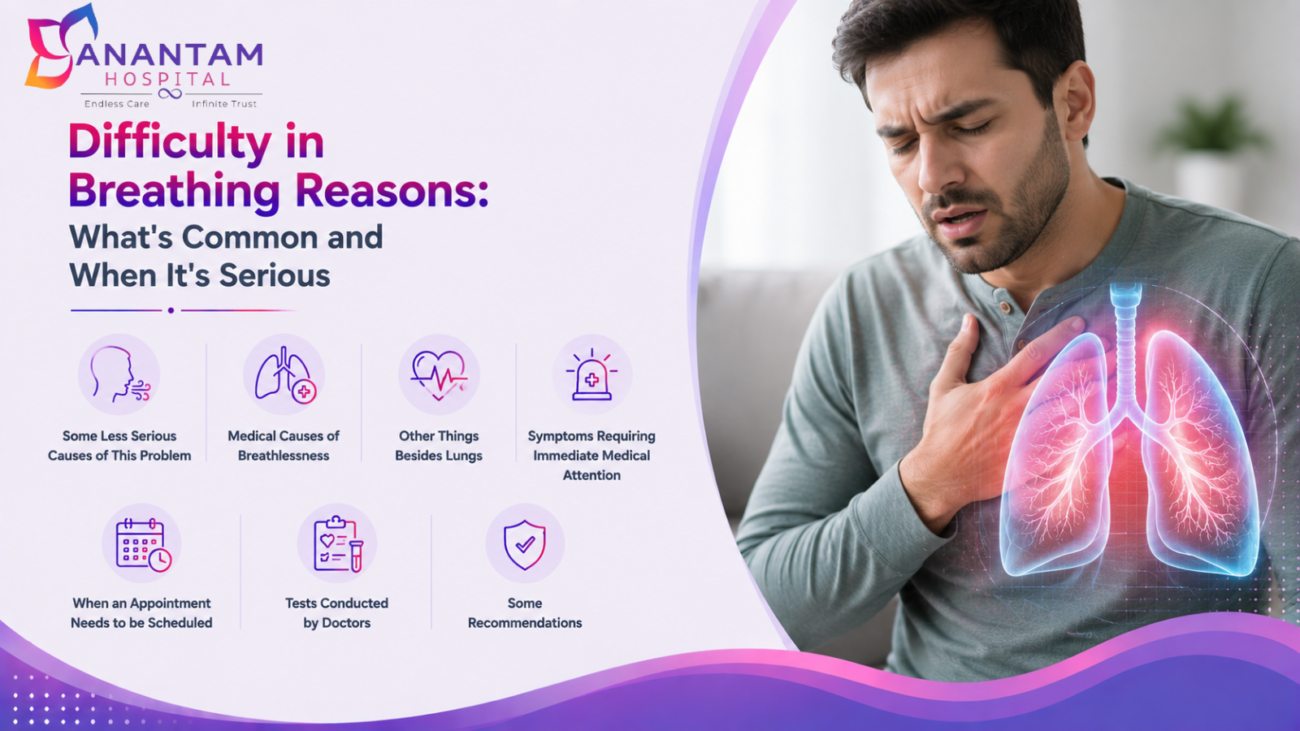
Have you ever had trouble getting a proper breath after climbing just one flight of stairs, or felt the same way when you first woke up? Even if it turns out not to be anything serious, this problem needs a bit more exploration. The symptom of breathlessness ranges from being trivial to potentially being life-threatening. Knowing about difficulty in breathing reasons is essential in order to determine what type of condition you might be suffering from.
Some of the Less Serious Causes of This Problem
There are many possible reasons behind a sudden shortage of breath, not all of which are actually very worrying.
The common causes include:
- Physical exertion when the body was not prepared, especially if you don’t have much physical fitness and did something exhausting;
- Anxiety or panic attacks when breathlessness happens due to psychological stress rather than any physical reasons;
- Bad posture, especially if you’re used to slouching a lot and limit yourself in expanding your lungs while doing so;
- Respiratory infections such as a common cold;
- Being at high altitudes or excessively hot weather.
None of these will do you any harm other than making you uncomfortable, but they should still draw your attention if you feel them too often.
The Medical Causes of Breathlessness You Need to Be Aware Of
There are several medical conditions which should definitely appear in your list of possible difficulty in breathing reasons. Some of them won’t require permanent treatment but will demand you pay more attention to your health.
Respiratory Diseases
- Asthma, the disease which leads to swelling of airways and is triggered both by allergy and physical activity;
- Chronic obstructive pulmonary disease which develops in people who smoke regularly and negatively affects the lungs;
- Pneumonia that causes fluid build-up in the lungs.
Cardiovascular Diseases
- Heart failure that makes the pumping function of your heart weak and causes fluid accumulation in the body;
- Problems with coronary arteries that affect blood flow and make the patient feel breathlessness and pain in the chest.
Other Causes
- Anemia which lowers your red blood cell count and therefore makes you prone to feeling breathless;
- Obesity which puts additional load on your lungs and heart.
Sometimes It’s Not About Your Lungs
The common misconception regarding difficulty breathing lies in that not every single case of it means lung problem. In some cases, it can be related to such health issues as heart problems, blood issues, and even psychological problems.
That is exactly why a doctor will not only check your lungs if you claim you have difficulty breathing but he or she will conduct a series of tests that will evaluate other aspects of your health as well.
Symptoms Requiring Immediate Medical Attention
Sometimes certain symptoms of difficulty breathing cannot be neglected. You need to see your doctor immediately in case:
- You feel sudden and severe breathlessness
- You have chest pain or pressure along with breathing problems
- Your lips and/or fingers appear blue
- You feel difficulty breathing even during rest or lying position
- You experience confusion or severe fatigue along with breathing problems
You should not put off such symptoms, they require immediate attention.
When You Can Go With a Scheduled Appointment
Of course, not all symptoms of breathlessness require going to the ER. Sometimes, mild and occasional breathing problems caused by physical effort and minor illnesses do not require urgent medical attention.
However, if your difficulty breathing happens regularly, takes place for prolonged periods of time and interferes with your daily routine, you should not postpone your consultation.
Tests Doctors Conduct To Identify The Reason
In most cases, a combination of several simple tests allows determining the exact reason of your breathing difficulty symptoms.
- Chest X-ray for evaluating the presence of inflammation, infection, or any other problems with your lungs
- Pulmonary function tests to identify the problems with lung functioning
- ECG for determining if the reason of difficulty breathing is heart-related
- Blood test for determining the presence of anemia or any infectious conditions
These simple tests usually give an accurate diagnosis of your problem.
Some Recommendations That Help
Several habits that always help, regardless of the reason of difficulty breathing.
- Keep your body weight normal, to reduce the load on your heart and lungs
- Never smoke and avoid being around people who smoke
- Exercise to improve lung capacity
- Keep stress levels low, because anxiety may affect your breathing
- Treat respiratory infections timely, do not let them get worse
Conclusion
Shortness of breath may range in meaning from simple shortness of breath to something that requires urgent care. Understanding the usual causes of breathlessness and the warning signs is what will allow you to deal appropriately rather than underestimating the situation or letting yourself get scared unnecessarily.
If you have been dealing with an unusual shortness of breath recently, you should see a doctor immediately rather than hope that it gets better on its own. Anantam Hospital, rated as the best multispeciality hospital in Kalyan with 24/7 emergency care, provides all-round evaluation of your condition through their Pulmonology and Cardiology Departments.