
Urinary Tract Infections and Treatment at Anantam Hospital

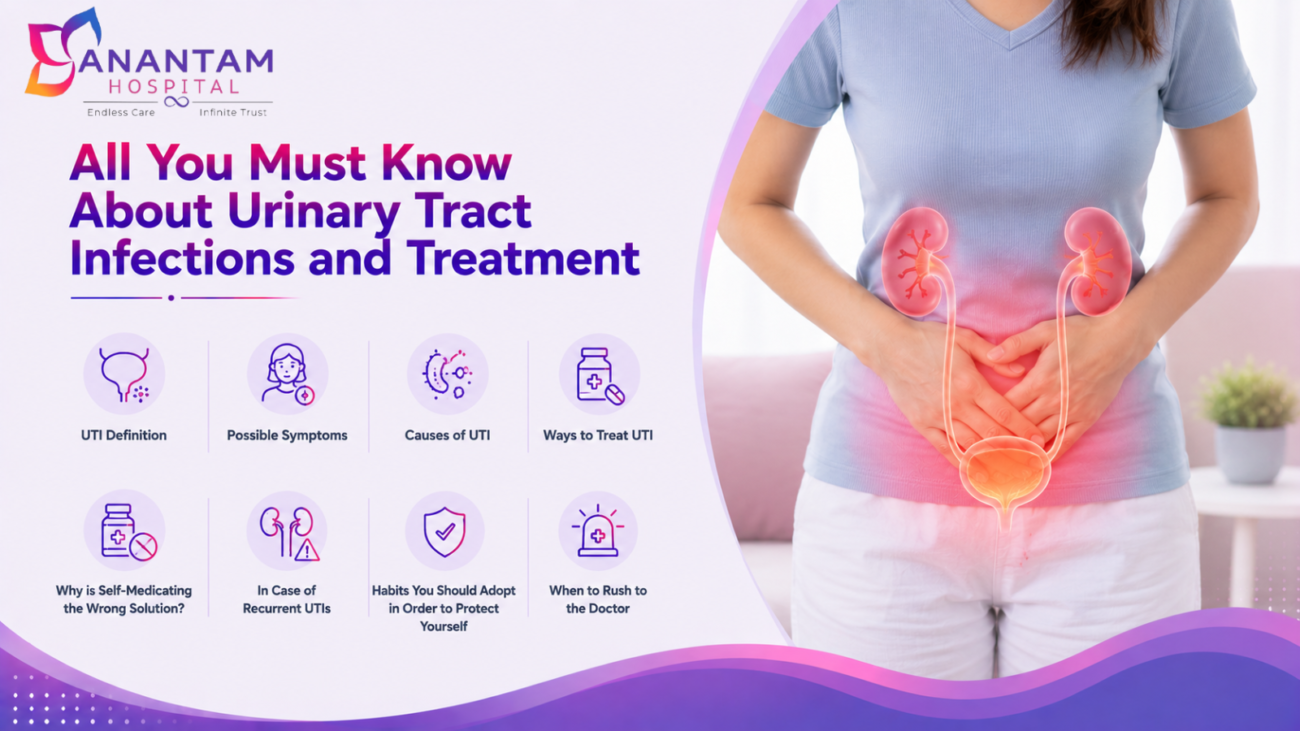
All You Must Know About Urinary Tract Infections and Treatment

Do you remember that burning sensation every time you urinated followed by urgent feeling that you need to urinate all over again in 5 minutes? Yep, you have most probably got a UTI infection, and this problem affects many people. Urinary tract infections are very common but somehow still under-discussed problem. Proper treatment of urinary tract infections and treatment requires knowing about it in detail.

UTI Definition

UTI stands for urinary tract infection. UTI infection happens when bacteria infect your urinary system. It may affect your bladder, urethra, or even your kidneys in case of advanced infection.

UTIs are more common among women because of their anatomy. Women tend to have shorter urethra and because of that, it is easier for bacteria to enter into their bladder.

Possible Symptoms

You always feel that something is going wrong before realizing that you are sick. Here are the symptoms of UTI infections.

Symptoms of UTIs include:

  • Burning sensation during urination
  • Strong desire to urinate even when only a small amount of urine leaves your body
  • Cloudy or strongly smelling urine
  • Pain in lower abdomen or pelvic area
  • General feeling of weakness

In case if the listed symptoms are accompanied by fever, chills, or pain in back – it is time to visit a doctor for proper UTI treatment.

The Causes of Urinary Tract Infections

Several things may cause UTIs, and the knowledge of them will help you to avoid such problems in the future.

  • Lack of proper hydration, which means less frequent visits to bathroom and inability to flush out the bacteria
  • Holding of urine for too long, which gives the bacteria more time to multiply
  • Using of certain contraceptives (like diaphragm and spermicide)
  • Pregnancy, which is associated with changes of hormonal level and physical changes in the urinary tract
  • Diabetes, because of high levels of sugar in your blood, which encourages bacterial growth
  • Poor hygiene practices, like improper wiping after using a toilet

None of the listed factors guarantees the appearance of UTIs, but they certainly increase your chances to get them, and they are helpful for the doctors to diagnose your situation and provide you with proper UTI treatment.

Ways to Treat UTI Infections

This is the part when people usually mess everything and try to manage the situation without appropriate diagnosis.

Common treatment options for UTIs include:

  • The use of antibiotics, depending on the type of bacteria causing the infection
  • Increase in the intake of water to flush the bacteria along with taking antibiotics
  • Pain killers for dealing with pain while antibiotics work their way
  • Completion of a full antibiotic course even when feeling better after 1-2 days

This is how things really are. Antibiotics should be used with the proper diagnosis; guessing does not do any good.

Why is Self-Medicating the Wrong Solution?

Although it is quite tempting to go for self-medication, this solution poses certain risks.

In particular, inappropriate use of an antibiotic may lead to developing resistance to it, which will make treating the next infection even more difficult. Moreover, the symptoms might just go away while the infection progresses to the kidneys.

In Case of Recurrent UTIs

However, recurrent UTIs are a sign you should look into instead of following the same treatment process.

The cause for the recurrence can be:

  • Some problem with the body’s anatomy
  • The previous infection was not completely cured
  • Some of the daily routines or hygiene practices should change
  • In rare occasions – an altogether different illness like diabetes

You will be advised to take tests to see what the cause for the recurrence is.

Habits You Should Adopt in Order to Protect Yourself

There are some routines and habits that really reduce the chance of UTIs.

  1. Drinking plenty of fluids during the day
  2. Going to the toilet whenever you have the urge to, without holding it in
  3. Wiping from front to back, particularly for females
  4. Urinating after sex, as it flushes bacteria out
  5. Avoiding unnecessary use of strong feminine hygiene products, since it disturbs the balance of bacteria

When to Rush to the Doctor

UTIs are mostly easy to manage, but there are some indications when immediate medical help is needed.

You should go to a doctor when:

  • There are fever or chills along with UTI symptoms
  • There is pain in the sides or back, suggesting kidney involvement
  • You see blood in the urine
  • You have had symptoms for several days, despite home remedies

These are not symptoms to ignore especially if there is a risk of kidneys being involved.

Conclusion

UTIs are common, troublesome and completely treatable if you get the proper care instead of going at it alone. Knowing their causes, symptoms and possible treatments makes it much easier to react to them instead of enduring them unnecessarily.

In case UTI symptoms are dragging on or keep recurring, don’t just tough it out. Anantam Hospital is the best multispeciality hospital in Kalyan and provides dedicated Urology consultations.
Infographic comparing fibroids and ovarian cysts by the best multispeciality hospital in Kalyan-Anantam

Fibroids vs Ovarian Cysts – What’s the Difference?

Women’s reproductive health plays a vital role in overall well-being, yet many gynecological conditions often go unnoticed until they begin affecting daily life. Among the most common conditions affecting women are uterine fibroids and ovarian cysts. Although these conditions may share certain symptoms such as pelvic pain, abdominal discomfort, and irregular menstrual cycles, they are entirely different in terms of where they develop, why they occur, and how they are treated.

Many women become anxious after hearing terms like “fibroid” or “ovarian cyst” during a routine ultrasound. While both conditions are common and often non-cancerous, understanding the difference between them is essential for timely diagnosis, appropriate treatment, and peace of mind.

At Anantam Hospital, the Best Multispeciality Hospital in Kalyan, our experienced gynecologists provide comprehensive women’s healthcare using advanced diagnostic technology and personalized treatment plans designed to meet every patient’s unique needs.

What Are Uterine Fibroids?
Uterine fibroids, also known as leiomyomas, are non-cancerous growths that develop within or on the walls of the uterus. They are made up of smooth muscle and connective tissue and can vary greatly in size, ranging from tiny seed-like growths to large masses that enlarge the uterus.

Fibroids are extremely common among women during their reproductive years, particularly between the ages of 30 and 50. Although the exact cause remains unknown, hormonal factors such as estrogen and progesterone are believed to contribute to their growth. Genetics, obesity, and family history may also increase the likelihood of developing fibroids.

Many women with fibroids experience no symptoms at all, while others may suffer from heavy menstrual bleeding, prolonged periods, pelvic pressure, frequent urination, constipation, lower back pain, or difficulty becoming pregnant.

What Are Ovarian Cysts?
Ovarian cysts are fluid-filled sacs that develop on or inside the ovaries. Unlike fibroids, ovarian cysts do not grow in the uterus. Most ovarian cysts develop naturally during the menstrual cycle and disappear on their own without requiring treatment.

Functional ovarian cysts are the most common type and generally resolve within a few menstrual cycles. However, certain cysts may continue to grow, cause pain, or require medical intervention if they become large or complicated.

While many ovarian cysts produce no symptoms, larger cysts may cause pelvic pain, bloating, abdominal swelling, pain during intercourse, irregular menstrual cycles, or a feeling of fullness in the lower abdomen.

Fibroids vs Ovarian Cysts: Understanding the Difference
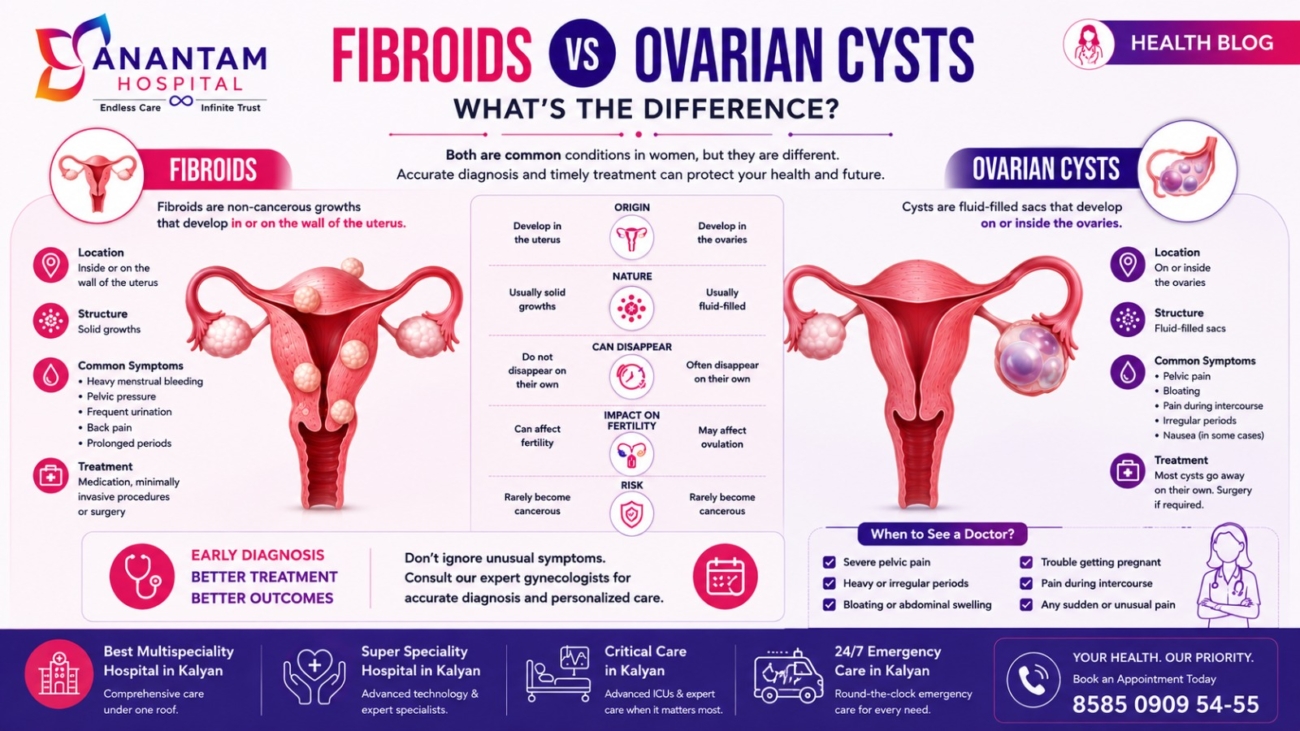
Although both conditions affect the female reproductive system, they differ significantly in their origin and structure. Fibroids are solid muscular tumors that grow in the uterus, whereas ovarian cysts are fluid-filled sacs that develop in the ovaries. Fibroids commonly cause heavy menstrual bleeding and pelvic pressure, while ovarian cysts are more likely to cause sharp pelvic pain or discomfort, especially if they rupture or twist.

Fibroids usually remain stable or grow slowly over time under the influence of hormones. In contrast, many ovarian cysts disappear naturally without treatment. Accurate diagnosis through ultrasound or other imaging tests helps doctors determine the exact condition and recommend appropriate treatment.

What Causes Fibroids?
Although researchers have not identified a single cause, several factors contribute to fibroid development. Hormonal changes, particularly increased estrogen and progesterone levels, play an important role. Family history, obesity, early onset of menstruation, vitamin D deficiency, and certain lifestyle factors may also increase the risk.

Fibroids often shrink naturally after menopause as hormone levels decline.

What Causes Ovarian Cysts?
Most ovarian cysts develop as part of the normal ovulation process. However, hormonal imbalances, endometriosis, pregnancy, pelvic infections, and conditions such as Polycystic Ovary Syndrome (PCOS) may also contribute to cyst formation.

Unlike fibroids, ovarian cysts are not always permanent and often resolve without any medical treatment.

Common Symptoms of Fibroids
Women with uterine fibroids may experience heavy or prolonged menstrual bleeding, pelvic pressure, frequent urination due to pressure on the bladder, constipation, lower back pain, painful periods, abdominal enlargement, discomfort during intercourse, and fertility-related issues in some cases.

The severity of symptoms often depends on the size, number, and location of the fibroids.

Common Symptoms of Ovarian Cysts
Most ovarian cysts are discovered during routine examinations because they produce no symptoms. However, when symptoms occur, they may include one-sided pelvic pain, abdominal bloating, pain during sexual intercourse, irregular menstrual cycles, difficulty emptying the bladder, nausea, vomiting, or sudden severe pain if the cyst ruptures or twists.

A ruptured ovarian cyst or ovarian torsion requires immediate medical attention.

How Are Fibroids and Ovarian Cysts Diagnosed?
Diagnosis begins with a detailed medical history and pelvic examination. Doctors may recommend imaging tests such as pelvic ultrasound, transvaginal ultrasound, MRI, CT scan, or blood investigations depending on the patient’s symptoms and medical condition.

Ultrasound is usually the first and most effective investigation because it clearly distinguishes fibroids from ovarian cysts. In some cases, additional investigations may be necessary to rule out other gynecological conditions.

At Anantam Hospital, advanced diagnostic imaging ensures accurate and timely diagnosis, allowing patients to receive the most appropriate treatment.

Treatment for Fibroids
Treatment depends on the size of the fibroids, symptoms, patient’s age, and future pregnancy plans. Small fibroids without symptoms may simply require regular monitoring. Symptomatic fibroids may be treated with medications that control bleeding or shrink the fibroids temporarily.

For larger fibroids causing significant symptoms, minimally invasive procedures or surgery may be recommended. Treatment options include myomectomy, which removes only the fibroids while preserving the uterus, uterine artery embolization to reduce blood supply to the fibroids, or hysterectomy in selected cases where childbearing is complete.

Treatment for Ovarian Cysts
Most functional ovarian cysts disappear naturally within a few weeks or months and require only observation with repeat ultrasound examinations. Pain-relieving medications or hormonal therapy may be recommended in selected cases.

Surgical removal may become necessary if the cyst is large, persistent, causing severe pain, appears suspicious on imaging, or results in complications such as rupture or ovarian torsion.

Early diagnosis allows doctors to determine whether immediate treatment is necessary or if simple observation is sufficient.

Can Fibroids or Ovarian Cysts Affect Fertility?
Both fibroids and ovarian cysts can influence fertility in certain situations, although many women with these conditions conceive naturally and have healthy pregnancies.

Fibroids located inside the uterine cavity may interfere with implantation or increase the risk of miscarriage. Similarly, certain ovarian cysts, particularly those associated with endometriosis or PCOS, may affect ovulation and fertility.

Women planning pregnancy should consult an experienced gynecologist for appropriate evaluation and individualized treatment planning.

When Should You Consult a Gynecologist?
You should seek medical attention if you experience unusually heavy menstrual bleeding, severe pelvic pain, persistent bloating, sudden abdominal pain, irregular menstrual cycles, pain during intercourse, frequent urination, difficulty conceiving, or any noticeable increase in abdominal size.

Ignoring these symptoms can delay diagnosis and allow certain conditions to progress.

Why Choose Anantam Hospital for Women’s Healthcare?
Women’s health requires compassionate, specialized, and comprehensive medical care. As a Super Speciality Hospital in Kalyan, Anantam Hospital provides complete gynecological services under one roof, including preventive health checkups, advanced imaging, minimally invasive surgery, fertility evaluation, pregnancy care, and emergency gynecological services.

Our experienced gynecologists use the latest diagnostic technologies to accurately identify fibroids, ovarian cysts, and other reproductive health conditions while offering personalized treatment plans focused on preserving long-term health and fertility whenever possible.

Supported by modern operation theatres, advanced imaging facilities, and 24/7 Emergency Care in Kalyan, we ensure timely intervention for gynecological emergencies requiring immediate attention.

Although uterine fibroids and ovarian cysts may appear similar because they share certain symptoms, they are two distinct medical conditions that require different approaches to diagnosis and treatment. Understanding the difference between them allows women to seek timely medical care, avoid unnecessary anxiety, and make informed healthcare decisions.

If you are experiencing pelvic pain, heavy periods, abdominal bloating, or irregular menstrual cycles, do not ignore these symptoms. Consult the experienced gynecology team at Anantam Hospital – the Best Multispeciality Hospital in Kalyan, where advanced diagnostics, expert specialists, compassionate care, and comprehensive women’s health services ensure you receive the highest standard of treatment for every stage of life.