

Doctor administering adult immunization vaccine to patient at Anantam Hospital

Vaccination Isn’t Just for Kids: A Guide to Adult Immunization

Quick question. When was the last time you got a vaccine?

If you’re drawing a blank, you’re not alone. Most of us associate vaccines with baby check-ups and school entry forms, then mentally file the topic away forever. But here’s the thing: your immune system doesn’t stop needing backup just because you grew up.

The Myth That Just Won’t Die

Somewhere along the way, we all picked up this idea that vaccines are a “kid thing.” You get your shots, you grow up, you’re set for life. Done and dusted.

That’s simply not how immunity works. Some childhood vaccines wear off over time. Others were never designed to protect you forever in the first place. And a few adult immunization needs only show up later in life, based on your age, job, health conditions, or travel plans.

So if you skipped your last few check-ups thinking vaccines were behind you, this one’s for you.

The Vaccines Adults Actually Need

Let’s break down what a solid adult immunization schedule typically looks like:

Flu Shot

  • Recommended every single year, not just once
  • The virus mutates constantly, so last year’s shot won’t cover this year’s strain
  • Especially important if you’re 50+, pregnant, or have a chronic condition

Tdap and Td Booster

  • Protects against tetanus, diphtheria, and whooping cough
  • You need a booster every 10 years, even if you got the full series as a kid
  • Pregnant women should get a Tdap booster with every pregnancy

Shingles Vaccine

  • Recommended for adults 50 and older
  • If you’ve ever had chickenpox, the virus is still sitting dormant in your body
  • Shingles can be seriously painful, so this one’s worth prioritizing

Pneumococcal Vaccine

  • Protects against pneumonia and related infections
  • Recommended for adults 65+ or younger adults with certain health conditions
  • Talk to your doctor about which version you actually need, since there’s more than one

HPV Vaccine (Catch-Up)

  • Not just for teenagers anymore
  • Adults up to age 45 can still benefit from catching up if they missed it earlier
  • Worth a conversation with your doctor if you’re in that window

COVID Boosters

  • Recommendations keep evolving, so this one needs regular check-ins
  • Especially relevant if you’re older, immunocompromised, or have underlying conditions

It’s Not One-Size-Fits-All

Here’s where a lot of people get tripped up. Your adult immunization needs aren’t the same as your neighbor’s, your parent’s, or your coworker’s.

A few things that change the equation:

  • Age: Once you cross 50 or 65, new vaccines come into play
  • Health conditions: Diabetes, heart disease, or a weakened immune system can shift what you need
  • Occupation: Healthcare workers, teachers, and childcare staff often need specific vaccines
  • Travel plans: Heading abroad? Some destinations require vaccines you wouldn’t otherwise think about, like typhoid or yellow fever

This is exactly why a blanket vaccine schedule doesn’t cut it for grown-ups. Your adult immunization needs depend on who you are and how you live.

What About Immunocompromised Adults?

If you’re managing a chronic illness or your immune system isn’t at full strength, vaccines matter even more, not less.

Some vaccines might need adjusting. Others become non-negotiable. This is a conversation to have directly with your doctor rather than guessing on your own.

How to Catch Up If You’ve Fallen Behind

Not sure what you’ve had and what you’ve missed? You’re in good company. Most adults have no clue what their vaccination history looks like.

Here’s how to sort it out:

  1. Pull your old records if you have them, even a faded vaccination card helps
  2. Ask your doctor to run a titer test, which checks if you still have immunity to certain diseases
  3. Start fresh if needed, since re-vaccinating is safe even if you’re not sure you need it
  4. Set a yearly check-in, so you’re not scrambling to remember years later

Getting back on track with your adult immunization schedule isn’t complicated. It just takes one conversation to get moving again.

Don’t Wait for a Reason

Most people only think about vaccines when they’re already sick, traveling next week, or scared by news of an outbreak. But adult immunization works best as prevention, not reaction, and building it into your routine now saves you from bigger health scares later.

Think of it less like an emergency fix and more like regular maintenance. You don’t wait for your car to break down before changing the oil.

Let’s Get You Sorted

If you’ve been putting off your shots or genuinely don’t know what you’re due for, don’t stress about figuring it out alone. A quick chat with your doctor can map out exactly what you need based on your age, health history, and lifestyle.

Anantam Hospital, recognized as the best multispeciality hospital in Kalyan, offers immunization consultations to help you catch up and stay protected. Book a consult today and cross this one off your list for good.
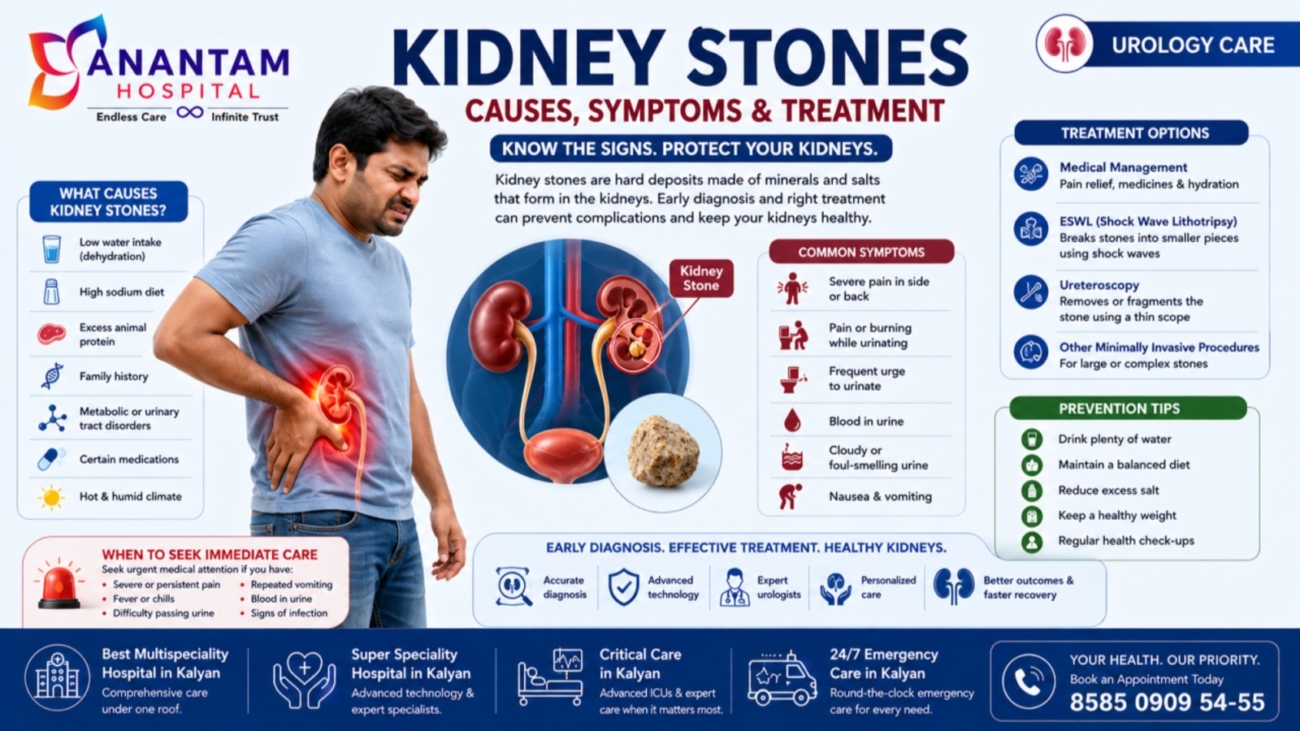
Kidney stones causes, symptoms & treatment – Anantam Hospital

Kidney Stones – Causes, Symptoms & Treatment

Kidney stones are a common urinary system problem that can affect people of different ages. They develop when certain minerals and salts present in urine become highly concentrated and form hard deposits inside the kidneys. Some kidney stones are very small and may pass naturally through the urinary tract, while larger stones can cause significant pain, blockage, infection, and other complications.

Understanding the causes, symptoms, treatment options, and prevention of kidney stones can help you recognize the condition early and seek appropriate medical care.

At Anantam Hospital, the Best Multispeciality Hospital in Kalyan, our experienced specialists provide comprehensive evaluation and treatment for kidney and urinary tract conditions using advanced diagnostic facilities and patient-focused care.

What Are Kidney Stones?

Kidney stones are hard, crystal-like deposits that form inside the kidneys when substances such as calcium, oxalate, uric acid, or other minerals become concentrated in the urine. A stone may remain inside the kidney without causing symptoms or travel through the ureter, the tube connecting the kidney to the bladder.

The size and location of a stone largely determine whether it will cause symptoms. Smaller stones may pass through the urinary tract without medical intervention, whereas larger stones can become lodged and obstruct the normal flow of urine.

What Causes Kidney Stones?

Several factors can contribute to kidney stone formation. Not drinking enough water is one of the most important risk factors because concentrated urine makes it easier for minerals to crystallize. A diet high in sodium may also increase the risk of certain stones, while excessive intake of some animal proteins can contribute to stone formation in susceptible individuals.

Family history can increase the likelihood of developing kidney stones. People who have had kidney stones previously may also be more likely to develop them again. Certain medical conditions, metabolic disorders, urinary tract problems, and some medications can increase the risk as well.

Hot and humid environments can also contribute indirectly because excessive sweating without adequate fluid replacement may lead to dehydration and more concentrated urine.

Common Symptoms of Kidney Stones

A small kidney stone may not cause any symptoms until it begins moving. When a stone travels through the urinary tract, it can cause sudden and intense pain. The pain may occur in the side or back and can sometimes spread toward the lower abdomen or groin.

Other symptoms may include pain or burning while urinating, a frequent urge to urinate, blood in the urine, cloudy or foul-smelling urine, nausea, and vomiting. Some people may experience pain that comes and goes in waves as the stone moves.

A kidney stone accompanied by fever or chills may indicate an infection and requires prompt medical evaluation.

Where Does Kidney Stone Pain Occur?

Kidney stone pain can vary depending on where the stone is located. It commonly begins in the back or side below the ribs and may move toward the lower abdomen or groin as the stone travels down the ureter.

The intensity of the pain can also change as the stone moves. Some people describe it as severe, cramping pain that comes in waves. However, symptoms can vary considerably from person to person.

How Are Kidney Stones Diagnosed?

Doctors begin with a medical history and physical examination. Urine and blood tests may be performed to look for signs of infection, blood in the urine, or factors that may contribute to stone formation.

Imaging plays an important role in diagnosis. An ultrasound may be used to identify stones and assess whether urine flow is obstructed. Depending on the situation, doctors may recommend additional imaging such as a CT scan to determine the size and exact location of the stone.

Accurate diagnosis helps doctors decide whether the stone can pass naturally or requires medical or surgical treatment.

How Are Kidney Stones Treated?

Treatment depends on the stone’s size, location, composition, symptoms, and whether it is causing an obstruction or infection. Small stones may pass naturally with adequate fluid intake and appropriate pain management under medical guidance.

When a stone is unlikely to pass on its own or is causing significant symptoms, a urologist may recommend a procedure to remove or break it into smaller pieces.

One commonly used treatment is Extracorporeal Shock Wave Lithotripsy (ESWL), which uses focused shock waves to break certain kidney stones into smaller fragments that can then pass through the urinary tract.

Another option is ureteroscopy, where a thin specialized instrument is passed through the urinary tract to locate and remove or fragment the stone. For larger or more complex stones, other minimally invasive procedures may be recommended depending on the patient’s condition.

The appropriate treatment should always be decided by a qualified urologist after evaluating the individual patient.

When Does a Kidney Stone Become an Emergency?

Most kidney stones can be treated effectively, but certain symptoms require urgent medical attention. Severe or persistent pain, fever or chills, difficulty passing urine, repeated vomiting, significant blood in the urine, or symptoms suggesting a urinary infection should not be ignored.

A blocked urinary tract combined with an infection can become a serious medical emergency. Prompt treatment is essential to prevent complications and protect kidney function.

If you experience severe symptoms, seek immediate medical attention rather than attempting to manage the condition on your own.

Can Kidney Stones Be Prevented?

Once someone has developed a kidney stone, making certain lifestyle changes may help reduce the risk of recurrence. Drinking enough water throughout the day is one of the most important preventive measures. Your doctor may recommend a specific fluid intake depending on your health and individual risk factors.

Reducing excessive salt intake, maintaining a balanced diet, and avoiding unnecessary dietary restrictions without medical advice can also help. The recommended diet may vary depending on the type of stone, so people with recurrent kidney stones may benefit from a metabolic evaluation and personalized dietary guidance.

Maintaining a healthy weight and managing medical conditions that increase stone risk are also important for long-term prevention.

Why Do Kidney Stones Keep Coming Back?

Some people experience kidney stones repeatedly. Recurrence can be associated with inadequate fluid intake, dietary factors, family history, certain medical conditions, or the chemical composition of previous stones.

If you have had kidney stones more than once, your doctor may recommend testing the stone itself, analyzing urine, or performing blood tests to understand why the stones are forming. Identifying the underlying cause can help create a more effective prevention plan.

Why Choose Anantam Hospital for Kidney Stone Treatment?

Kidney stone treatment requires accurate diagnosis and the right treatment approach based on the individual patient’s condition. At Anantam Hospital, the Best Multispeciality Hospital in Kalyan, patients receive comprehensive evaluation and treatment supported by experienced specialists and advanced diagnostic facilities.

As a Super Speciality Hospital in Kalyan, Anantam Hospital provides multidisciplinary care for complex kidney and urinary tract conditions. Patients can access advanced imaging, laboratory investigations, specialist consultations, minimally invasive treatment options, and postoperative care under one roof.

For patients requiring close monitoring or advanced medical support, our Critical Care in Kalyan provides specialized care, while our 24/7 Emergency Care in Kalyan ensures that urgent medical conditions can be assessed and treated without unnecessary delay.

Kidney stones can range from small stones that pass naturally to larger stones that cause severe pain, urinary obstruction, or infection. Recognizing symptoms early and obtaining an accurate diagnosis can help prevent complications and ensure timely treatment.

Adequate hydration, a balanced diet, and appropriate medical evaluation can also play an important role in preventing future stones. If you experience severe side or back pain, painful urination, blood in the urine, fever, vomiting, or difficulty passing urine, consult a healthcare professional promptly.

At Anantam Hospital – the Best Multispeciality Hospital in Kalyan, our experienced specialists and advanced facilities provide comprehensive kidney and urinary care with a patient-first approach. Whether you require diagnostic evaluation, medical management, minimally invasive treatment, Critical Care in Kalyan, or 24/7 Emergency Care in Kalyan, our team is committed to helping you receive timely and appropriate care.

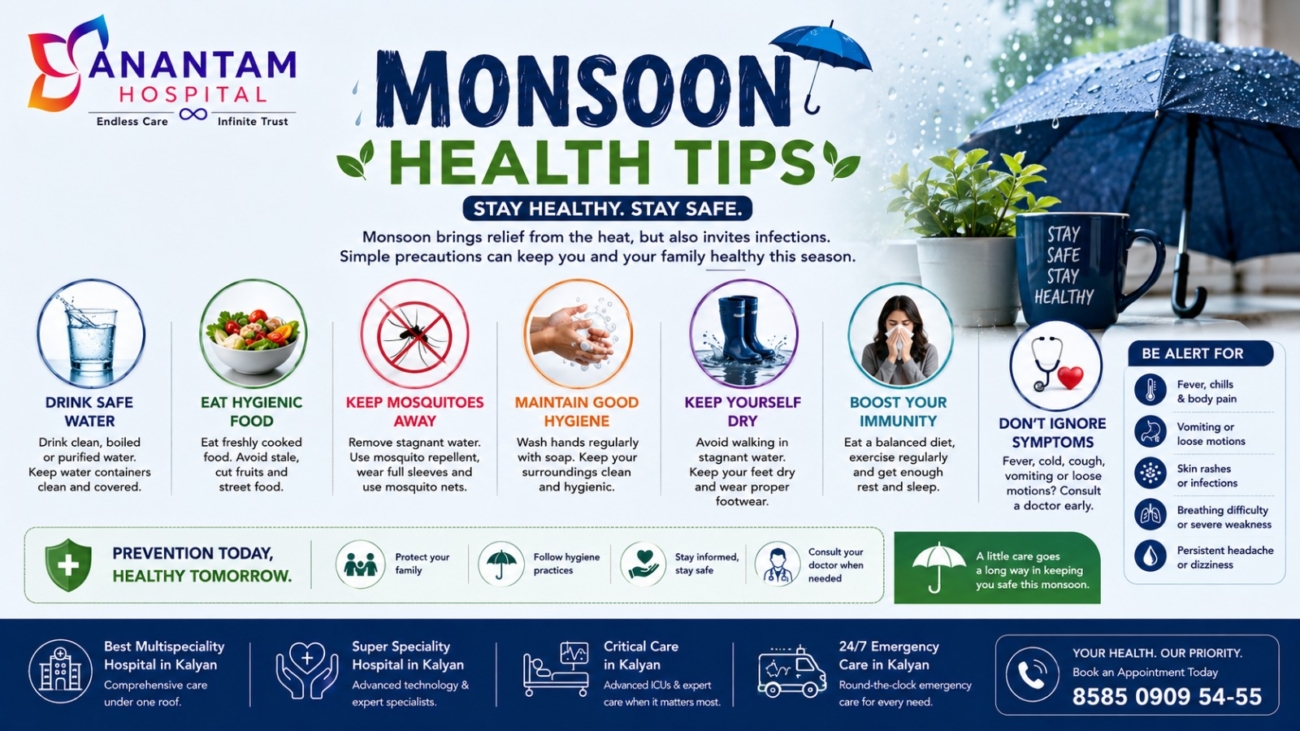
Monsoon infections & health tips at best multispeciality hospital in Kalyan

Monsoon Health Tips: How to Stay Healthy and Safe During the Rainy Season

The monsoon brings relief from the summer heat, but increased humidity, stagnant water, and changes in weather can also create conditions that favour the spread of certain infections. During the rainy season, illnesses such as dengue, diarrhoeal diseases, respiratory infections, and other mosquito- or water-borne infections can become more common. Taking simple precautions related to hygiene, food, drinking water, mosquito control, and personal safety can help protect you and your family throughout the season.

Stay Hydrated With Safe Drinking Water

Staying hydrated remains important even when the weather is cooler. However, during the monsoon, the quality of drinking water deserves extra attention because contaminated water can transmit infections that cause diarrhoea and other illnesses. Drink water from a safe and reliable source, and take appropriate precautions if the safety of the water supply is uncertain. Keep drinking-water containers clean and covered, and avoid consuming water from questionable sources.

Pay Attention to Food Hygiene

Humidity and warm temperatures can allow microorganisms to multiply more quickly in food. WHO notes that foodborne illnesses can increase during monsoon conditions. Choose freshly prepared food, keep food covered, wash your hands before eating or preparing meals, and make sure food is cooked and stored safely. Be particularly careful with food that has been left exposed for long periods.

Protect Yourself From Mosquitoes

Mosquitoes can breed in small amounts of stagnant water around homes, balconies, gardens, construction areas, and other locations. Dengue is transmitted through the bite of infected mosquitoes, and transmission often increases during and after rainy seasons. Empty and clean containers that collect water, keep water-storage containers covered, remove discarded items that can hold rainwater, and use appropriate mosquito protection.

The mosquitoes that transmit dengue are active during the daytime, so protection should not be limited to nighttime. Wearing clothing that covers more of the body, using mosquito screens or repellents appropriately, and keeping indoor and outdoor areas free from stagnant water can help reduce exposure.

Maintain Good Personal Hygiene

Frequent handwashing with soap is one of the simplest ways to reduce the spread of infections. Wash your hands before preparing or eating food and after using the toilet. Maintaining clean surroundings and practising good personal hygiene are particularly important during the rainy season when exposure to contaminated water and surfaces may increase.

Take Care of Your Feet and Skin

Wet conditions can leave your feet damp for extended periods, particularly if you frequently walk through rain or waterlogged areas. Try to keep your feet clean and dry, change out of wet footwear and clothes when possible, and maintain good skin hygiene. Avoid unnecessary contact with potentially contaminated floodwater, particularly if you have cuts or open wounds.

Be Alert to Fever and Other Symptoms

Do not ignore a persistent fever during the monsoon. Dengue can cause high fever, headache, body aches, nausea, vomiting, and rash, while severe dengue can develop with warning signs such as severe abdominal pain, persistent vomiting, bleeding, rapid breathing, extreme weakness, or restlessness. Anyone experiencing concerning symptoms should seek medical attention promptly rather than relying on self-diagnosis.

It is also important to remember that not every fever during the monsoon is dengue. Different infections can produce similar symptoms, so a doctor may recommend appropriate examinations or blood tests based on the patient’s symptoms and medical history.

Eat a Balanced and Nutritious Diet

A balanced diet supports normal immune function and overall health. Include a variety of vegetables, fruits, whole grains, pulses, and appropriate sources of protein in your meals. During the monsoon, prioritise food safety along with nutrition and avoid consuming food that appears spoiled, contaminated, or has been stored improperly.

Keep Your Home and Surroundings Clean

Regularly inspect your home and surrounding areas for places where rainwater can collect. Flowerpots, buckets, discarded containers, tyres, drains, and other objects can become mosquito-breeding sites if they retain water. Removing these potential breeding sites is an important part of dengue prevention.

Take Extra Care During Heavy Rain and Flooding

Heavy rainfall and flooding can create additional health and safety risks. Avoid unnecessary contact with floodwater, particularly when its cleanliness is uncertain. Follow local safety instructions during severe weather and seek medical advice if you develop symptoms after exposure to contaminated water or if you become unwell.

When Should You Consult a Doctor?

A mild illness may sometimes improve with rest and appropriate supportive care, but certain symptoms require medical evaluation. Consult a healthcare professional if you develop persistent or high fever, repeated vomiting, significant diarrhoea, signs of dehydration, severe weakness, breathing difficulties, unusual bleeding, severe abdominal pain, or symptoms that are getting worse rather than improving.

For children, older adults, pregnant women, and people with existing health conditions, seeking medical advice promptly can be particularly important when significant symptoms develop.

Monsoon Healthcare at Anantam Hospital

At Anantam Hospital, the Best Multispeciality Hospital in Kalyan, patients can access comprehensive medical care for seasonal infections, fever, dehydration, respiratory concerns, and other health problems that may arise during the monsoon.

As a Super Speciality Hospital in Kalyan, Anantam Hospital brings together experienced specialists, advanced diagnostic facilities, and comprehensive treatment services under one roof. For patients requiring close monitoring or advanced medical support, our Critical Care in Kalyan provides specialized care, while our 24/7 Emergency Care in Kalyan is available for medical emergencies at any time.

Conclusion

The monsoon can be enjoyed safely with a few simple health precautions. Drinking safe water, practising good hygiene, choosing hygienically prepared food, preventing mosquito breeding, protecting yourself from mosquito bites, maintaining clean surroundings, and paying attention to unusual symptoms can all help reduce health risks during the rainy season.

If you or a family member develops persistent fever, severe weakness, dehydration, breathing difficulties, unusual bleeding, or other concerning symptoms, seek professional medical evaluation without delay. At Anantam Hospital – the Best Multispeciality Hospital in Kalyan, our experienced healthcare team is committed to providing timely diagnosis, comprehensive treatment, Critical Care in Kalyan, and 24/7 Emergency Care in Kalyan when you need it most.