
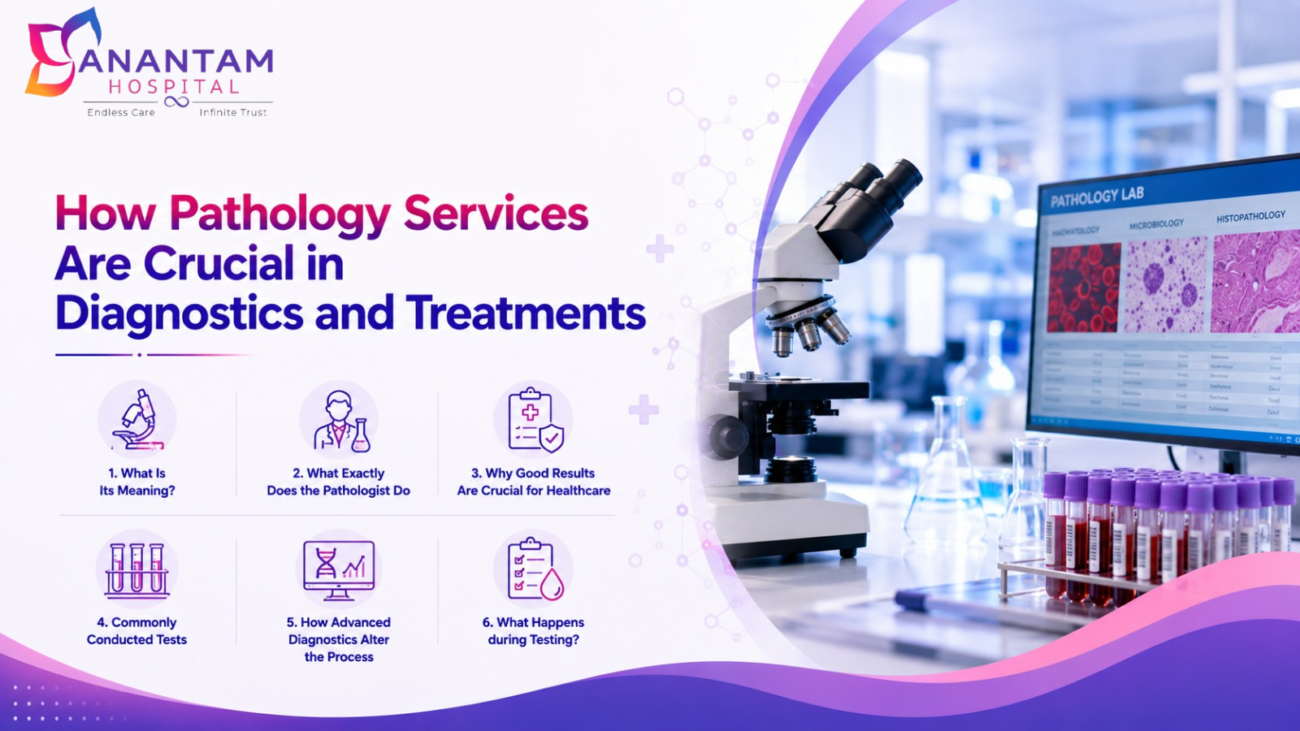
Pathology services in a lab with microscope and blood test samples at Anantam Hospital

How Pathology Services Are Crucial in Diagnostics and Treatments

Going to the lab, getting poked, and leaving without even looking back is something we all did several times in our life, but what really happens after you leave – most likely, you don’t even give it a second thought. It turns out, this small process influences each of your treatment choices in a huge way. This is the part of diagnostic process in pathology services which gets overlooked the most often, but behind each diagnosis lies the lab diagnosing what’s happening inside your body.

What We Mean by This Term?

While many people assume “the lab” equals blood draws, this particular field covers many more aspects of diagnostics.

Typically, it includes:

  • blood tests ranging from general health check-ups to complicated panels;
  • biopsy – testing samples of tissue for presence of any diseases;
  • analysis of urine and feces in order to detect any abnormalities and infections;
  • histopathology – analyzing tissue structure using a microscope;
  • microbiology which identifies bacteria, viruses, fungi infections;
  • molecular diagnostics which analyzes DNA for a particular disorder.

Although their roles may be very different, these are crucial parts of diagnostics process.

What Exactly Does the Pathologist Do in Your Case

Although you’re unlikely to ever meet the pathologist who works on your case, his or her input will directly affect the treatment plan.

Concluding that you have an infection, that there are cancer cells in a sample of tissue, that you do not have a particular disease – this is where pathology services make their diagnostic contribution.

Why Good Results Are Crucial for Healthcare

Delayed or incorrect results not only cause discomfort but can significantly affect the treatment. That’s exactly the reason why good pathology services are crucial in current healthcare industry.

  • timely diagnosis allows you to get treated faster in case of any urgent cases;
  • accurate results reduce unnecessary treatment or missings of certain conditions;
  • detailed reports provide doctors with the whole information about the condition;
  • reliable quality control of all lab procedures leads to trustworthy results.

Commonly Conducted Tests

Now let’s discuss several commonly conducted tests most of you are familiar with without understanding what exactly is being checked during the examination.

  • CBC (Complete Blood Count) – checks patients for infections, anemia, etc.;
  • Lipid Profile – checks your cholesterol to determine your chances of having heart disease;
  • Biopsy Reports – confirm or exclude certain conditions, such as cancer;
  • Tests for liver and kidneys functioning;
  • Tests of blood sugar;

Understanding the purposes of these procedures will significantly improve communication with your physician.

How Advanced Diagnostics Alter the Process

In addition to traditional methods, modern laboratory diagnostics is now able to use molecular and genetic testing to identify various diseases at early stages and provide a more accurate individual treatment.

In such way, the shift towards personalized medicine changes the process, making the treatment plan based on laboratory diagnostics rather than on your symptoms.

What Happens during Testing?

Testing is not scary anymore when you know the basics of the process.

  • Collecting of samples – blood, urine, tissues or other type of material
  • Laboratory diagnostics – analysis of collected material by trained specialists
  • Report generation – creation of report to be sent to the doctor
  • Turnaround time – period during which you will receive results of the procedure (depending on the procedure it might take from minutes to few days)

Presence of the in-house, accredited laboratory ensures more prompt delivery of the reports and better cooperation between the laboratory and your physician.

Summary

Pathology services are not always mentioned, but still, they are involved in almost every important medical decision. Accuracy and promptness of your laboratory test results are the base of your whole further diagnosis and treatment.

When you have to undergo routine tests or need special diagnostics, choosing a hospital with quality laboratory services will be crucial for the process of your treatment. You should choose Anantam Hospital as one of the best multispeciality hospitals in Kalyan with 24/7 emergency care.
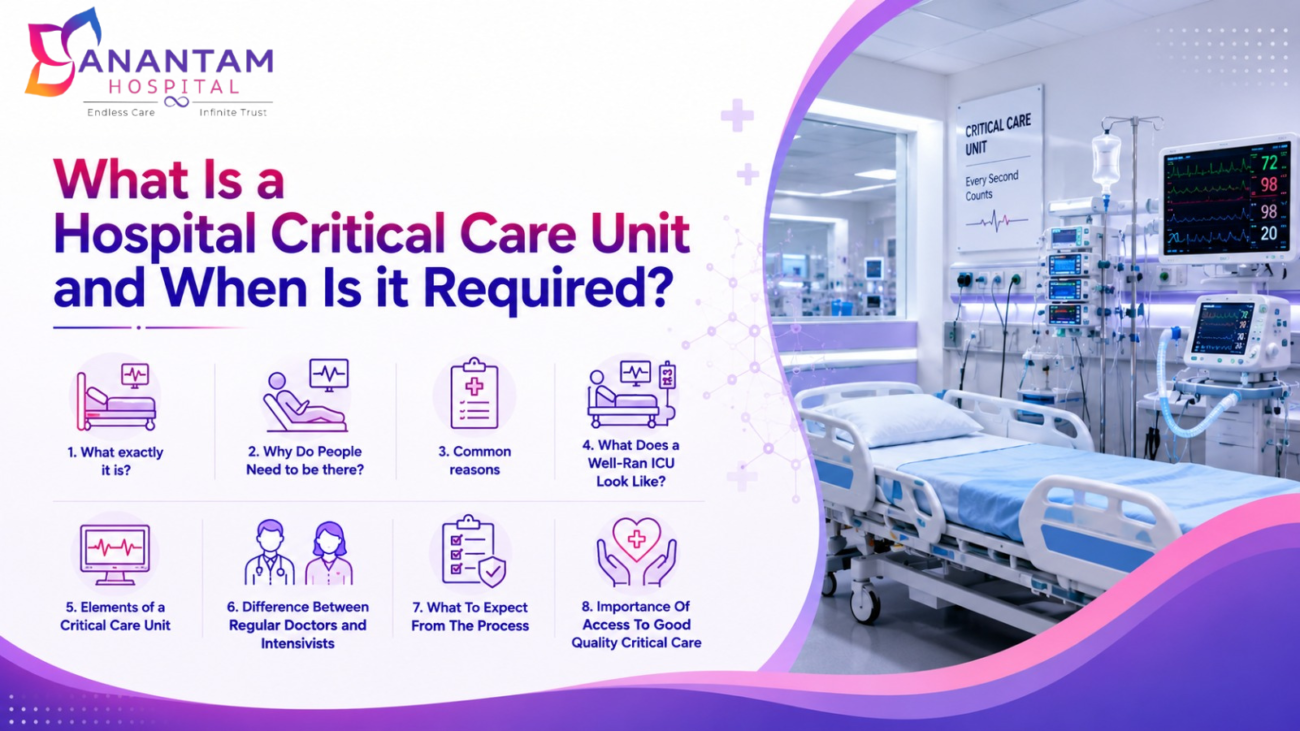
Hospital critical care unit with ICU beds and monitoring equipment at Anantam Hospital

What Is a Hospital Critical Care Unit and When Is it Required?

The news that a relative or close person will be admitted to the ICU may be frightening and even alarming as most people do not understand what does it mean. It is important to learn some information about a hospital critical care unit as it will help to understand the situation better.

What Is a Hospital Critical Care Unit?

The ICU, or a critical care unit, is a special area in the hospital which is dedicated to patients who require continuous monitoring and intensive attention. The main peculiarity of this unit is that each patient gets much more attention than it is in the other hospital areas.

Why Do People Need to Be in a Critical Care Unit?

There are many reasons why a person is admitted to the ICU and all of them are rather serious. In most cases, such a unit helps to save lives.

Common reasons for admission to a critical care unit include:

  • Sepsis or other serious infections
  • After complications following the surgical operation
  • Patients with heart attacks
  • Patients with breathing problems
  • After an accident or any other trauma
  • Organ failure

It may take several days or even weeks for a patient to leave the critical care unit. It depends on his or her condition.

What Does a Well-Ran ICU Look Like?

It is not only a ward with some additional devices and machines. A good ICU consists of highly-specialized medical staff, advanced medical technologies and readiness for rapid response.

Elements of a hospital critical care unit include:

  • Constant monitoring of the patient’s vital signs
  • Ventilators in case a person cannot breathe on his/her own
  • Cardiac monitors
  • Intensivists who are medical doctors specializing in critical care medicine
  • Rapid response protocols

All these elements have a purpose to provide timely reaction to all possible problems of patients.

Difference Between Regular Doctors and Intensivists

Doctors usually focus on diagnostics and development of treatment plan. On the contrary, intensivists always try to make a quick decision in case of changes in a patient’s condition.

What To Expect From The Process

Being with your loved one in critical care can be a difficult experience, but there are certain things one can expect from the process.

  • The visiting hours may be limited due to patient needs and restrictions
  • Communications take place on regular basis, with doctors keeping the families informed about the current situation and future plans
  • Getting psychological support is important so ask the hospital’s staff to help you if you need any assistance
  • Questions are always allowed – ask the care team all the questions you might have

You are not supposed to know all the terms used by medical specialists, but a competent care team should be able to give you the needed explanation.

The Importance Of Access To Good Quality Critical Care

In a real emergency every minute counts, and having a well-equip hospital critical care unit available within the area is vital.

Some of the criteria for assessing a hospital’s readiness for a crisis situation:

  • 24×7 availability of intensivists and other specialists
  • Modern equipment maintained and upgraded regularly
  • Quick admission to critical care after being detected at the general ward
  • Effective communication between different departments in case of an emergency

These points are crucial to consider when evaluating the quality of the care offered at a particular facility.

Conclusion

Hospitals’ critical care units are designed to provide care to people who really need constant monitoring and fast reaction in case of a crisis situation. Understanding what such departments do, who are their target audiences and what one can expect from the process is important.

If you look for a hospital to get treatment for yourself or a loved one suffering from a certain condition, pay attention to the critical care unit. Anantam Hospital, which is considered the best multispeciality hospital in Kalyan, provides its patients with a 24×7 critical care unit staffed by experienced intensivists.

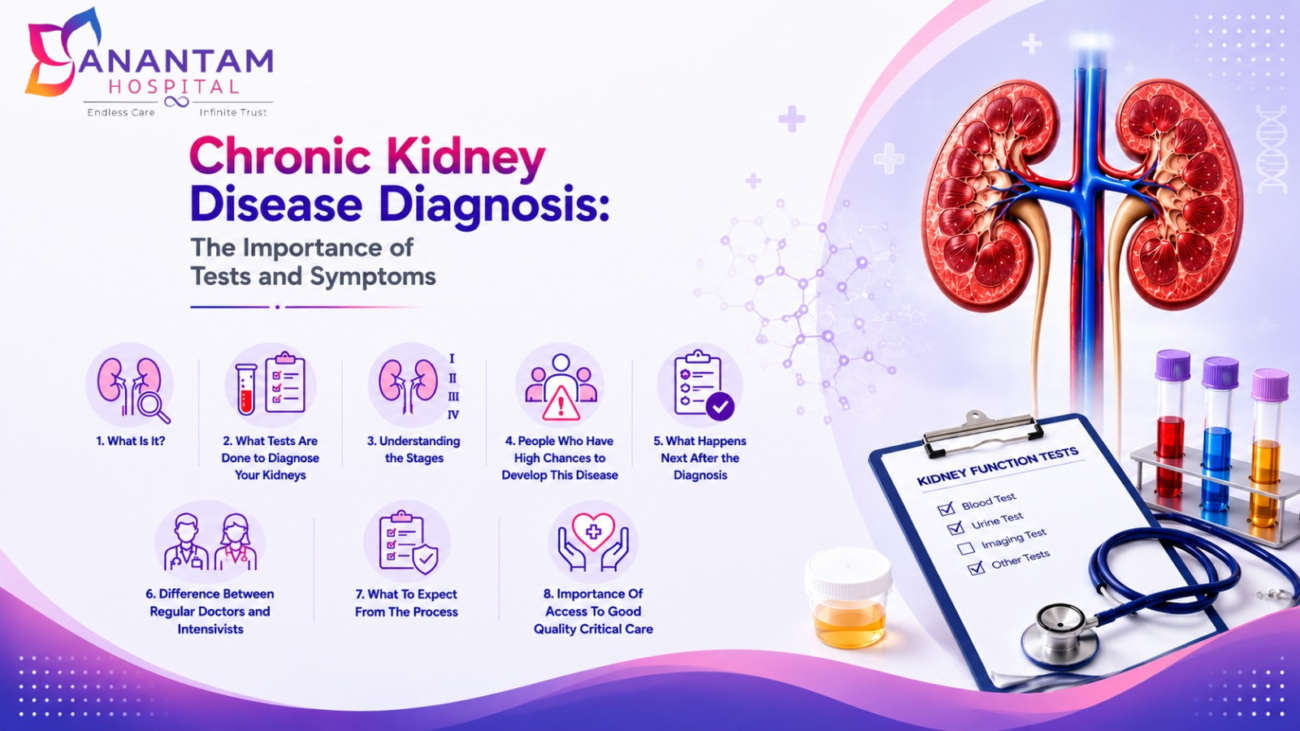
Chronic Kidney Disease Diagnosis at Anantam Hospital

Chronic Kidney Disease Diagnosis: The Importance of Tests and Symptoms

Your kidneys function continuously to cleanse your blood from toxins, yet you only pay attention to them once something goes wrong. By the time you notice the problem, lots of things may have been going on under the surface. That’s why chronic kidney disease diagnosis is so important. They usually appear slowly and develop silently, which means that an early detection becomes crucial for you to take appropriate action.

What Is Chronic Kidney Disease?

Chronic kidney disease, commonly known as CKD, is a slow decrease in kidney function due to some internal issues. Unlike acute cases, it takes a lot of time to develop, sometimes many years.

Your kidneys cleanse your blood from metabolic waste, adjust fluid balance, and maintain blood pressure levels. If something starts happening with kidneys, the consequences will affect the whole organism, not only the urinary system.

The First Signs that You Might Overlook

This illness is really hard to detect, and that is why chronic kidney disease diagnosis becomes so important.

Be careful about these symptoms:

  • Frequent tiredness despite rest
  • Leg swelling
  • Unusual urination patterns, including color changes
  • High blood pressure
  • Loss of appetite or a metallic taste

They do not indicate any specific kidney problem at all, which is exactly why people ignore them.

What Tests Are Done to Diagnose Your Kidneys

Diagnosing kidney issues is pretty simple and does not require any sophisticated procedure.

Blood Tests

  • Shows your creatinine level, a waste that should be filtered by your kidneys
  • Determines your eGFR, which is your estimated glomerular filtration rate (it shows how well your kidneys work)

Urine Tests

  • Detects presence of protein or albumin in urine, which should not be there
  • Allows you to diagnose your kidney issues even before any symptom appears

Imaging Test

  • Ultrasound helps you find the kidney’s size, structure, or blockages and cysts

Biopsy (If Needed)

  • It’s done if it’s difficult to understand the reason of your illness after all blood and urine tests

These tests create a full picture, and this is the reason why chronic kidney disease diagnosis rarely requires one single test.

Understanding the Stages of CKD

After you get your result, doctors will divide your disease into 5 stages according to your eGFR results.

Stage 1: normal kidney function but other signs of kidney damage present
Stage 2: mild reduction in kidney function
Stage 3: moderate reduction in kidney function (stage 3b is usually accompanied with symptoms appearance)
Stage 4: severe reduction in kidney function
Stage 5: kidney failure

Each stage will allow you to plan the appropriate treatment for your kidney disease.

People Who Have High Chances to Develop This Disease

There are a few factors, which increase your chances to develop chronic kidney disease.

Diabetes – is one of the main reasons for the appearance of this illness.
High blood pressure – puts additional stress on the blood vessels of the kidneys.
Family history of kidney disease
Obesity – it increases the workload on your kidneys.

Knowing your risks allows you to prevent this illness before it appears.

What Happens Next After the Chronic Kidney Disease Diagnosis?

After the diagnosis, you have to create an appropriate treatment plan, which depends on your stage.

It includes the following steps:

Lifestyle changes – it’s needed to control blood sugar, reduce salt intake, and to exercise.
Medication – to control high blood pressure.
Monitoring – regular blood and urine tests to control kidney function.
Dialysis or transplant – it’s used in advanced stages of this disease.

Timely treatment allows you to slow down the process of chronic kidney disease development.

Summary

CKD is really hard to spot, which is the main reason why the knowledge of this illness symptoms becomes so important. Getting your diagnosis in time will give you the opportunity to manage it successfully.

If you have diabetes or high blood pressure, or you haven’t got checked recently, it’s better to do it now. Anantam Hospital, which is the best multispeciality hospital in Kalyan with 24/7 emergency care, provides consultations for Nephrology.

Chemotherapy treatment session at Anantam Hospital

Chemotherapy Explained: What To Expect Before, During, and After Your Treatment

Finding out you or a close one has to go through chemotherapy may cause a lot of questions at once. Most of them are related to what actually will happen now.

This article provides a comprehensive overview of chemotherapy and will help to understand what to expect, how to cope with it and how this type of treatment may affect you.

What Is Chemotherapy?

The very definition of chemotherapy is using chemicals to eliminate cancerous cells or stop them from growing. In everyday conversation, this treatment is often shortened to the “chemo”. As a rule, it’s one of the treatment methods for cancer.

Sometimes it’s used alone, sometimes with other types of treatment such as surgery, radiation, etc.

How Does It Work?

Cancer cells tend to grow very fast, and chemotherapy targets precisely this property. However, there are some other cells in our body which grow equally fast, and they are affected by treatment. Those cells are hair follicles, blood cells and the mucosa of the gastrointestinal tract.

The most common ways of using this treatment are:

  • Primary treatment. That is chemotherapy only.
  • Neoadjuvant therapy. It’s used before surgery to reduce the size of the tumor and make it easier to operate.
  • Adjuvant therapy. This is chemotherapy after surgery to kill the residual cancer cells not visible on the scan.

Knowing how the treatment works takes a lot of the uncertainty away.

How Is It Administered?

There are some different ways to administer chemotherapy to the patient, and each method has its advantages and disadvantages.

Here they are:

  • Oral administration. The patient gets pills to take at home.
  • Intravenous administration. It’s done at the hospital or specialized clinic. The medication is delivered intravenously.
  • Injection. The medicine is injected directly into the muscle or under the skin of the patient.

The vast majority of treatments is conducted according to the cycle scheme.

Pre-treatment Tests and What You Can Expect Before Chemotherapy

Before starting your treatment, you will have to undergo a number of tests in order to get a full picture of your health condition. They are blood tests, scans, general examination and others.

After that, the specialists design the personalized chemotherapy plan for you including the necessary drugs, dosages and frequency of treatments. Each person and each case of cancer is unique, and so is the treatment plan.

Possible Side Effects of Chemo

This is the part where the majority of people have doubts. Let’s be honest about it.

Here they are:

  • Fatigue that can vary from mild to severe
  • Nausea that is now usually managed with anti-nausea medication
  • Hair loss, but not all of the chemo drugs cause hair loss
  • Changes in appetite and taste and others

The thing is that side effects differ a lot depending on the specific type of drugs and the response of your body. Some people have mild symptoms, some – more serious.

Coping with Chemotherapy

Going through this type of treatment involves not only coping with it itself but also with the impact it makes on your everyday life.

Some useful tips are as follows:

  1. Stay hydrated and eat light meals even when you don’t feel hungry;
  2. Take breaks and get enough sleep whenever you need it, because fatigue is a normal part of treatment;
  3. Go to your follow-ups because the plan of your treatment is adjusted depending on your condition;
  4. Rely on the support of your family members, friends or support group;
  5. Communicate your feelings both physical and psychological.

The truth is cancer treatment not only impacts the patient, but it impacts the whole family. That’s the emotional burden which needs to be addressed as well.

Chemo Myths

There are many myths related to chemotherapy. Here are some of them debunked.

  • Myth: Chemo means that you will feel severely ill.
    Fact: This is not necessarily true because severity of symptoms differs from one drug type and individual to another.
  • Myth: You will certainly lose your hair.
    Fact: Not all of the chemo drugs cause hair loss, and it depends on your particular drugs.
  • Myth: You won’t be able to work during this period of your life.
    Fact: Yes, there are people who can continue working while undergoing chemo.

Warning Signs to Seek Immediate Medical Help

Most of the side effects can be managed at home. However, there are some signs when you should immediately contact your doctor. Here they are:

  • High fever and signs of infection
  • Severe vomiting and inability to keep fluids
  • Bleeding or unexplained bruising
  • Sudden severe weakness and confusion

This is the symptom list that should not be ignored, especially during active treatment period when your immunity is vulnerable.

Conclusion

Chemotherapy is a scary process for a lot of people. But when you understand how this type of treatment works, what to expect and how to cope with the journey, everything becomes less frightening. Every chemotherapy treatment plan is different, and that is why personalized treatment and communication with your doctor are so important.

If you or your loved one is facing a cancer diagnosis and thinking about the treatment options, you are not alone. Anantam Hospital, one of the best multispeciality hospitals in Kalyan with 24/7 emergency care provides you with professional Oncology consultations for chemotherapy and other treatment steps.