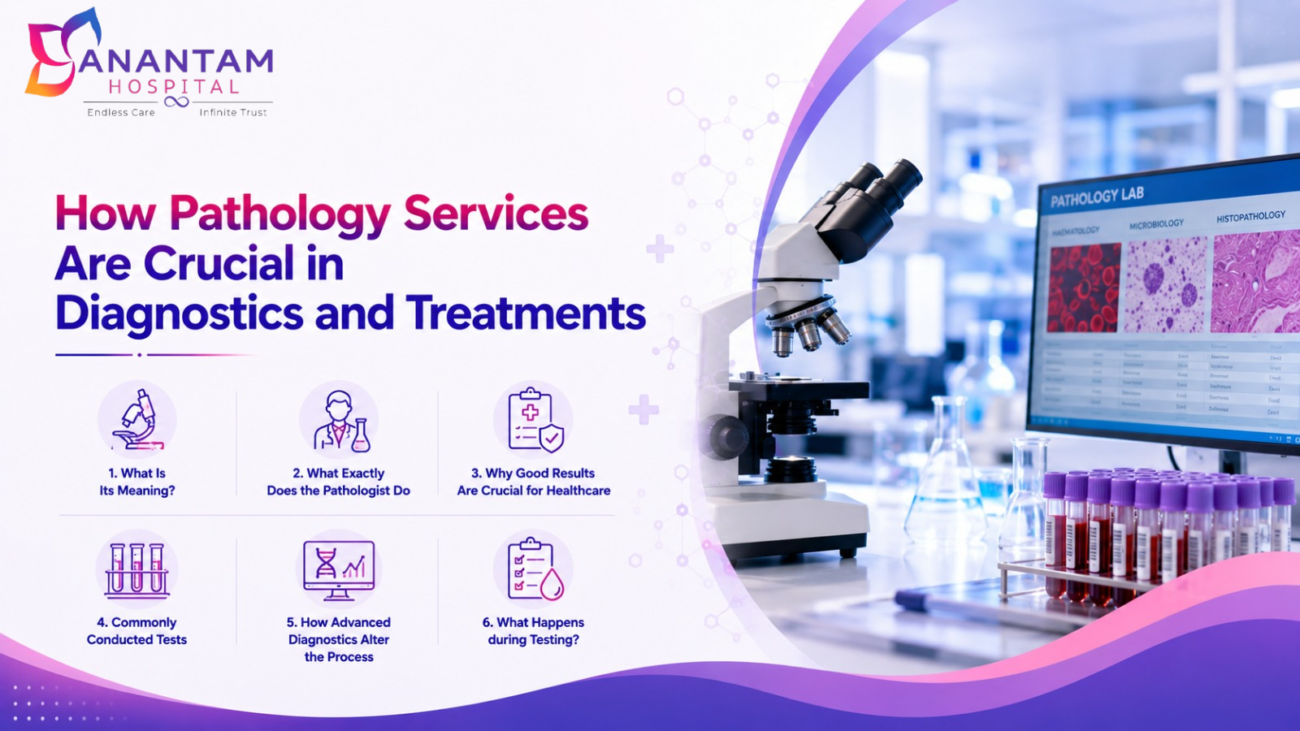
Pathology services in a lab with microscope and blood test samples at Anantam Hospital

How Pathology Services Are Crucial in Diagnostics and Treatments

Going to the lab, getting poked, and leaving without even looking back is something we all did several times in our life, but what really happens after you leave – most likely, you don’t even give it a second thought. It turns out, this small process influences each of your treatment choices in a huge way. This is the part of diagnostic process in pathology services which gets overlooked the most often, but behind each diagnosis lies the lab diagnosing what’s happening inside your body.

What We Mean by This Term?

While many people assume “the lab” equals blood draws, this particular field covers many more aspects of diagnostics.

Typically, it includes:

  • blood tests ranging from general health check-ups to complicated panels;
  • biopsy – testing samples of tissue for presence of any diseases;
  • analysis of urine and feces in order to detect any abnormalities and infections;
  • histopathology – analyzing tissue structure using a microscope;
  • microbiology which identifies bacteria, viruses, fungi infections;
  • molecular diagnostics which analyzes DNA for a particular disorder.

Although their roles may be very different, these are crucial parts of diagnostics process.

What Exactly Does the Pathologist Do in Your Case

Although you’re unlikely to ever meet the pathologist who works on your case, his or her input will directly affect the treatment plan.

Concluding that you have an infection, that there are cancer cells in a sample of tissue, that you do not have a particular disease – this is where pathology services make their diagnostic contribution.

Why Good Results Are Crucial for Healthcare

Delayed or incorrect results not only cause discomfort but can significantly affect the treatment. That’s exactly the reason why good pathology services are crucial in current healthcare industry.

  • timely diagnosis allows you to get treated faster in case of any urgent cases;
  • accurate results reduce unnecessary treatment or missings of certain conditions;
  • detailed reports provide doctors with the whole information about the condition;
  • reliable quality control of all lab procedures leads to trustworthy results.

Commonly Conducted Tests

Now let’s discuss several commonly conducted tests most of you are familiar with without understanding what exactly is being checked during the examination.

  • CBC (Complete Blood Count) – checks patients for infections, anemia, etc.;
  • Lipid Profile – checks your cholesterol to determine your chances of having heart disease;
  • Biopsy Reports – confirm or exclude certain conditions, such as cancer;
  • Tests for liver and kidneys functioning;
  • Tests of blood sugar;

Understanding the purposes of these procedures will significantly improve communication with your physician.

How Advanced Diagnostics Alter the Process

In addition to traditional methods, modern laboratory diagnostics is now able to use molecular and genetic testing to identify various diseases at early stages and provide a more accurate individual treatment.

In such way, the shift towards personalized medicine changes the process, making the treatment plan based on laboratory diagnostics rather than on your symptoms.

What Happens during Testing?

Testing is not scary anymore when you know the basics of the process.

  • Collecting of samples – blood, urine, tissues or other type of material
  • Laboratory diagnostics – analysis of collected material by trained specialists
  • Report generation – creation of report to be sent to the doctor
  • Turnaround time – period during which you will receive results of the procedure (depending on the procedure it might take from minutes to few days)

Presence of the in-house, accredited laboratory ensures more prompt delivery of the reports and better cooperation between the laboratory and your physician.

Summary

Pathology services are not always mentioned, but still, they are involved in almost every important medical decision. Accuracy and promptness of your laboratory test results are the base of your whole further diagnosis and treatment.

When you have to undergo routine tests or need special diagnostics, choosing a hospital with quality laboratory services will be crucial for the process of your treatment. You should choose Anantam Hospital as one of the best multispeciality hospitals in Kalyan with 24/7 emergency care.

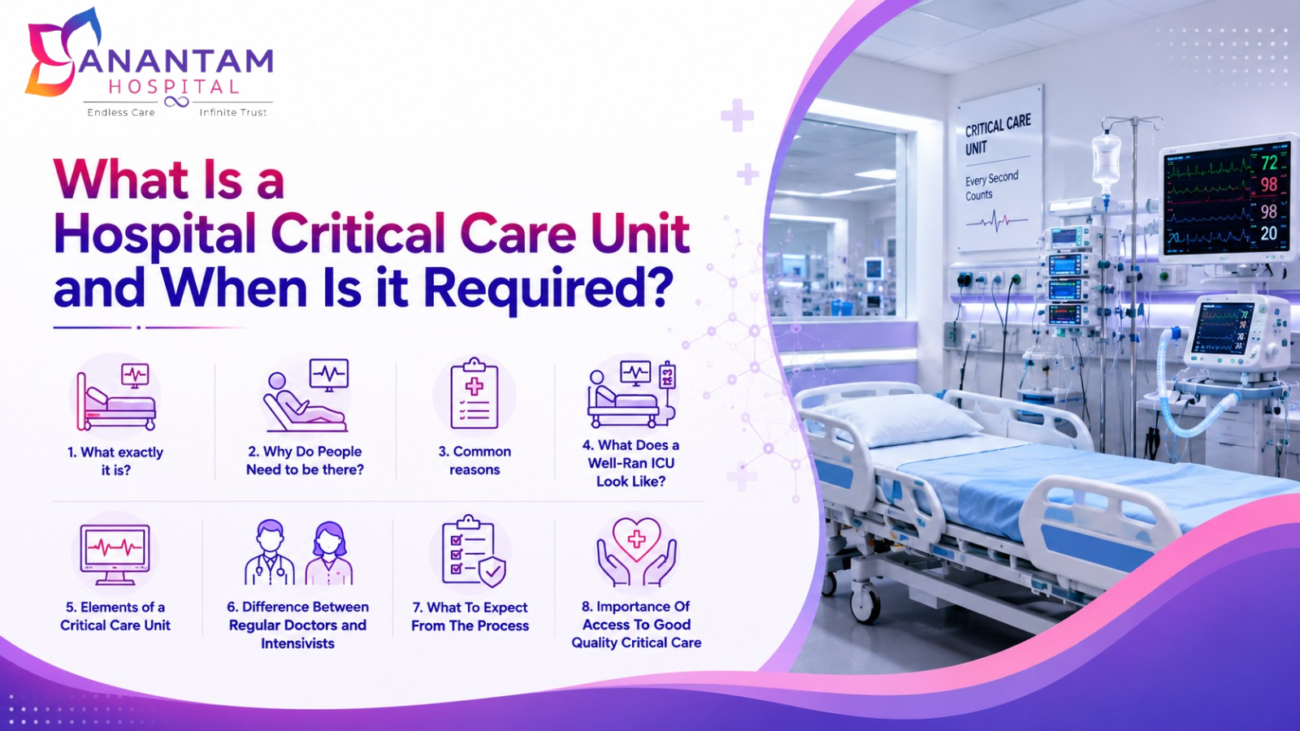
Hospital critical care unit with ICU beds and monitoring equipment at Anantam Hospital

What Is a Hospital Critical Care Unit and When Is it Required?

The news that a relative or close person will be admitted to the ICU may be frightening and even alarming as most people do not understand what does it mean. It is important to learn some information about a hospital critical care unit as it will help to understand the situation better.

What Is a Hospital Critical Care Unit?

The ICU, or a critical care unit, is a special area in the hospital which is dedicated to patients who require continuous monitoring and intensive attention. The main peculiarity of this unit is that each patient gets much more attention than it is in the other hospital areas.

Why Do People Need to Be in a Critical Care Unit?

There are many reasons why a person is admitted to the ICU and all of them are rather serious. In most cases, such a unit helps to save lives.

Common reasons for admission to a critical care unit include:

  • Sepsis or other serious infections
  • After complications following the surgical operation
  • Patients with heart attacks
  • Patients with breathing problems
  • After an accident or any other trauma
  • Organ failure

It may take several days or even weeks for a patient to leave the critical care unit. It depends on his or her condition.

What Does a Well-Ran ICU Look Like?

It is not only a ward with some additional devices and machines. A good ICU consists of highly-specialized medical staff, advanced medical technologies and readiness for rapid response.

Elements of a hospital critical care unit include:

  • Constant monitoring of the patient’s vital signs
  • Ventilators in case a person cannot breathe on his/her own
  • Cardiac monitors
  • Intensivists who are medical doctors specializing in critical care medicine
  • Rapid response protocols

All these elements have a purpose to provide timely reaction to all possible problems of patients.

Difference Between Regular Doctors and Intensivists

Doctors usually focus on diagnostics and development of treatment plan. On the contrary, intensivists always try to make a quick decision in case of changes in a patient’s condition.

What To Expect From The Process

Being with your loved one in critical care can be a difficult experience, but there are certain things one can expect from the process.

  • The visiting hours may be limited due to patient needs and restrictions
  • Communications take place on regular basis, with doctors keeping the families informed about the current situation and future plans
  • Getting psychological support is important so ask the hospital’s staff to help you if you need any assistance
  • Questions are always allowed – ask the care team all the questions you might have

You are not supposed to know all the terms used by medical specialists, but a competent care team should be able to give you the needed explanation.

The Importance Of Access To Good Quality Critical Care

In a real emergency every minute counts, and having a well-equip hospital critical care unit available within the area is vital.

Some of the criteria for assessing a hospital’s readiness for a crisis situation:

  • 24×7 availability of intensivists and other specialists
  • Modern equipment maintained and upgraded regularly
  • Quick admission to critical care after being detected at the general ward
  • Effective communication between different departments in case of an emergency

These points are crucial to consider when evaluating the quality of the care offered at a particular facility.

Conclusion

Hospitals’ critical care units are designed to provide care to people who really need constant monitoring and fast reaction in case of a crisis situation. Understanding what such departments do, who are their target audiences and what one can expect from the process is important.

If you look for a hospital to get treatment for yourself or a loved one suffering from a certain condition, pay attention to the critical care unit. Anantam Hospital, which is considered the best multispeciality hospital in Kalyan, provides its patients with a 24×7 critical care unit staffed by experienced intensivists.

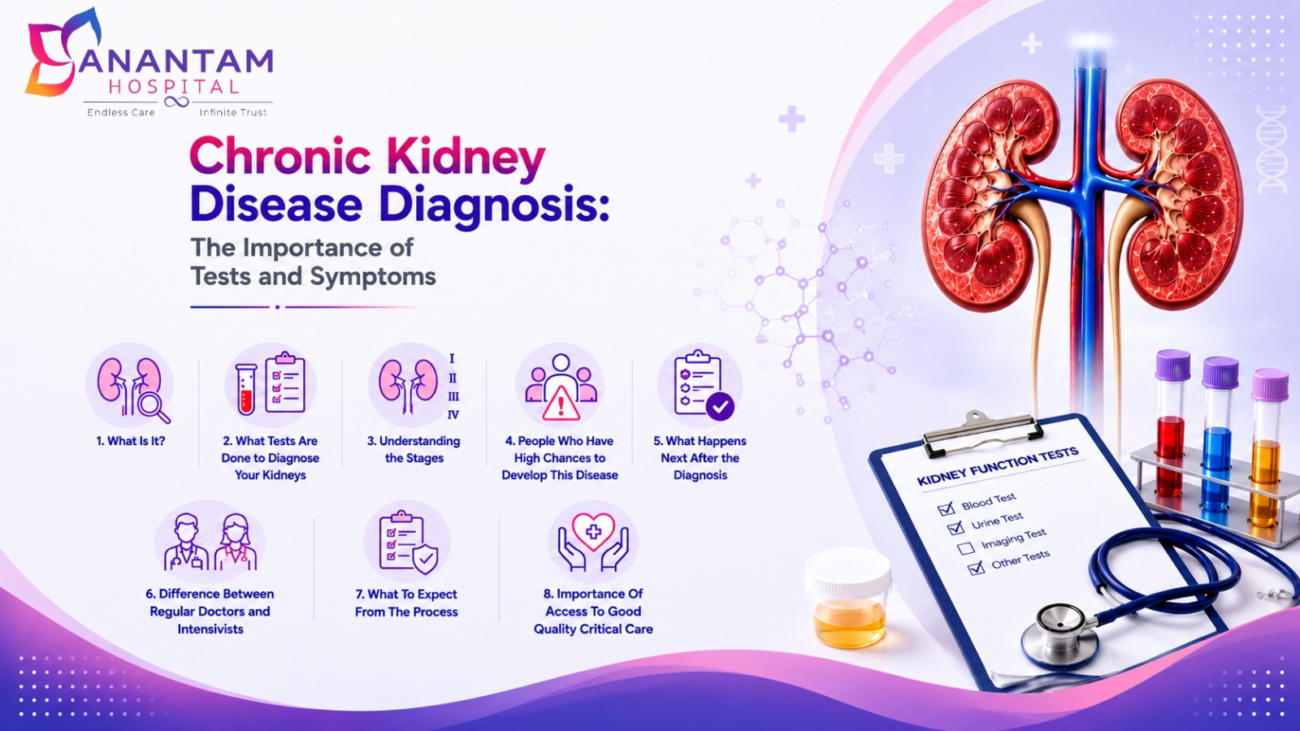
Chronic Kidney Disease Diagnosis at Anantam Hospital

Chronic Kidney Disease Diagnosis: The Importance of Tests and Symptoms

Your kidneys function continuously to cleanse your blood from toxins, yet you only pay attention to them once something goes wrong. By the time you notice the problem, lots of things may have been going on under the surface. That’s why chronic kidney disease diagnosis is so important. They usually appear slowly and develop silently, which means that an early detection becomes crucial for you to take appropriate action.

What Is Chronic Kidney Disease?

Chronic kidney disease, commonly known as CKD, is a slow decrease in kidney function due to some internal issues. Unlike acute cases, it takes a lot of time to develop, sometimes many years.

Your kidneys cleanse your blood from metabolic waste, adjust fluid balance, and maintain blood pressure levels. If something starts happening with kidneys, the consequences will affect the whole organism, not only the urinary system.

The First Signs that You Might Overlook

This illness is really hard to detect, and that is why chronic kidney disease diagnosis becomes so important.

Be careful about these symptoms:

  • Frequent tiredness despite rest
  • Leg swelling
  • Unusual urination patterns, including color changes
  • High blood pressure
  • Loss of appetite or a metallic taste

They do not indicate any specific kidney problem at all, which is exactly why people ignore them.

What Tests Are Done to Diagnose Your Kidneys

Diagnosing kidney issues is pretty simple and does not require any sophisticated procedure.

Blood Tests

  • Shows your creatinine level, a waste that should be filtered by your kidneys
  • Determines your eGFR, which is your estimated glomerular filtration rate (it shows how well your kidneys work)

Urine Tests

  • Detects presence of protein or albumin in urine, which should not be there
  • Allows you to diagnose your kidney issues even before any symptom appears

Imaging Test

  • Ultrasound helps you find the kidney’s size, structure, or blockages and cysts

Biopsy (If Needed)

  • It’s done if it’s difficult to understand the reason of your illness after all blood and urine tests

These tests create a full picture, and this is the reason why chronic kidney disease diagnosis rarely requires one single test.

Understanding the Stages of CKD

After you get your result, doctors will divide your disease into 5 stages according to your eGFR results.

Stage 1: normal kidney function but other signs of kidney damage present
Stage 2: mild reduction in kidney function
Stage 3: moderate reduction in kidney function (stage 3b is usually accompanied with symptoms appearance)
Stage 4: severe reduction in kidney function
Stage 5: kidney failure

Each stage will allow you to plan the appropriate treatment for your kidney disease.

People Who Have High Chances to Develop This Disease

There are a few factors, which increase your chances to develop chronic kidney disease.

Diabetes – is one of the main reasons for the appearance of this illness.
High blood pressure – puts additional stress on the blood vessels of the kidneys.
Family history of kidney disease
Obesity – it increases the workload on your kidneys.

Knowing your risks allows you to prevent this illness before it appears.

What Happens Next After the Chronic Kidney Disease Diagnosis?

After the diagnosis, you have to create an appropriate treatment plan, which depends on your stage.

It includes the following steps:

Lifestyle changes – it’s needed to control blood sugar, reduce salt intake, and to exercise.
Medication – to control high blood pressure.
Monitoring – regular blood and urine tests to control kidney function.
Dialysis or transplant – it’s used in advanced stages of this disease.

Timely treatment allows you to slow down the process of chronic kidney disease development.

Summary

CKD is really hard to spot, which is the main reason why the knowledge of this illness symptoms becomes so important. Getting your diagnosis in time will give you the opportunity to manage it successfully.

If you have diabetes or high blood pressure, or you haven’t got checked recently, it’s better to do it now. Anantam Hospital, which is the best multispeciality hospital in Kalyan with 24/7 emergency care, provides consultations for Nephrology.

Chemotherapy treatment session at Anantam Hospital

Chemotherapy Explained: What To Expect Before, During, and After Your Treatment

Finding out you or a close one has to go through chemotherapy may cause a lot of questions at once. Most of them are related to what actually will happen now.

This article provides a comprehensive overview of chemotherapy and will help to understand what to expect, how to cope with it and how this type of treatment may affect you.

What Is Chemotherapy?

The very definition of chemotherapy is using chemicals to eliminate cancerous cells or stop them from growing. In everyday conversation, this treatment is often shortened to the “chemo”. As a rule, it’s one of the treatment methods for cancer.

Sometimes it’s used alone, sometimes with other types of treatment such as surgery, radiation, etc.

How Does It Work?

Cancer cells tend to grow very fast, and chemotherapy targets precisely this property. However, there are some other cells in our body which grow equally fast, and they are affected by treatment. Those cells are hair follicles, blood cells and the mucosa of the gastrointestinal tract.

The most common ways of using this treatment are:

  • Primary treatment. That is chemotherapy only.
  • Neoadjuvant therapy. It’s used before surgery to reduce the size of the tumor and make it easier to operate.
  • Adjuvant therapy. This is chemotherapy after surgery to kill the residual cancer cells not visible on the scan.

Knowing how the treatment works takes a lot of the uncertainty away.

How Is It Administered?

There are some different ways to administer chemotherapy to the patient, and each method has its advantages and disadvantages.

Here they are:

  • Oral administration. The patient gets pills to take at home.
  • Intravenous administration. It’s done at the hospital or specialized clinic. The medication is delivered intravenously.
  • Injection. The medicine is injected directly into the muscle or under the skin of the patient.

The vast majority of treatments is conducted according to the cycle scheme.

Pre-treatment Tests and What You Can Expect Before Chemotherapy

Before starting your treatment, you will have to undergo a number of tests in order to get a full picture of your health condition. They are blood tests, scans, general examination and others.

After that, the specialists design the personalized chemotherapy plan for you including the necessary drugs, dosages and frequency of treatments. Each person and each case of cancer is unique, and so is the treatment plan.

Possible Side Effects of Chemo

This is the part where the majority of people have doubts. Let’s be honest about it.

Here they are:

  • Fatigue that can vary from mild to severe
  • Nausea that is now usually managed with anti-nausea medication
  • Hair loss, but not all of the chemo drugs cause hair loss
  • Changes in appetite and taste and others

The thing is that side effects differ a lot depending on the specific type of drugs and the response of your body. Some people have mild symptoms, some – more serious.

Coping with Chemotherapy

Going through this type of treatment involves not only coping with it itself but also with the impact it makes on your everyday life.

Some useful tips are as follows:

  1. Stay hydrated and eat light meals even when you don’t feel hungry;
  2. Take breaks and get enough sleep whenever you need it, because fatigue is a normal part of treatment;
  3. Go to your follow-ups because the plan of your treatment is adjusted depending on your condition;
  4. Rely on the support of your family members, friends or support group;
  5. Communicate your feelings both physical and psychological.

The truth is cancer treatment not only impacts the patient, but it impacts the whole family. That’s the emotional burden which needs to be addressed as well.

Chemo Myths

There are many myths related to chemotherapy. Here are some of them debunked.

  • Myth: Chemo means that you will feel severely ill.
    Fact: This is not necessarily true because severity of symptoms differs from one drug type and individual to another.
  • Myth: You will certainly lose your hair.
    Fact: Not all of the chemo drugs cause hair loss, and it depends on your particular drugs.
  • Myth: You won’t be able to work during this period of your life.
    Fact: Yes, there are people who can continue working while undergoing chemo.

Warning Signs to Seek Immediate Medical Help

Most of the side effects can be managed at home. However, there are some signs when you should immediately contact your doctor. Here they are:

  • High fever and signs of infection
  • Severe vomiting and inability to keep fluids
  • Bleeding or unexplained bruising
  • Sudden severe weakness and confusion

This is the symptom list that should not be ignored, especially during active treatment period when your immunity is vulnerable.

Conclusion

Chemotherapy is a scary process for a lot of people. But when you understand how this type of treatment works, what to expect and how to cope with the journey, everything becomes less frightening. Every chemotherapy treatment plan is different, and that is why personalized treatment and communication with your doctor are so important.

If you or your loved one is facing a cancer diagnosis and thinking about the treatment options, you are not alone. Anantam Hospital, one of the best multispeciality hospitals in Kalyan with 24/7 emergency care provides you with professional Oncology consultations for chemotherapy and other treatment steps.

Reason for swine flu symptoms as doctor checks patient

Swine Flu Alert: The Real Reason for Swine Flu Behind India’s 2026 Surge

Turn on the news this month and you’ll probably catch a headline about H1N1 cases climbing across the country. It’s not your imagination, and it’s not just another flu season scare story either.

Delhi alone has seen its H1N1 numbers shoot up dramatically compared to last year, and states like Rajasthan are logging their highest monthly case counts of 2026 right now. So what’s actually driving this, and more importantly, should you be worried?

What’s Actually Happening Right Now

Health authorities across India have flagged a sharp rise in H1N1 cases this monsoon season. Delhi’s case count this year is running nearly eight times higher than the same period last year, and the Health Ministry has urged anyone with persistent flu-like symptoms to get checked early instead of waiting it out.

Here’s the reassuring part though. Health officials have confirmed there’s no new or more dangerous strain behind this spike. It’s the same seasonal H1N1 virus that’s circulated in India for years, just showing up in higher numbers this season.

What Exactly Is Swine Flu?

Let’s back up for a second. Swine flu, medically known as H1N1, is a strain of influenza that originally jumped from pigs to humans years ago. Knowing this origin is the first step in understanding the reason for swine flu today.

These days, it spreads person to person just like any other flu virus. You don’t need to be anywhere near a pig to catch it, and eating pork has nothing to do with it either.

The Real Reason for Swine Flu Spreading This Season

This is what everyone actually wants answered. The reason for swine flu surging right now comes down to a mix of seasonal, biological, and everyday factors working together.

Monsoon Weather Conditions

  • Humidity and fluctuating temperatures create ideal conditions for flu viruses to spread and survive longer
  • This is exactly why India sees seasonal spikes every year between July and November
  • Your body’s natural defenses also tend to dip during sudden weather shifts

Airborne Transmission in Crowded Spaces

  • The virus spreads through droplets when an infected person coughs, sneezes, or talks
  • Crowded trains, offices, and markets let one infected person expose dozens of others within minutes
  • This is a major reason for swine flu spreading so quickly in dense cities

Dipping Immunity Levels

  • Seasonal illness and weather changes leave many people more vulnerable than usual
  • Existing health conditions like diabetes, asthma, or heart disease weaken your body’s ability to fight off infection
  • Kids, elderly folks, and pregnant women fall into higher-risk categories for this reason

Delayed Testing and Reporting

  • Many mild cases never get tested, which means official numbers likely understate how widespread it actually is, adding another layer to the reason for swine flu case counts looking the way they do
  • People often mistake early symptoms for a regular cold and delay seeking care
  • This delay is part of why case counts appear to jump suddenly once people do get tested

Population Density and Poor Ventilation

  • Cities like Mumbai and Delhi see faster transmission simply due to how many people share tight indoor spaces
  • Offices, schools, and public transport become natural hotspots during outbreak season

Put it all together, and there isn’t one single reason for swine flu spreading this hard. It’s several factors piling up at exactly the same time of year.

Symptoms You Shouldn’t Brush Off

Swine flu often looks like a regular flu at first, which is exactly why people delay getting checked.

Watch out for:

  • Sudden high fever, often above 100.4°F
  • Chills and body aches
  • Sore throat and persistent cough
  • Runny or stuffy nose
  • Headache and fatigue that hits harder than a normal cold
  • In some cases, vomiting or diarrhea

Not everyone develops every symptom, and fever doesn’t always show up either, so don’t rule it out just because one symptom is missing.

Who Should Be Extra Cautious

Higher-risk groups include:

  • Children under 5 years old
  • Adults over 65
  • Pregnant women
  • People with asthma, diabetes, heart disease, or weakened immune systems
  • Healthcare workers with frequent patient exposure

If you fall into any of these categories, don’t wait around hoping symptoms fade on their own.

How to Protect Yourself This Season

Prevention isn’t complicated, it just needs consistency, especially with case numbers climbing.

  1. Wash your hands frequently, especially after commuting or being in crowded places
  2. Avoid touching your face without washing your hands first
  3. Wear a mask in crowded or poorly ventilated indoor spaces
  4. Get vaccinated, particularly if you’re in a high-risk category
  5. Stay home when unwell instead of pushing through work or school
  6. Boost your immunity with proper sleep, hydration, and a balanced diet

None of these guarantee complete immunity, but together they significantly cut your risk during a season like this one.

When to See a Doctor

Most cases resolve with rest, fluids, and basic care within a week. But given the current surge, certain signs mean it’s time to stop self-managing.

Seek medical attention if you notice:

  • Difficulty breathing or chest pain
  • Fever that doesn’t improve after 3 to 4 days
  • Severe weakness or dizziness
  • Symptoms that suddenly worsen after initially improving
  • Bluish tint to lips or face

These aren’t symptoms to sit on, especially with hospitals across the country already reporting increased flu-related admissions this season.

The Takeaway

Swine flu isn’t a new threat, but this season’s numbers are a real reminder to take it seriously. Understanding the reason for swine flu spiking each year, from monsoon weather to crowded spaces to dipping immunity, puts you a step ahead instead of caught off guard when symptoms show up.

If you or someone in your family is running a fever that won’t quit or showing flu symptoms that just won’t let up, don’t wait it out. Anantam Hospital, recognized as the best multispeciality hospital in Kalyan and the best critical care hospital in Kalyan, is among the 24×7 hospitals in Kalyan offering dedicated consultations for flu-related illnesses to help you get diagnosed and treated without delay.

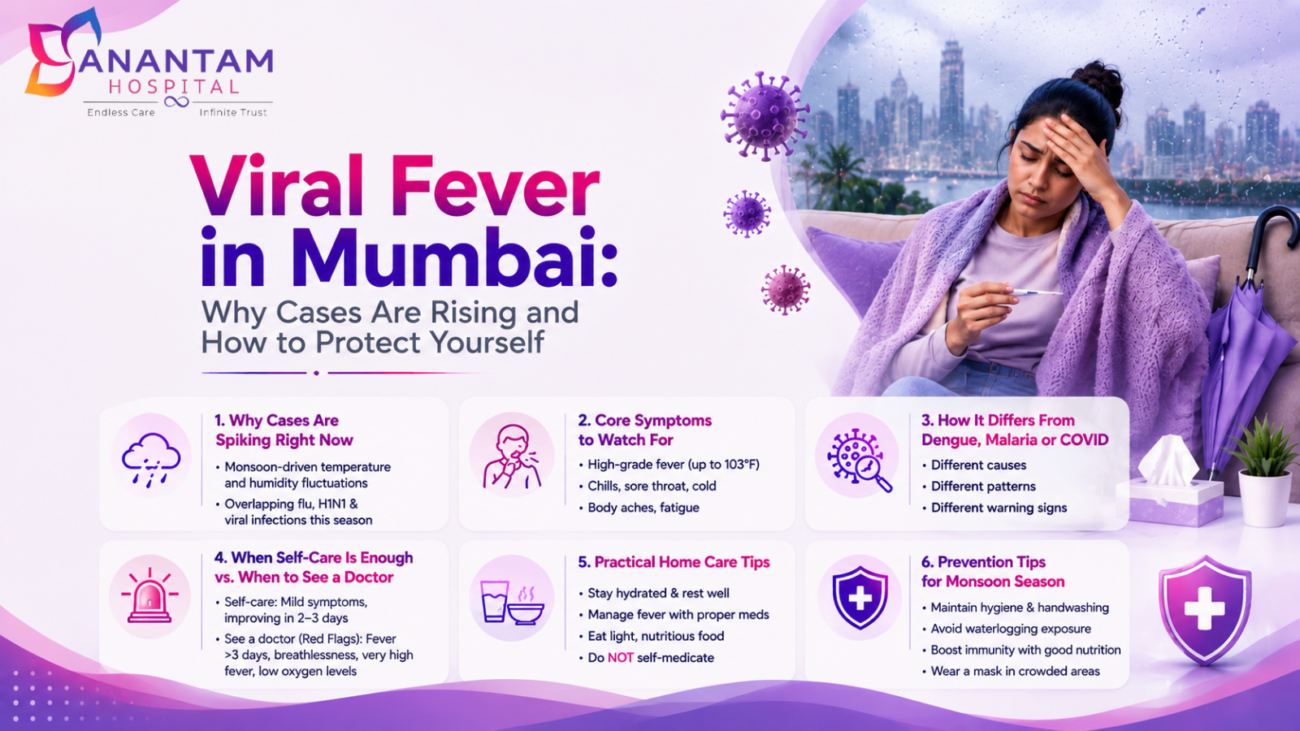
Patient with viral fever symptoms consulting doctor at Anantam Hospital Kalyan

Viral Fever in Mumbai: Why Cases Are Rising and How to Protect Yourself

Feels like everyone around you is either coughing, running a fever, or nursing a sore throat right now, doesn’t it? You’re not imagining it. Mumbai is seeing a real spike in viral fever cases this season, and if you haven’t caught it yet, chances are someone in your house, office, or building has.

Why Is Viral Fever Spiking Right Now?

Blame it on the weather. Mumbai’s monsoon brings that classic combo of high humidity and sudden temperature swings, and viruses love that environment.

Here’s what’s fueling the surge:

  • Fluctuating temperatures that weaken your body’s natural defenses
  • High humidity that lets viruses spread and survive longer in the air
  • Crowded indoor spaces where people gather to escape the rain
  • Waterlogging and stagnant water, which brings its own set of infections into the mix

Doctors across the city are reporting a noticeable jump in OPD visits for fever, cough, and cold this month. If it feels like this year is worse than usual, that’s not just a coincidence.

What Does It Actually Feel Like?

Not every fever is the same, so let’s talk symptoms. Most cases right now show up with a fairly predictable pattern.

Common symptoms include:

  • High-grade fever, sometimes touching 102 to 103°F
  • Chills and body shivering, even indoors
  • Sore throat that makes swallowing uncomfortable
  • Persistent cold and a blocked or runny nose
  • Body aches and general fatigue
  • Mild cough that sticks around

It’s not fun, but for most people, it’s manageable at home with the right care.

Viral Fever vs. Dengue, Malaria, and COVID

This is where things get confusing, and honestly, that confusion is valid. A lot of monsoon illnesses share overlapping symptoms.

Here’s a quick way to think about it:

  • This kind of fever usually comes with cold, sore throat, and body aches, and tends to ease up within a few days
  • Dengue often brings a much higher fever along with severe joint pain, rashes, and a sharp drop in platelet count
  • Malaria typically causes fever that comes in cycles, often paired with intense chills and sweating
  • COVID can look similar to viral fever but may include loss of taste or smell and breathing difficulty in some cases

If you’re unsure which one you’re dealing with, that’s exactly the kind of guessing game you shouldn’t play alone.

When Should You Actually See a Doctor?

Most viral infections run their course in three to five days with rest and basic care. But certain signs mean it’s time to stop waiting it out.

Get checked if you notice:

  • Fever lasting more than three days without improvement
  • Very high fever that isn’t responding to medication
  • Breathlessness or chest discomfort
  • Severe weakness or dizziness
  • Persistent vomiting or inability to keep fluids down
  • Any drop in oxygen levels if you’re monitoring at home

None of these should be brushed off, especially if you’re managing symptoms in an elderly family member or a young child.

How to Manage It at Home

If your case is mild, here’s what actually helps:

  1. Hydrate constantly. Water, ORS, coconut water, and soups keep you from getting dehydrated
  2. Rest properly. Your body needs energy to fight off the infection, not to push through work
  3. Manage fever sensibly. Use paracetamol as needed, but don’t self-medicate with random combinations
  4. Gargle for sore throat. Warm salt water works better than people give it credit for
  5. Monitor your symptoms daily. If things aren’t improving by day three or four, that’s your cue to get checked

One thing worth repeating: don’t self-medicate with antibiotics. Most cases of viral fever are, well, viral, and antibiotics won’t do a thing against a virus.

Prevention Tips for Monsoon Season

A little effort now saves you a miserable week later. Here’s what actually makes a difference:

  • Avoid wading through waterlogged streets whenever you can help it
  • Keep your surroundings dry to cut down mosquito breeding near your home
  • Wash your hands frequently, especially after commuting or being in crowded spaces
  • Eat warm, home-cooked food and avoid roadside food during this season
  • Boost your immunity with enough sleep, hydration, and a balanced diet
  • Wear a mask in crowded indoor spaces if you’re around anyone who’s unwell

None of this guarantees you’ll dodge it completely, but it meaningfully lowers your odds.

Don’t Wait It Out If Something Feels Off

Mumbai’s monsoon season brings this wave every year, and this year is proving no different. Most cases of viral fever resolve on their own, but knowing when to seek help is what keeps a mild illness from turning into something more serious.

If you or your family have been dealing with fever, sore throat, or persistent cold for more than a couple of days, don’t just push through it. Anantam Hospital, recognized as the best multispeciality hospital in Kalyan, offers a dedicated Fever OPD and General Medicine department to help you get checked, diagnosed, and back on your feet quickly.

Banner: 'Vaccination Isn’t Just for Kids: A Guide to Adult Immunization' with a nurse giving a shot to a smiling woman.

Vaccination Isn’t Just for Kids: A Guide to Adult Immunization

Quick question. When was the last time you got a vaccine?

If you’re drawing a blank, you’re not alone. Most of us associate vaccines with baby check-ups and school entry forms, then mentally file the topic away forever. But here’s the thing: your immune system doesn’t stop needing backup just because you grew up.

The Myth That Just Won’t Die

Somewhere along the way, we all picked up this idea that vaccines are a “kid thing.” You get your shots, you grow up, you’re set for life. Done and dusted.

That’s simply not how immunity works. Some childhood vaccines wear off over time. Others were never designed to protect you forever in the first place. And a few adult immunization needs only show up later in life, based on your age, job, health conditions, or travel plans.

So if you skipped your last few check-ups thinking vaccines were behind you, this one’s for you.

The Vaccines Adults Actually Need

Let’s break down what a solid adult immunization schedule typically looks like:

Flu Shot

  • Recommended every single year, not just once
  • The virus mutates constantly, so last year’s shot won’t cover this year’s strain
  • Especially important if you’re 50+, pregnant, or have a chronic condition

Tdap and Td Booster

  • Protects against tetanus, diphtheria, and whooping cough
  • You need a booster every 10 years, even if you got the full series as a kid
  • Pregnant women should get a Tdap booster with every pregnancy

Shingles Vaccine

  • Recommended for adults 50 and older
  • If you’ve ever had chickenpox, the virus is still sitting dormant in your body
  • Shingles can be seriously painful, so this one’s worth prioritizing

Pneumococcal Vaccine

  • Protects against pneumonia and related infections
  • Recommended for adults 65+ or younger adults with certain health conditions
  • Talk to your doctor about which version you actually need, since there’s more than one

HPV Vaccine (Catch-Up)

  • Not just for teenagers anymore
  • Adults up to age 45 can still benefit from catching up if they missed it earlier
  • Worth a conversation with your doctor if you’re in that window

COVID Boosters

  • Recommendations keep evolving, so this one needs regular check-ins
  • Especially relevant if you’re older, immunocompromised, or have underlying conditions

It’s Not One-Size-Fits-All

Here’s where a lot of people get tripped up. Your adult immunization needs aren’t the same as your neighbor’s, your parent’s, or your coworker’s.

A few things that change the equation:

  • Age: Once you cross 50 or 65, new vaccines come into play
  • Health conditions: Diabetes, heart disease, or a weakened immune system can shift what you need
  • Occupation: Healthcare workers, teachers, and childcare staff often need specific vaccines
  • Travel plans: Heading abroad? Some destinations require vaccines you wouldn’t otherwise think about, like typhoid or yellow fever

This is exactly why a blanket vaccine schedule doesn’t cut it for grown-ups. Your adult immunization needs depend on who you are and how you live.

What About Immunocompromised Adults?

If you’re managing a chronic illness or your immune system isn’t at full strength, vaccines matter even more, not less.

Some vaccines might need adjusting. Others become non-negotiable. This is a conversation to have directly with your doctor rather than guessing on your own.

How to Catch Up If You’ve Fallen Behind

Not sure what you’ve had and what you’ve missed? You’re in good company. Most adults have no clue what their vaccination history looks like.

Here’s how to sort it out:

  1. Pull your old records if you have them, even a faded vaccination card helps
  2. Ask your doctor to run a titer test, which checks if you still have immunity to certain diseases
  3. Start fresh if needed, since re-vaccinating is safe even if you’re not sure you need it
  4. Set a yearly check-in, so you’re not scrambling to remember years later

Getting back on track with your adult immunization schedule isn’t complicated. It just takes one conversation to get moving again.

Don’t Wait for a Reason

Most people only think about vaccines when they’re already sick, traveling next week, or scared by news of an outbreak. But adult immunization works best as prevention, not reaction, and building it into your routine now saves you from bigger health scares later.

Think of it less like an emergency fix and more like regular maintenance. You don’t wait for your car to break down before changing the oil.

Let’s Get You Sorted

If you’ve been putting off your shots or genuinely don’t know what you’re due for, don’t stress about figuring it out alone. A quick chat with your doctor can map out exactly what you need based on your age, health history, and lifestyle.

Anantam Hospital, recognized as the best multispeciality hospital in Kalyan, offers immunization consultations to help you catch up and stay protected. Book a consult today and cross this one off your list for good.

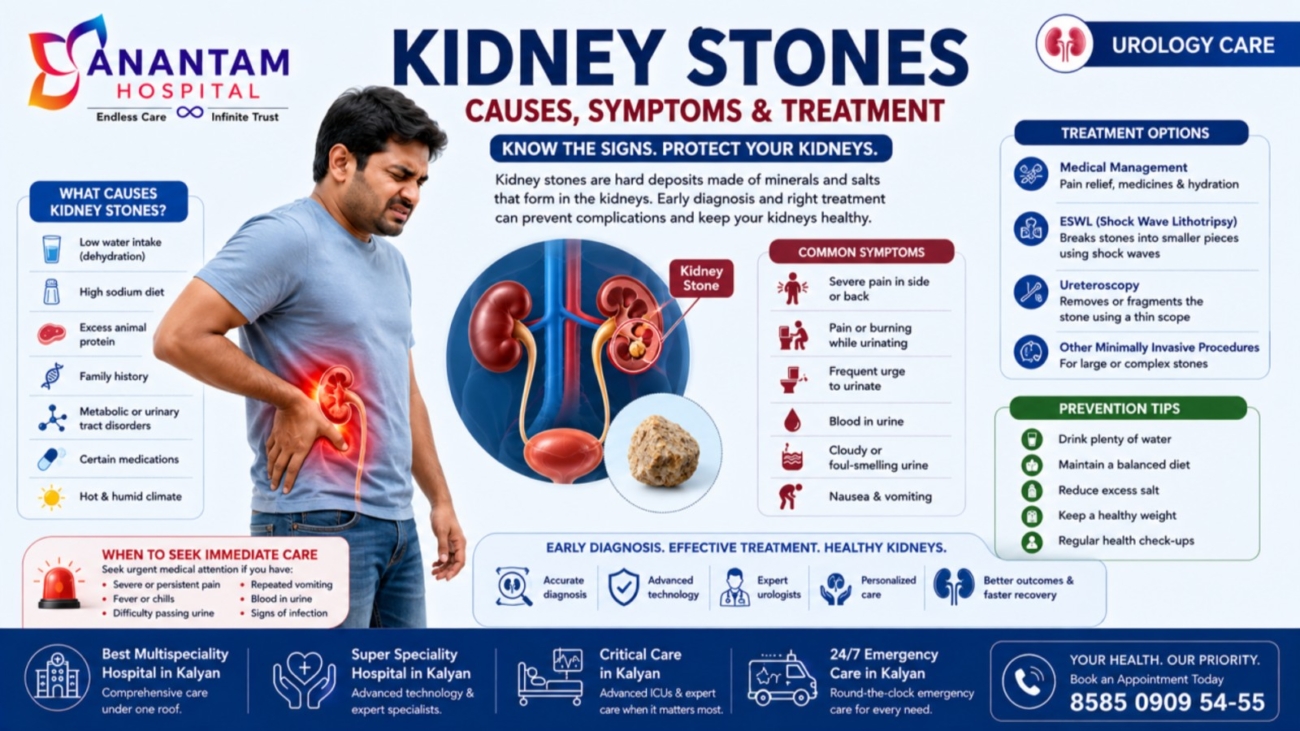
Kidney stones causes, symptoms & treatment – Anantam Hospital

Kidney Stones – Causes, Symptoms & Treatment

Kidney stones are a common urinary system problem that can affect people of different ages. They develop when certain minerals and salts present in urine become highly concentrated and form hard deposits inside the kidneys. Some kidney stones are very small and may pass naturally through the urinary tract, while larger stones can cause significant pain, blockage, infection, and other complications.

Understanding the causes, symptoms, treatment options, and prevention of kidney stones can help you recognize the condition early and seek appropriate medical care.

At Anantam Hospital, the Best Multispeciality Hospital in Kalyan, our experienced specialists provide comprehensive evaluation and treatment for kidney and urinary tract conditions using advanced diagnostic facilities and patient-focused care.

What Are Kidney Stones?

Kidney stones are hard, crystal-like deposits that form inside the kidneys when substances such as calcium, oxalate, uric acid, or other minerals become concentrated in the urine. A stone may remain inside the kidney without causing symptoms or travel through the ureter, the tube connecting the kidney to the bladder.

The size and location of a stone largely determine whether it will cause symptoms. Smaller stones may pass through the urinary tract without medical intervention, whereas larger stones can become lodged and obstruct the normal flow of urine.

What Causes Kidney Stones?

Several factors can contribute to kidney stone formation. Not drinking enough water is one of the most important risk factors because concentrated urine makes it easier for minerals to crystallize. A diet high in sodium may also increase the risk of certain stones, while excessive intake of some animal proteins can contribute to stone formation in susceptible individuals.

Family history can increase the likelihood of developing kidney stones. People who have had kidney stones previously may also be more likely to develop them again. Certain medical conditions, metabolic disorders, urinary tract problems, and some medications can increase the risk as well.

Hot and humid environments can also contribute indirectly because excessive sweating without adequate fluid replacement may lead to dehydration and more concentrated urine.

Common Symptoms of Kidney Stones

A small kidney stone may not cause any symptoms until it begins moving. When a stone travels through the urinary tract, it can cause sudden and intense pain. The pain may occur in the side or back and can sometimes spread toward the lower abdomen or groin.

Other symptoms may include pain or burning while urinating, a frequent urge to urinate, blood in the urine, cloudy or foul-smelling urine, nausea, and vomiting. Some people may experience pain that comes and goes in waves as the stone moves.

A kidney stone accompanied by fever or chills may indicate an infection and requires prompt medical evaluation.

Where Does Kidney Stone Pain Occur?

Kidney stone pain can vary depending on where the stone is located. It commonly begins in the back or side below the ribs and may move toward the lower abdomen or groin as the stone travels down the ureter.

The intensity of the pain can also change as the stone moves. Some people describe it as severe, cramping pain that comes in waves. However, symptoms can vary considerably from person to person.

How Are Kidney Stones Diagnosed?

Doctors begin with a medical history and physical examination. Urine and blood tests may be performed to look for signs of infection, blood in the urine, or factors that may contribute to stone formation.

Imaging plays an important role in diagnosis. An ultrasound may be used to identify stones and assess whether urine flow is obstructed. Depending on the situation, doctors may recommend additional imaging such as a CT scan to determine the size and exact location of the stone.

Accurate diagnosis helps doctors decide whether the stone can pass naturally or requires medical or surgical treatment.

How Are Kidney Stones Treated?

Treatment depends on the stone’s size, location, composition, symptoms, and whether it is causing an obstruction or infection. Small stones may pass naturally with adequate fluid intake and appropriate pain management under medical guidance.

When a stone is unlikely to pass on its own or is causing significant symptoms, a urologist may recommend a procedure to remove or break it into smaller pieces.

One commonly used treatment is Extracorporeal Shock Wave Lithotripsy (ESWL), which uses focused shock waves to break certain kidney stones into smaller fragments that can then pass through the urinary tract.

Another option is ureteroscopy, where a thin specialized instrument is passed through the urinary tract to locate and remove or fragment the stone. For larger or more complex stones, other minimally invasive procedures may be recommended depending on the patient’s condition.

The appropriate treatment should always be decided by a qualified urologist after evaluating the individual patient.

When Does a Kidney Stone Become an Emergency?

Most kidney stones can be treated effectively, but certain symptoms require urgent medical attention. Severe or persistent pain, fever or chills, difficulty passing urine, repeated vomiting, significant blood in the urine, or symptoms suggesting a urinary infection should not be ignored.

A blocked urinary tract combined with an infection can become a serious medical emergency. Prompt treatment is essential to prevent complications and protect kidney function.

If you experience severe symptoms, seek immediate medical attention rather than attempting to manage the condition on your own.

Can Kidney Stones Be Prevented?

Once someone has developed a kidney stone, making certain lifestyle changes may help reduce the risk of recurrence. Drinking enough water throughout the day is one of the most important preventive measures. Your doctor may recommend a specific fluid intake depending on your health and individual risk factors.

Reducing excessive salt intake, maintaining a balanced diet, and avoiding unnecessary dietary restrictions without medical advice can also help. The recommended diet may vary depending on the type of stone, so people with recurrent kidney stones may benefit from a metabolic evaluation and personalized dietary guidance.

Maintaining a healthy weight and managing medical conditions that increase stone risk are also important for long-term prevention.

Why Do Kidney Stones Keep Coming Back?

Some people experience kidney stones repeatedly. Recurrence can be associated with inadequate fluid intake, dietary factors, family history, certain medical conditions, or the chemical composition of previous stones.

If you have had kidney stones more than once, your doctor may recommend testing the stone itself, analyzing urine, or performing blood tests to understand why the stones are forming. Identifying the underlying cause can help create a more effective prevention plan.

Why Choose Anantam Hospital for Kidney Stone Treatment?

Kidney stone treatment requires accurate diagnosis and the right treatment approach based on the individual patient’s condition. At Anantam Hospital, the Best Multispeciality Hospital in Kalyan, patients receive comprehensive evaluation and treatment supported by experienced specialists and advanced diagnostic facilities.

As a Super Speciality Hospital in Kalyan, Anantam Hospital provides multidisciplinary care for complex kidney and urinary tract conditions. Patients can access advanced imaging, laboratory investigations, specialist consultations, minimally invasive treatment options, and postoperative care under one roof.

For patients requiring close monitoring or advanced medical support, our Critical Care in Kalyan provides specialized care, while our 24/7 Emergency Care in Kalyan ensures that urgent medical conditions can be assessed and treated without unnecessary delay.

Kidney stones can range from small stones that pass naturally to larger stones that cause severe pain, urinary obstruction, or infection. Recognizing symptoms early and obtaining an accurate diagnosis can help prevent complications and ensure timely treatment.

Adequate hydration, a balanced diet, and appropriate medical evaluation can also play an important role in preventing future stones. If you experience severe side or back pain, painful urination, blood in the urine, fever, vomiting, or difficulty passing urine, consult a healthcare professional promptly.

At Anantam Hospital – the Best Multispeciality Hospital in Kalyan, our experienced specialists and advanced facilities provide comprehensive kidney and urinary care with a patient-first approach. Whether you require diagnostic evaluation, medical management, minimally invasive treatment, Critical Care in Kalyan, or 24/7 Emergency Care in Kalyan, our team is committed to helping you receive timely and appropriate care.

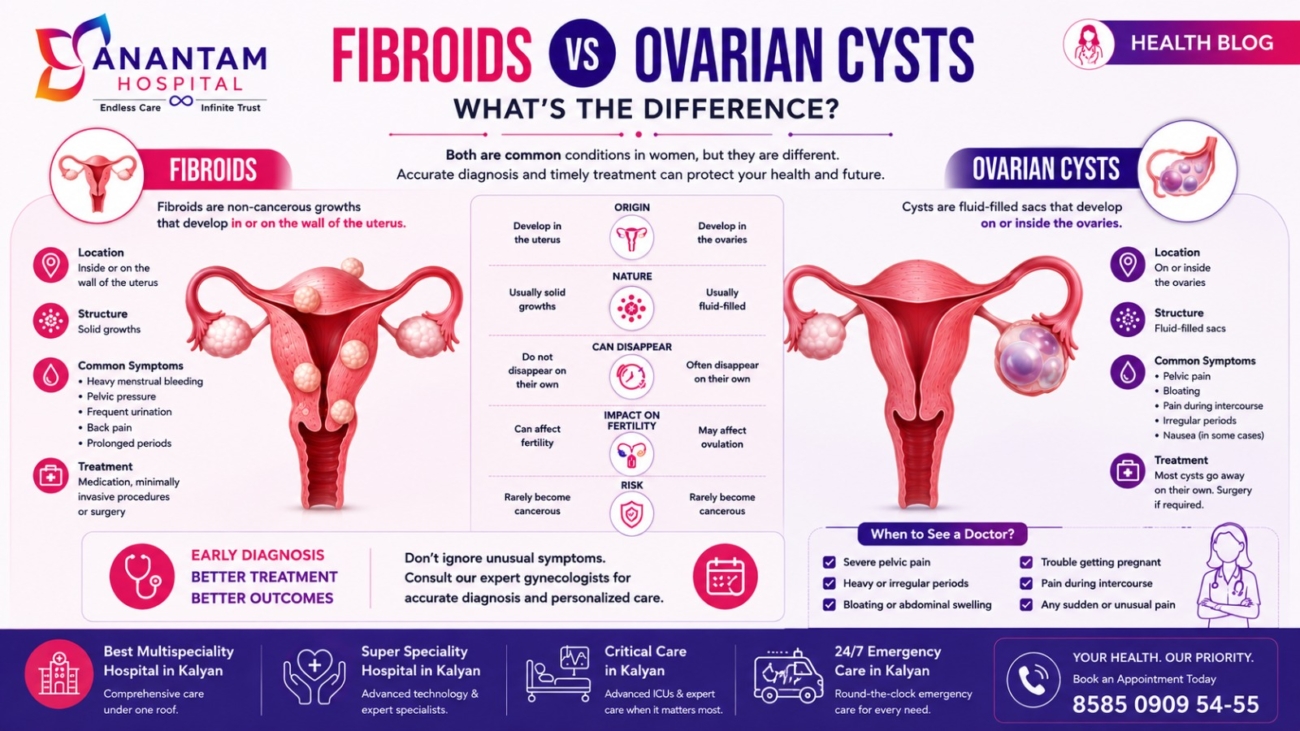
Infographic comparing fibroids and ovarian cysts by the best multispeciality hospital in Kalyan-Anantam

Fibroids vs Ovarian Cysts – What’s the Difference?

Women’s reproductive health plays a vital role in overall well-being, yet many gynecological conditions often go unnoticed until they begin affecting daily life. Among the most common conditions affecting women are uterine fibroids and ovarian cysts. Although these conditions may share certain symptoms such as pelvic pain, abdominal discomfort, and irregular menstrual cycles, they are entirely different in terms of where they develop, why they occur, and how they are treated.

Many women become anxious after hearing terms like “fibroid” or “ovarian cyst” during a routine ultrasound. While both conditions are common and often non-cancerous, understanding the difference between them is essential for timely diagnosis, appropriate treatment, and peace of mind.

At Anantam Hospital, the Best Multispeciality Hospital in Kalyan, our experienced gynecologists provide comprehensive women’s healthcare using advanced diagnostic technology and personalized treatment plans designed to meet every patient’s unique needs.

What Are Uterine Fibroids?
Uterine fibroids, also known as leiomyomas, are non-cancerous growths that develop within or on the walls of the uterus. They are made up of smooth muscle and connective tissue and can vary greatly in size, ranging from tiny seed-like growths to large masses that enlarge the uterus.

Fibroids are extremely common among women during their reproductive years, particularly between the ages of 30 and 50. Although the exact cause remains unknown, hormonal factors such as estrogen and progesterone are believed to contribute to their growth. Genetics, obesity, and family history may also increase the likelihood of developing fibroids.

Many women with fibroids experience no symptoms at all, while others may suffer from heavy menstrual bleeding, prolonged periods, pelvic pressure, frequent urination, constipation, lower back pain, or difficulty becoming pregnant.

What Are Ovarian Cysts?
Ovarian cysts are fluid-filled sacs that develop on or inside the ovaries. Unlike fibroids, ovarian cysts do not grow in the uterus. Most ovarian cysts develop naturally during the menstrual cycle and disappear on their own without requiring treatment.

Functional ovarian cysts are the most common type and generally resolve within a few menstrual cycles. However, certain cysts may continue to grow, cause pain, or require medical intervention if they become large or complicated.

While many ovarian cysts produce no symptoms, larger cysts may cause pelvic pain, bloating, abdominal swelling, pain during intercourse, irregular menstrual cycles, or a feeling of fullness in the lower abdomen.

Fibroids vs Ovarian Cysts: Understanding the Difference
Although both conditions affect the female reproductive system, they differ significantly in their origin and structure. Fibroids are solid muscular tumors that grow in the uterus, whereas ovarian cysts are fluid-filled sacs that develop in the ovaries. Fibroids commonly cause heavy menstrual bleeding and pelvic pressure, while ovarian cysts are more likely to cause sharp pelvic pain or discomfort, especially if they rupture or twist.

Fibroids usually remain stable or grow slowly over time under the influence of hormones. In contrast, many ovarian cysts disappear naturally without treatment. Accurate diagnosis through ultrasound or other imaging tests helps doctors determine the exact condition and recommend appropriate treatment.

What Causes Fibroids?
Although researchers have not identified a single cause, several factors contribute to fibroid development. Hormonal changes, particularly increased estrogen and progesterone levels, play an important role. Family history, obesity, early onset of menstruation, vitamin D deficiency, and certain lifestyle factors may also increase the risk.

Fibroids often shrink naturally after menopause as hormone levels decline.

What Causes Ovarian Cysts?
Most ovarian cysts develop as part of the normal ovulation process. However, hormonal imbalances, endometriosis, pregnancy, pelvic infections, and conditions such as Polycystic Ovary Syndrome (PCOS) may also contribute to cyst formation.

Unlike fibroids, ovarian cysts are not always permanent and often resolve without any medical treatment.

Common Symptoms of Fibroids
Women with uterine fibroids may experience heavy or prolonged menstrual bleeding, pelvic pressure, frequent urination due to pressure on the bladder, constipation, lower back pain, painful periods, abdominal enlargement, discomfort during intercourse, and fertility-related issues in some cases.

The severity of symptoms often depends on the size, number, and location of the fibroids.

Common Symptoms of Ovarian Cysts
Most ovarian cysts are discovered during routine examinations because they produce no symptoms. However, when symptoms occur, they may include one-sided pelvic pain, abdominal bloating, pain during sexual intercourse, irregular menstrual cycles, difficulty emptying the bladder, nausea, vomiting, or sudden severe pain if the cyst ruptures or twists.

A ruptured ovarian cyst or ovarian torsion requires immediate medical attention.

How Are Fibroids and Ovarian Cysts Diagnosed?
Diagnosis begins with a detailed medical history and pelvic examination. Doctors may recommend imaging tests such as pelvic ultrasound, transvaginal ultrasound, MRI, CT scan, or blood investigations depending on the patient’s symptoms and medical condition.

Ultrasound is usually the first and most effective investigation because it clearly distinguishes fibroids from ovarian cysts. In some cases, additional investigations may be necessary to rule out other gynecological conditions.

At Anantam Hospital, advanced diagnostic imaging ensures accurate and timely diagnosis, allowing patients to receive the most appropriate treatment.

Treatment for Fibroids
Treatment depends on the size of the fibroids, symptoms, patient’s age, and future pregnancy plans. Small fibroids without symptoms may simply require regular monitoring. Symptomatic fibroids may be treated with medications that control bleeding or shrink the fibroids temporarily.

For larger fibroids causing significant symptoms, minimally invasive procedures or surgery may be recommended. Treatment options include myomectomy, which removes only the fibroids while preserving the uterus, uterine artery embolization to reduce blood supply to the fibroids, or hysterectomy in selected cases where childbearing is complete.

Treatment for Ovarian Cysts
Most functional ovarian cysts disappear naturally within a few weeks or months and require only observation with repeat ultrasound examinations. Pain-relieving medications or hormonal therapy may be recommended in selected cases.

Surgical removal may become necessary if the cyst is large, persistent, causing severe pain, appears suspicious on imaging, or results in complications such as rupture or ovarian torsion.

Early diagnosis allows doctors to determine whether immediate treatment is necessary or if simple observation is sufficient.

Can Fibroids or Ovarian Cysts Affect Fertility?
Both fibroids and ovarian cysts can influence fertility in certain situations, although many women with these conditions conceive naturally and have healthy pregnancies.

Fibroids located inside the uterine cavity may interfere with implantation or increase the risk of miscarriage. Similarly, certain ovarian cysts, particularly those associated with endometriosis or PCOS, may affect ovulation and fertility.

Women planning pregnancy should consult an experienced gynecologist for appropriate evaluation and individualized treatment planning.

When Should You Consult a Gynecologist?
You should seek medical attention if you experience unusually heavy menstrual bleeding, severe pelvic pain, persistent bloating, sudden abdominal pain, irregular menstrual cycles, pain during intercourse, frequent urination, difficulty conceiving, or any noticeable increase in abdominal size.

Ignoring these symptoms can delay diagnosis and allow certain conditions to progress.

Why Choose Anantam Hospital for Women’s Healthcare?
Women’s health requires compassionate, specialized, and comprehensive medical care. As a Super Speciality Hospital in Kalyan, Anantam Hospital provides complete gynecological services under one roof, including preventive health checkups, advanced imaging, minimally invasive surgery, fertility evaluation, pregnancy care, and emergency gynecological services.

Our experienced gynecologists use the latest diagnostic technologies to accurately identify fibroids, ovarian cysts, and other reproductive health conditions while offering personalized treatment plans focused on preserving long-term health and fertility whenever possible.

Supported by modern operation theatres, advanced imaging facilities, and 24/7 Emergency Care in Kalyan, we ensure timely intervention for gynecological emergencies requiring immediate attention.

Although uterine fibroids and ovarian cysts may appear similar because they share certain symptoms, they are two distinct medical conditions that require different approaches to diagnosis and treatment. Understanding the difference between them allows women to seek timely medical care, avoid unnecessary anxiety, and make informed healthcare decisions.

If you are experiencing pelvic pain, heavy periods, abdominal bloating, or irregular menstrual cycles, do not ignore these symptoms. Consult the experienced gynecology team at Anantam Hospital – the Best Multispeciality Hospital in Kalyan, where advanced diagnostics, expert specialists, compassionate care, and comprehensive women’s health services ensure you receive the highest standard of treatment for every stage of life.